 Bellingham Siding
 Deck Replacement Built for Happy Valley's Weather, Not Just Its Views
Happy Valley sits close enough to Bellingham Bay that salt-laden air, wind-driven rain, and shade from mature trees all show up in how a deck ages. If you've owned a home here for more than a few years, you've probably already noticed it: boards that cup and gray faster than the ones on a friend's deck across town, railings that stay damp long after the rain stops, or a green film that creeps back across the decking every fall no matter how many times you power-wash it. That's not bad luck — it's the neighborhood's microclimate doing exactly what it does to every exposed wood or composite surface within a few miles of the water.
A deck replacement done right in Happy Valley isn't the same project as a deck replacement in a drier, more open part of Whatcom County. The framing, fasteners, decking material, and even the layout need to account for moisture that lingers and moss that never fully goes dormant. We've replaced decks throughout this pocket of Bellingham and built our process around those conditions specifically, not around a generic checklist.
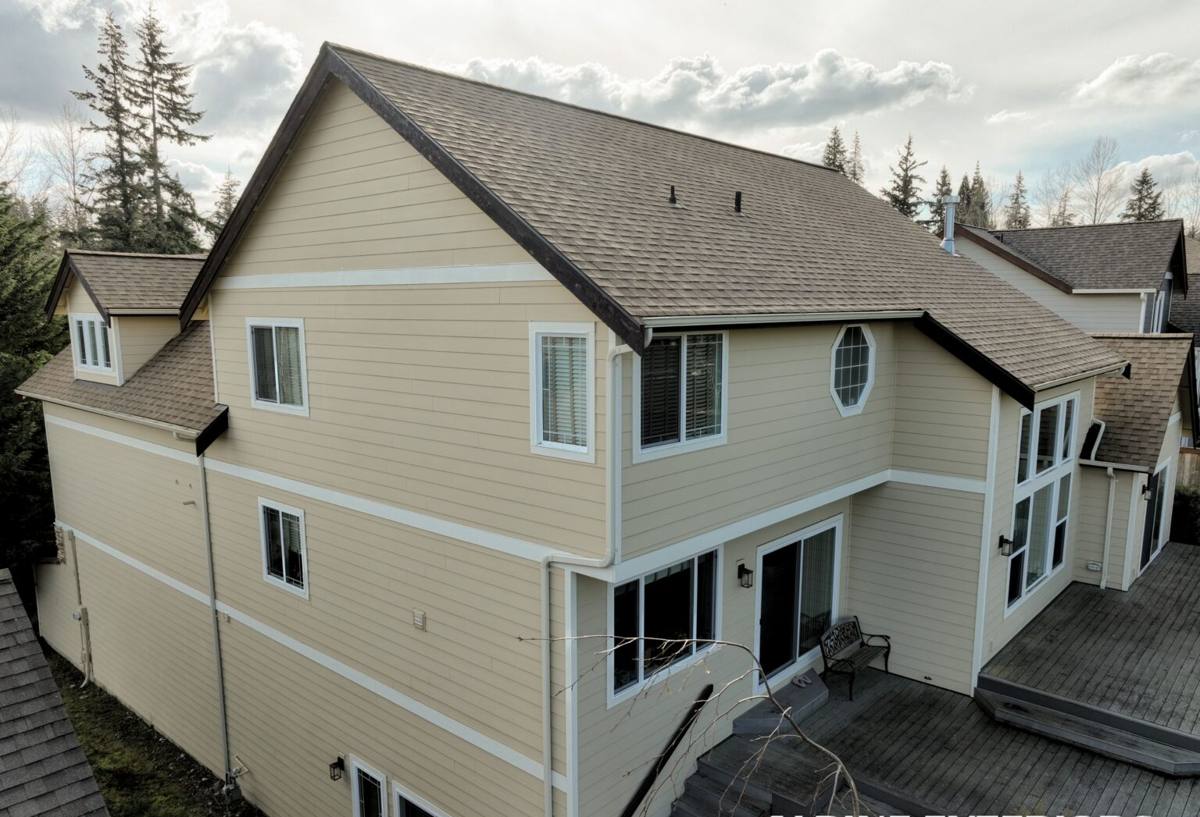
What Happy Valley's Climate Actually Does to a Deck
Salt Air and Metal Fatigue
Proximity to the bay means airborne salt reaches further inland than most homeowners assume, especially on breezy days. Over years, that salt accelerates corrosion in fasteners, joist hangers, and railing hardware — even galvanized products can start showing rust bleed if they weren't rated for coastal exposure. A deck that looks structurally fine from the surface can have compromised connectors underneath, which is one of the first things we check when we inspect an older deck here.
Driving Rain and Moisture Intrusion
Bellingham's rain rarely falls straight down — wind pushes it sideways into ledger boards, stair stringers, and the point where the deck meets the house. That's where rot typically starts, hidden behind the decking where you can't see it until a board feels spongy or a post starts to lean. Correct flashing at the ledger connection matters more here than almost anywhere else in the build.
The Long Moss Season
Shade, moisture, and mild temperatures give moss and algae a long runway in Whatcom County — often close to year-round on decks that don't get much direct sun. Moss holds moisture against the decking surface, which speeds up wood decay and makes composite surfaces slick and slippery. Material choice and board spacing both affect how much of a problem this becomes.
Signs Your Happy Valley Deck Needs Replacing, Not Just Repair
- Soft, spongy, or spring-back decking boards, especially near the house or in shaded corners
- Rust streaks running down from screw heads or bolts
- A ledger board that feels damp or shows dark staining where it meets the siding
- Railing posts that wiggle at the base, even slightly
- Persistent moss or green film that returns within weeks of cleaning
- Gaps opening up between boards, or boards that have visibly cupped or crowned
- Stair stringers with any visible checking, splitting, or soft spots
Any one of these on its own might be a repair. Several together, or anything involving the ledger connection or support posts, usually means the structure has been compromised long enough that patching won't hold up through another wet season.
What a Correct Deck Replacement Involves
Structural First
Before any decking goes down, we evaluate the framing: joists, beams, posts, and footings. In a neighborhood like Happy Valley, we pay close attention to post bases and any wood that sits close to grade, since ground moisture combines with rainfall to keep that zone wet longer than code minimums assume. Undersized or improperly spaced framing gets corrected, not just covered over.
Ledger Attachment and Flashing
The ledger board — where the deck bolts to the house — is the single most common failure point on older decks in wet coastal climates. We install proper flashing that directs water away from the house framing rather than trapping it, and we use fasteners rated for the moisture and salt exposure typical this close to the bay.
Hardware and Fasteners
We use corrosion-resistant, coastal-rated hardware for joist hangers, structural screws, and railing connections. This costs more upfront than standard galvanized hardware, but replacing rusted-out connectors in eight years costs a lot more than that difference.
Decking Material Selection
We'll walk through the honest trade-offs between wood and composite decking for your specific site — sun exposure, shade, and how much maintenance you actually want to do — rather than pushing one material as universally "better." Both perform differently under Bellingham's moss and moisture conditions, and the right call depends on your yard, not a brochure.
Drainage and Airflow Underneath
Poor airflow under a low deck traps moisture and speeds up rot in the joists above. Where clearance allows, we build in ventilation and grade the ground below to shed water instead of holding it against the structure.
Wood vs. Composite Decking for This Neighborhood
| Factor | Wood (Cedar/Pressure-Treated) | Composite |
|---|---|---|
| Upfront cost | Lower | Higher |
| Moss/algae resistance | Needs regular cleaning and sealing | More resistant, but not immune in heavy shade |
| Maintenance | Annual cleaning, periodic staining/sealing | Occasional washing, no staining required |
| Lifespan in coastal climate | Shorter if maintenance lapses | Generally longer with consistent performance |
| Feel underfoot when wet | Can get slick without treatment | Varies by product; textured options reduce slip |
| Repairability | Individual boards easy to replace | Board replacement possible but less common |
Neither option eliminates moss and moisture concerns entirely — a shaded, damp lot in Happy Valley will challenge any decking material. The difference is how much upkeep each one asks of you and how forgiving it is when that upkeep occasionally slips.
Cost Factors for a Happy Valley Deck Replacement
Every deck is different, but the same handful of variables tend to drive the price up or down. We'll give you a firm number after seeing the site, but here's what typically moves the estimate:
- Size and shape: square footage, plus any curves, multiple levels, or built-in seating add labor and material
- Framing condition: whether existing joists, beams, and footings can be reused or need replacement
- Decking material: wood, composite, and grade within each category vary significantly
- Height and access: elevated decks require more structural work and stair complexity
- Railing style: code-required height and baluster spacing, plus material choice
- Site access: tight side yards or sloped lots common in this area can add setup time
Rough budget ranges for a straightforward replacement generally run from the lower thousands for a small, simple wood deck up through significantly more for a larger composite deck with railings and stairs. Anything involving major structural repair or an elevated multi-level design will run higher. We'd rather walk your specific deck and give you real numbers than quote a range that doesn't apply to your project.
Our Process, Start to Finish
- On-site inspection: we check framing, ledger condition, post bases, and hardware, and look for the moisture and moss patterns specific to your lot
- Written estimate: clear scope, material options, and a firm price before any work starts
- Demo and disposal: full removal of the old deck, including any compromised framing found underneath
- Structural rebuild: corrected framing, proper footings, and coastal-rated hardware throughout
- Ledger and flashing work: done to keep water out of the house structure, not just off the deck surface
- Decking and railing installation: per the material and layout you chose
- Final walkthrough: we go over care and cleaning specific to your material and site conditions
Why a Crew That Already Works Happy Valley Matters
A contractor who mainly works drier, inland parts of Whatcom County can still build a technically sound deck — but they may not think twice about coastal-rated fasteners, or budget extra time for ledger flashing done properly the first time. We work this part of Bellingham regularly enough to know which lots hold moisture longest, which yards fight moss no matter what, and which framing details actually matter here versus what's just code minimum elsewhere in the county.
That local pattern recognition shows up in small decisions throughout the build — where we add extra ventilation, which hardware we won't cut corners on, and how we talk you through material trade-offs honestly instead of upselling whatever's easiest to install. It's the difference between a deck that looks good at handoff and one that still looks good in year eight.
Maintaining Your New Deck in Happy Valley's Climate
- Sweep debris and standing leaves off the deck regularly, especially in fall
- Clean moss and algae buildup before it gets embedded, rather than waiting for a heavy layer
- Check railing posts and stair connections once a year for movement or looseness
- Reseal wood decking on the schedule recommended for your specific product — don't wait until it looks weathered
- Keep gutters and downspouts clear so runoff isn't dumping extra water onto or near the deck
- Trim back vegetation that's shading the deck and keeping it damp longer than necessary
If your deck is showing any of the wear patterns common to this part of Bellingham, we're happy to take a look and give you an honest read on repair versus replacement. Fill out the form below for a free, no-pressure estimate.