 Bellingham Siding
 Deck Repair in York, Bellingham
Decks in the York neighborhood take a beating that decks in drier climates never have to deal with. Between the rain that rolls in off Bellingham Bay, the salt-tinged air this close to the water, and a moss season that can run from October clear into May, a deck here ages differently than the same deck would in Spokane or Boise. We repair decks in York because we're already working in the neighborhood on siding and exterior projects, and we've learned what actually fails first on a Whatcom County deck versus what just looks bad and can wait.
This page is about deck repair specifically — patching, rebuilding, and restoring an existing deck's structure and surface. If your deck needs to come out entirely and start over, that's a different conversation, but most of the decks we look at in York don't need that. They need the right sections fixed correctly, not a wholesale teardown.
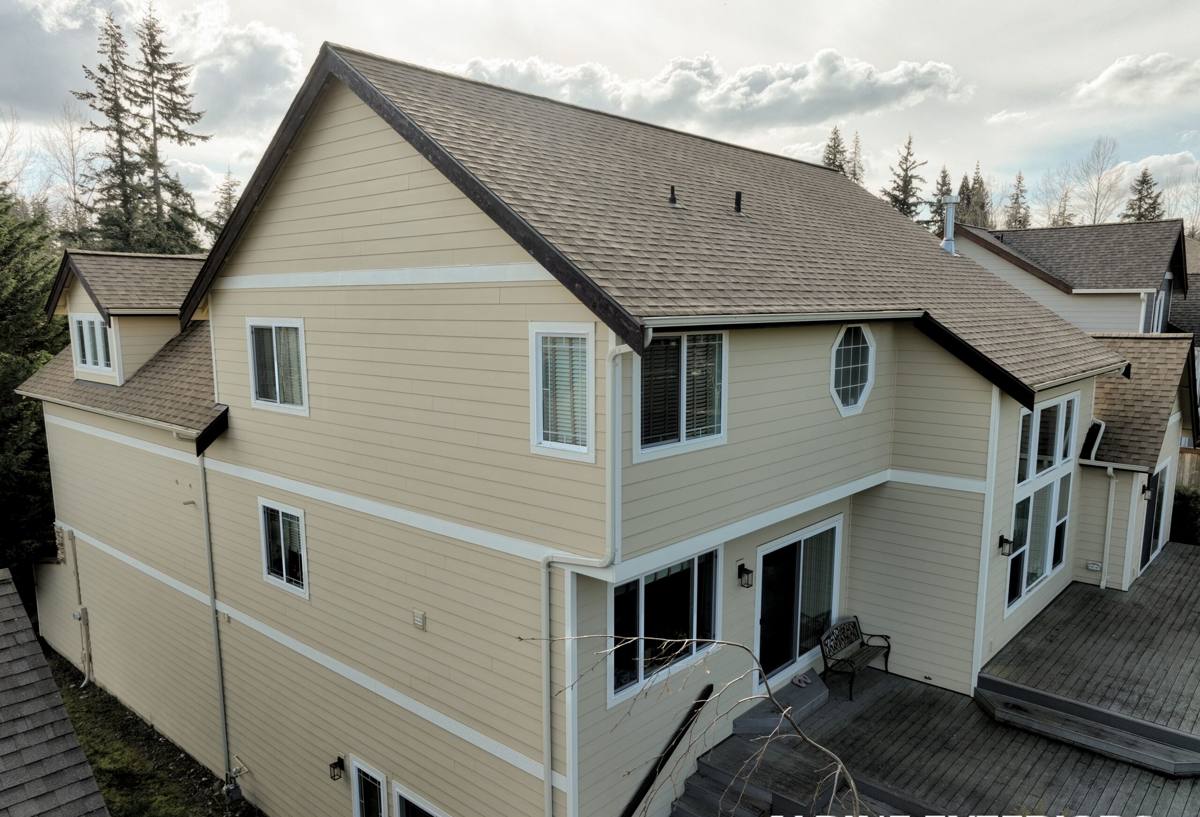
What Bellingham's Climate Does to a Deck
Three things drive almost every deck repair call we get in this part of Whatcom County:
Driving rain and standing moisture
Bellingham doesn't just get rain, it gets rain pushed sideways by wind off the Sound for days at a stretch. Water finds its way under ledger boards, behind rim joists, and into any gap where two pieces of wood meet without flashing between them. A deck that looks fine from the top can have soft, rotting framing underneath simply because water has been sitting where it shouldn't for a few winters.
Salt air and metal fatigue
Being close to the water means a steady low dose of salt in the air. That's hard on unprotected or lower-grade fasteners, joist hangers, and structural screws. We see corrosion on deck hardware in York that you wouldn't see nearly as fast on an inland deck of the same age. Once a fastener corrodes, it loses holding strength long before it looks obviously broken.
The long moss season
Moss and algae don't just make a deck look neglected — they hold moisture against the wood surface and turn a treated board into a slow sponge. On low-sun, shaded sections of a deck (common under mature trees, which York has plenty of), moss can establish itself within a single wet season and start degrading the wood surface before anyone notices.
Signs a Deck in York Needs Repair, Not Just Cleaning
Homeowners often call us for a "cleaning" and end up needing a repair, or vice versa. Here's how to tell the difference before we even show up:
- Boards that feel spongy, springy, or noticeably softer underfoot in one area
- Visible gaps, cupping, or splitting concentrated near the house (ledger area)
- Rust streaks running down from screws, nails, or joist hangers
- A railing that wiggles or flexes when you lean on it
- Green or black staining that comes back within weeks of being cleaned off
- Stairs that feel uneven or have started to separate at the stringers
- Any spot where you can see daylight or gaps between the ledger board and the house wall
- A musty smell coming from underneath the deck, especially after a few dry days
If it's just surface graying or light moss on an otherwise solid deck, that's usually a cleaning and re-sealing job. If you're seeing softness, movement, or corrosion, that's structural, and that's what this page is about.
Repair vs. Replace: How We Help You Decide
Not every soft board means the whole deck is done. A lot of decks in York are structurally sound where it counts (main framing, footings) but have failed in the specific spots that take the most weather exposure. The table below is a general guide, not a quote — every deck is different.
| Condition | Usually Repairable | Often Points to Replacement |
|---|---|---|
| Surface boards worn, splintering, or cupped | Yes — board-by-board replacement | Only if most of the decking is affected |
| Soft spot at ledger or rim joist | Yes, if isolated and framing below is sound | If rot has spread into multiple joists |
| Loose or wobbly railing | Yes — usually a fastener or post-mount fix | Rarely requires full replacement |
| Corroded hardware, otherwise solid wood | Yes — hardware swap-out | No, unless corrosion caused wood damage |
| Undersized or failing footings/posts | Sometimes, with sistering or reinforcement | Often, if settling has affected the whole structure |
| Widespread rot across multiple framing members | No | Yes |
Cost to repair generally runs a fraction of full replacement, but it depends heavily on how much of the structure is affected and how easy it is to access the damaged sections. We give an honest answer on-site rather than assuming the worst before we've actually opened anything up.
What a Correct Deck Repair Actually Involves
A repair that just swaps a bad board for a new one without addressing why it failed is a repair you'll be paying for again in a few years. Here's what we actually check and address:
The ledger board connection
This is where the deck attaches to the house, and it's the single most common failure point we find in this climate. If flashing was missed or installed wrong originally, water has likely been getting behind it for years. We don't just replace a rotted ledger — we correct the flashing detail so it doesn't happen again.
Joists and framing
Any joist showing soft spots gets probed, not guessed at. Depending on severity, that can mean sistering a new joist alongside the old one or replacing the section outright. We also check joist hangers for corrosion, since a hanger that's lost strength can fail well before the wood around it looks bad.
Fasteners and hardware
Given the salt air here, we use fasteners and hardware rated for exterior/coastal exposure, not general-purpose hardware store screws. This is one of the cheapest parts of a repair and one of the most consequential if it's done wrong.
Decking surface
Whether it's wood or composite, we match board profile and fastening pattern as closely as possible so repaired sections don't stand out or perform differently than the rest of the deck.
Drainage and airflow underneath
A lot of moss and rot problems trace back to poor airflow under the deck trapping moisture. Where it's practical, we improve grading, clear vegetation, or adjust skirting to let the underside dry out between storms.
Wood vs. Composite: What We Consider on a Repair
Most decks we repair in York are pressure-treated wood, some are cedar, and a growing number have composite decking on a wood frame. Each has different repair considerations:
- Pressure-treated wood: Cheapest to repair board-by-board, but needs re-sealing after repair or it will weather unevenly next to the older boards.
- Cedar: Repairs blend better visually since cedar grays naturally, but rot can hide under a good-looking surface, so we probe more carefully.
- Composite over wood framing: The decking itself rarely rots, but the wood framing underneath still can — composite just hides the problem longer, which is why framing checks matter even more on these.
We're not going to talk you into switching materials during a repair unless the framing damage is bad enough that it makes sense to reconsider the surface too. Our standard is fixing what's actually wrong, not upselling a new deck.
Our Deck Repair Process
- On-site inspection: We walk the whole deck, check underneath where possible, and probe any soft spots you've flagged.
- Honest assessment: We tell you what's cosmetic, what's structural, and what we'd prioritize if budget is a factor.
- Written estimate: Scope, materials, and price before any work starts — no surprise change orders for things we could have identified up front.
- Repair work: Framing and structural fixes first, then decking, then railings and finish details.
- Cleanup and walk-through: We remove debris and old material, and walk the finished repair with you before we call it done.
Why a Crew That Already Works in York Matters
York is an established, tree-lined part of Bellingham with a real mix of home ages, which means a real mix of deck ages and original construction quality. We're not learning the neighborhood's quirks on your job — we already know how exposure, shade, and drainage patterns tend to vary block to block here, because we're regularly working on siding and exteriors in the same area. That means fewer surprises during the inspection and a repair plan that accounts for how this specific climate treats a deck over time, not a generic checklist written for a different part of the country.
It also means we're not disappearing after the invoice. If something about the repair doesn't hold up the way it should, we're a local call, not a company that drove in from out of town for one job.
Maintaining a Deck After It's Repaired
A repair holds up a lot longer with a small amount of seasonal upkeep. This isn't a sales pitch for a maintenance contract — it's genuinely just what keeps a Whatcom County deck from needing the same repair again in five years:
- Sweep debris and organic matter off the deck before fall rains set in
- Rinse off moss and algae as soon as you see it, before it establishes
- Check the ledger area and any spot near downspouts once a year
- Reseal or re-stain wood decking on the manufacturer's recommended cycle, not just when it looks bad
- Trim back vegetation that's shading and holding moisture against the deck
- Keep gutters and downspouts clear so water isn't dumping directly onto or under the deck
Get a Free Estimate for Your York Deck
If your deck has soft spots, wobbly railings, or moss that keeps coming back no matter how often you clean it, it's worth having someone look at it before another wet season goes by. We'll give you a straight answer about what needs fixing, what can wait, and what it's likely to cost — no pressure, no obligation. Fill out the form below and we'll set up a time to come take a look.