 Bellingham Siding
 Windows Built for the Puget Side of Bellingham
Homes in the Puget area near Bellingham sit close enough to the water that the weather isn't the same as it is a few miles inland. Salt-laden air, wind-driven rain that comes in sideways off the Sound, and a moss season that can run half the year all put extra stress on a window's frame, seals, and hardware. A window that's fine in a dry inland climate can start failing here years before it should — sticking sashes, fogged glass, soft trim, streaks of black growth in the corners of the frame. Custom windows sized and specified for this specific exposure last longer and perform better, and that's the whole point of doing the job right the first time.
This page is about one service, done for one kind of location: custom window replacement and installation for homes in the Puget area, where salt air, driving rain, and moss are the baseline conditions we design around, not exceptions.
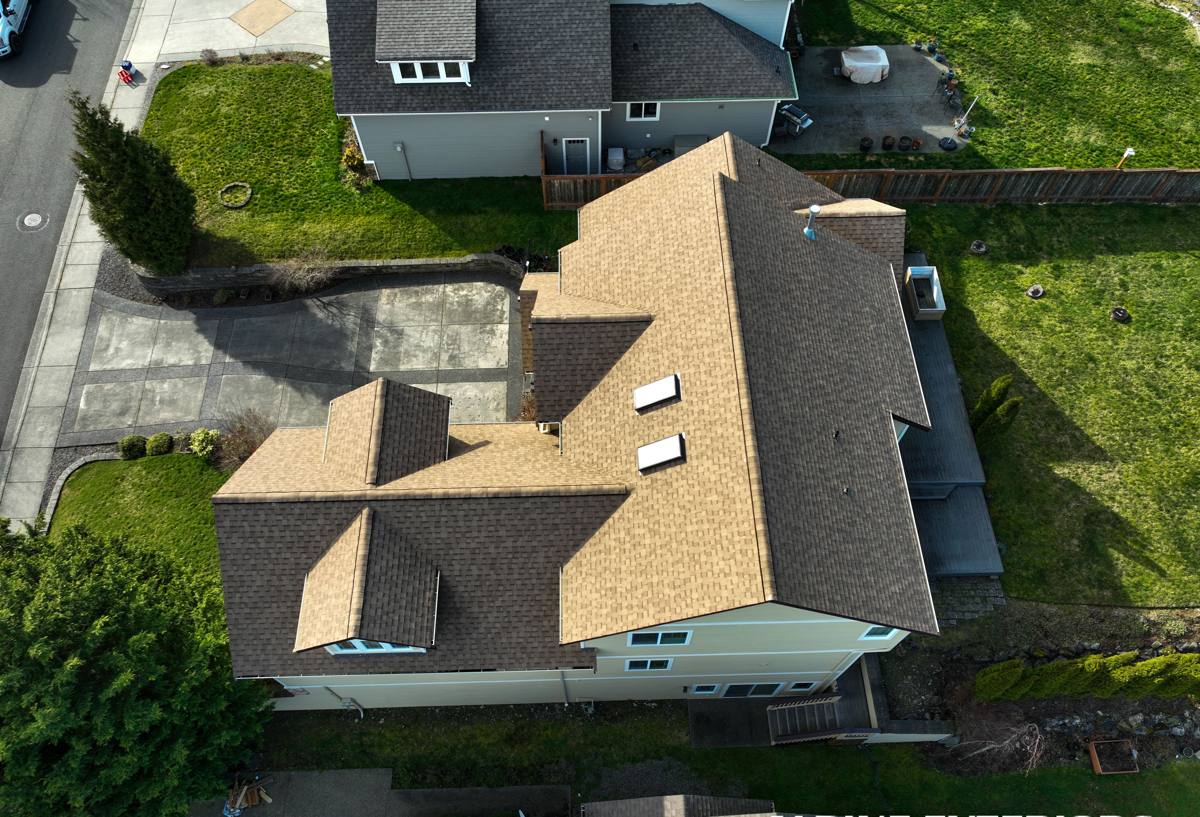
What Salt Air, Driving Rain, and Moss Season Actually Do to Windows
Each of these factors attacks a window a little differently, and understanding the failure mode helps explain why the fix isn't just "buy a nicer window."
Salt Air
Airborne salt is corrosive to exposed metal — hinges, cranks, balance systems, and lower-grade cladding fasteners. Over years, hardware that isn't rated for a marine-influenced environment can seize, pit, or discolor faster than the warranty period assumes. It also accelerates the breakdown of some sealants and finishes that weren't formulated with coastal exposure in mind.
Driving Rain
Wind off the Sound doesn't just wet a window — it pushes water sideways and upward into gaps that a calm-weather install would never have to deal with. This is a flashing and sealing problem more than a glass problem. A window can have excellent glass and still leak if the flashing detail around it wasn't built to shed wind-driven water rather than just vertical rain.
Moss and Sustained Moisture
Long stretches of damp, low-light weather let moss, algae, and mildew take hold anywhere water lingers — sill tracks, the bottom corners of frames, and trim that doesn't get enough sun or airflow to dry out between storms. On older windows this shows up as soft or discolored wood, sticky tracks, and a musty smell near the window when it rains. It's less a defect in the original window and more a sign that the surrounding assembly was never built to dry out fast in this climate.
What "Correct" Looks Like for a Puget-Area Window Job
A window replacement here has to account for all three factors at once, not just swap old glass for new. That means:
- Frame and cladding materials chosen for corrosion and moisture resistance, not just appearance
- Hardware rated for coastal or marine-adjacent exposure
- Flashing details built to shed wind-driven rain, not just gravity-fed drainage
- Sealants and gaskets that stay flexible through repeated wet-dry cycles
- Sill and trim details that let water drain and the assembly dry out between storms
- Glass and gas-fill specs that hold up to sustained damp and temperature swings without fogging
Skip any one of these and the window itself can be excellent quality and still underperform in this exposure.
Choosing the Right Frame Material
There's no single "best" window material — the right call depends on how exposed the home is, what the trim and siding look like, and what the homeowner wants to maintain. Here's how the common options stack up specifically against salt air, wind-driven rain, and moss:
| Frame Material | Salt Air Behavior | Rain/Moisture Behavior | Maintenance |
|---|---|---|---|
| Vinyl | Doesn't corrode; color can chalk over many years of coastal sun and salt exposure | Handles moisture well if seams and welds are sound | Low — occasional cleaning |
| Fiberglass | Very stable; resists corrosion and expands/contracts close to glass, reducing seal stress | Excellent — dimensionally stable in wet-dry cycles | Low |
| Aluminum | Needs a marine-grade finish or it can pit/corrode over time near the water | Conducts cold and can condense more without a thermal break | Moderate |
| Wood / Wood-Clad | Interior wood is fine; exterior faces need a durable, well-maintained cladding or finish | Most vulnerable to rot if flashing or finish fails; needs the best drainage detailing | Highest — periodic finish upkeep |
We're honest with homeowners about the trade-off with wood-clad and painted wood exteriors in this exposure: they can look great, but they're the least forgiving of a flashing mistake or a skipped maintenance cycle, and moss season doesn't give exposed wood much of a break. If a homeowner wants that look, we'll talk through what upkeep it actually takes rather than downplaying it.
Common Cost Factors
| Factor | Why It Moves the Price |
|---|---|
| Frame material | Fiberglass and higher-grade vinyl typically cost more upfront than basic vinyl or standard aluminum |
| Glass package | Triple-pane, upgraded Low-E coatings, and argon fill add cost but pay back in comfort and condensation control |
| Opening condition | Rot, soft framing, or old flashing found during removal adds repair scope before the new window goes in |
| Window size and configuration | Larger units, custom shapes, and multi-panel combinations cost more to fabricate and install |
| Access and site conditions | Second-story or hard-to-reach openings take longer and need more setup |
We won't quote a number without seeing the actual openings — anyone who does is guessing, and guesses on window jobs are usually wrong in one direction or the other.
Glass Packages That Actually Earn Their Keep Here
Not every upgrade is worth it everywhere, but a few are worth taking seriously in this climate specifically:
- Low-E coatings reduce heat loss and help control interior condensation during the long stretches of cool, damp weather typical of a Whatcom County winter
- Argon or krypton gas fill improves insulation value without adding bulk, which matters when temperature swings between a cold, wet night and a milder day drive condensation on interior glass
- Triple-pane glass is worth discussing on north- and west-facing openings that take the brunt of wind and rain off the water, less critical on sheltered or south-facing openings
- Warm-edge spacers resist the seal failure that leads to fogged double- or triple-pane glass, which shows up faster in homes with constant humidity swings
We'll spec glass based on which direction each opening actually faces and how exposed it is, not a single package for the whole house.
Installation Details That Matter More Here Than Elsewhere
The window unit itself is maybe half the job. The other half is how it's flashed, sealed, and integrated with the existing wall assembly — and that's where wind-driven rain finds every shortcut.
Flashing and Water Management
Every opening gets flashed to direct water out and down, never letting it pool against the frame or work its way behind the siding. On a home taking direct wind off the Sound, sill pan flashing and properly lapped house wrap or building paper aren't optional extras — they're the difference between a window that sheds a storm and one that leaks quietly into the wall cavity for years before anyone notices.
Sealant Selection and Placement
We use sealants rated to stay flexible through repeated freeze, soak, and dry cycles rather than the cheapest bead that will crack in a season or two. Sealant also has to go in the right place — sealing the wrong joint can trap water inside the wall instead of keeping it out.
Drainage and Drying Path
Sills and trim are detailed so water that does get in has somewhere to go, and so the assembly can dry out between storms instead of staying damp — which is exactly the condition moss and mildew need to take hold.
Our Process for Custom Window Projects in Puget
- On-site assessment — we look at each opening's exposure (direction, overhang, existing damage) before recommending materials or glass
- Custom measurement and spec — every window is sized and specified to the actual opening, not a stock assumption
- Removal and inspection — old windows come out carefully so we can check the framing and flashing underneath for hidden rot or moisture damage before it's covered back up
- Installation with proper flashing and sealing — built for wind-driven rain, not just calm-weather drainage
- Final check and cleanup — operation, seal, and site cleanup confirmed before we call it done
Why a Crew That Already Works This Area Matters
A contractor who mostly works drier, more inland jobs can still do competent work — but they may not default to marine-grade hardware, wind-driven-rain flashing details, or drainage-first trim work unless a homeowner specifically asks. A crew that regularly works homes in this part of Whatcom County builds those details in as standard practice, because they've seen what skipping them costs a homeowner five or ten years later.
A few things worth asking any contractor before hiring them for a window job in this exposure:
- Do they spec hardware and finishes for coastal/marine exposure, or use standard inland-grade components by default?
- Can they explain their flashing detail for wind-driven rain specifically, not just standard vertical drainage?
- Do they inspect the framing behind the old window before installing the new one, or just swap and caulk?
- Are they licensed, insured, and willing to put the scope and materials in writing?
- Do they give a straight answer about maintenance trade-offs instead of just upselling the most expensive option?
Maintaining Your New Windows Through Moss Season
Even the right windows, correctly installed, benefit from a little seasonal attention in this climate:
- Clear debris and moss buildup from sills and tracks before it holds moisture against the frame
- Check weep holes (the small drainage openings in the sill) periodically to make sure they're not clogged
- Rinse salt residue off exterior frames and glass a few times a year, especially after storms
- Wipe down interior condensation promptly during cold, damp stretches to protect sills and trim
- Watch for soft spots, discoloration, or a musty smell near any window and have it checked before it becomes a bigger repair
If your windows are showing their age — sticking, fogging, drafty, or growing moss in the corners — we're happy to take a look and give you a straightforward, no-pressure estimate on what it would take to fix it right for this climate. Use the form below to get started.