 Bellingham Siding
 Why Edgemoor Decks Take More Punishment Than Inland Builds
Edgemoor sits close enough to Bellingham Bay that salt-laden air is a daily fact of life, not an occasional weather event. Combine that with the driving rain that comes off the water most of the year and the long, damp moss season that follows it, and you've got three separate forces working against an outdoor structure at the same time. A deck built the same way you'd build one in Spokane or Yakima simply won't hold up the same way here — the fasteners corrode faster, the wood stays wet longer between rains, and anything shaded by mature trees or a north-facing slope grows moss and algae almost year-round.
None of this means a deck in Edgemoor can't last decades. It means the details that don't matter much in a dry climate — fastener grade, air gap under the boards, ledger flashing, footing drainage — matter here from day one. Get those right and you get a deck that ages gracefully. Skip them and you're looking at soft spots, rust streaks, and slick, moss-covered boards within a few seasons.
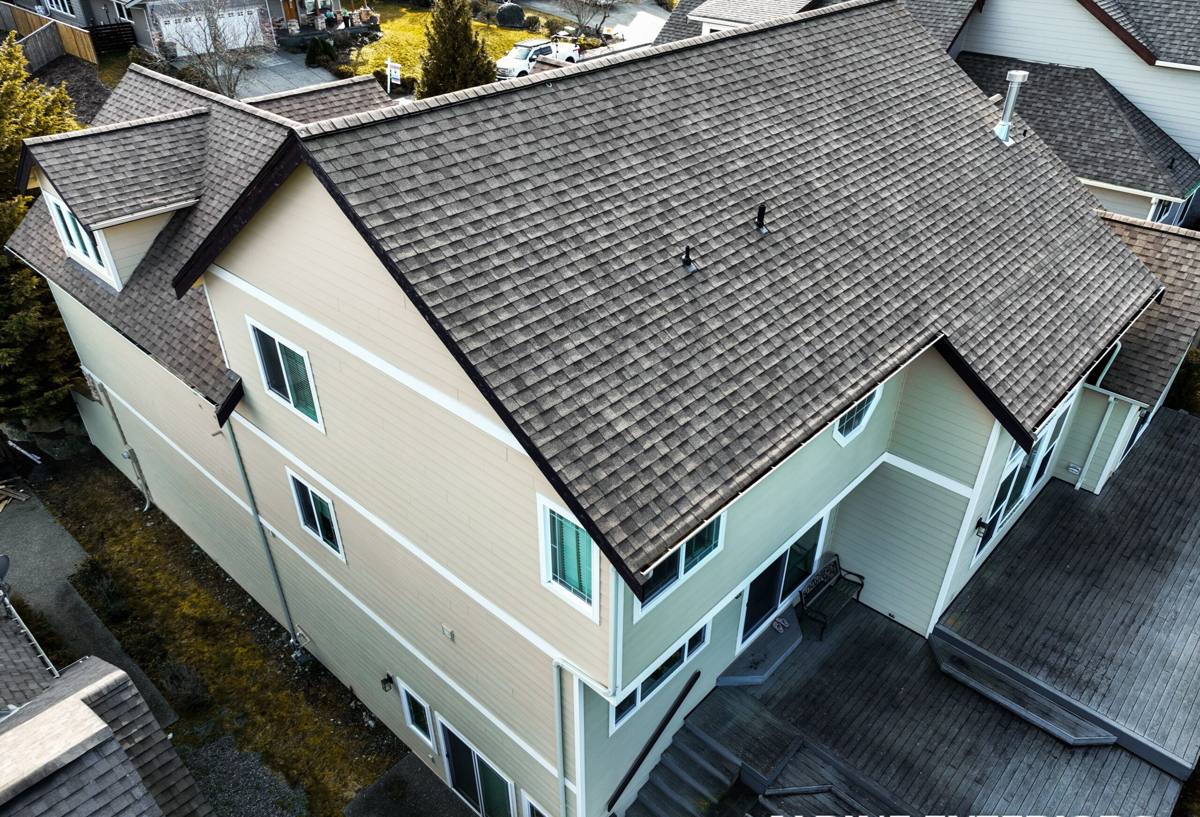
What a Correctly Built Deck Actually Involves
A lot of deck problems we get called out to fix in Bellingham neighborhoods near the water didn't come from bad wood or a bad contractor's math — they came from skipped steps that don't show up until year three or four. A correct build, from the ground up, includes:
- Footings set below frost depth and sized for the actual soil conditions on the lot, not a generic minimum
- A properly flashed ledger board where the deck attaches to the house, so water is directed away from the rim joist instead of into it
- Joist tape or a comparable membrane on top of every joist, protecting the wood from standing moisture under the decking
- Corrosion-rated fasteners and hardware matched to the decking and framing material, not just "whatever's in stock"
- Consistent board spacing and airflow underneath so the structure can dry out between rain events
- Grading and drainage around the posts and footings so water moves away from the structure, not toward it
Any one of these done poorly can cut years off a deck's life. Done right, they're mostly invisible once the project is finished — which is exactly the point.
The Ledger Connection Deserves Extra Attention
Where the deck ties into the house is the single most common failure point we see, and it's almost always a water intrusion problem rather than a structural one. Proper flashing — installed so it sheds water outward and downward, layered correctly with the house's existing weather barrier — is non-negotiable on a home exposed to driving rain off the bay. This is also the connection point building inspectors in Bellingham and Whatcom County scrutinize most closely, for good reason.
Choosing Decking Material for Edgemoor's Climate
There's no single "best" decking material — there's a best material for your budget, your maintenance appetite, and how exposed your specific lot is to salt air and shade. Here's how the common options actually perform in this environment:
| Material | Salt Air Behavior | Moss/Algae Resistance | Maintenance |
|---|---|---|---|
| Cedar | Naturally rot-resistant, but fasteners and hardware corrode faster near the water | Needs regular cleaning and periodic sealing to resist growth in shaded areas | Moderate to high — annual cleaning, re-oil or reseal every 2-3 years |
| Pressure-treated fir/hem-fir | Treatment resists rot; hardware is the weak point in salt exposure | Prone to moss buildup if not cleaned; darker, absorbs more moisture | High — cleaning, staining, and fastener checks |
| Composite decking | Doesn't rot or corrode itself; check hidden fastener spec | Better resistance, but still needs periodic washing in shaded, damp spots | Low — occasional wash, no staining or sealing |
| PVC/capped polymer | Excellent — no organic material for salt or moisture to attack | Best resistance among common options | Lowest — soap-and-water cleaning only |
We're upfront with Edgemoor homeowners about the trade-off: composite and PVC cost more up front but ask almost nothing of you afterward, which matters a lot in a spot where moss and mildew are working against you most of the year. Real wood costs less initially and gives you the look a lot of people want, but it demands a real maintenance habit — skip a year or two of cleaning and sealing, and it shows.
Fasteners and Hardware: Where Salt Air Does the Most Damage
Salt air doesn't rot wood, but it accelerates corrosion in metal, and metal hardware is what's actually holding your deck together. On a property this close to Bellingham Bay, we don't use standard galvanized fasteners as a default — we spec stainless steel or heavy-duty coated hardware rated for coastal exposure, especially on structural connectors like joist hangers, post bases, and ledger bolts. The price difference between standard and coastal-rated hardware is small compared to the cost of tearing into a deck a few years early because hangers rusted through.
This is one of those details that's completely hidden once the decking is down, which is exactly why it's worth asking your contractor about directly before work starts, not after.
Drainage, Airflow, and Keeping Moss Off Your Deck
Moss needs three things to take hold: moisture, shade, and something to grip. Edgemoor's tree cover and the region's long wet stretches supply the first two for free, so the deck itself needs to work against the third. That means:
- Board spacing wide enough for water to drain through rather than pool on the surface
- A clear air gap underneath the decking so both sides of each board can dry
- Grading that carries water away from posts and footings instead of letting it collect
- Keeping overhanging branches trimmed back where practical, since constant leaf litter and shade are what let moss establish in the first place
None of this eliminates moss entirely in a climate like ours — it's realistic to expect some seasonal cleaning no matter what you build. But a deck designed with drainage and airflow in mind needs a fraction of the maintenance of one that wasn't.
Permits and Code Considerations in Bellingham and Whatcom County
Most custom deck projects in the area require a building permit, particularly anything attached to the house, elevated more than a couple feet, or built with guardrails. Requirements we routinely account for include footing depth and frost protection, guardrail height and baluster spacing, stair geometry, and proper ledger attachment — the same connection point that matters most for water management is also the one inspectors check most carefully. We handle the permit process as part of the job rather than leaving it for the homeowner to navigate, and we build to pass inspection the first time, not to squeak by.
Our Process for an Edgemoor Deck Project
Because we already work in this neighborhood, a lot of the site-specific guesswork is out of the way before we ever show up. Our process generally runs:
- Site visit and assessment — we look at sun exposure, shade patterns, existing drainage, soil conditions, and how close the site sits to prevailing wind and rain off the bay
- Design and material selection — sized to your budget and how much upkeep you actually want to do, not a one-size-fits-all package
- Permit handling — drawings and applications submitted and tracked through the city or county process
- Construction — footings, framing, flashing, and decking installed in the sequence that protects the structure long-term, not just the sequence that's fastest
- Final walkthrough — we go over the finished deck with you, including what maintenance it actually needs and on what schedule
We build the framing and flashing details the same way whether it's a small platform deck or a large multi-level build, because those details are what determine whether the deck is still solid in fifteen years.
Maintenance Checklist for a Coastal Bellingham Deck
Whatever material you choose, a little seasonal attention goes a long way in this climate. A reasonable annual routine looks like:
- Sweep off leaves, needles, and debris regularly, especially in fall and through moss season
- Wash the surface with a deck cleaner or diluted solution rated for the material — pressure washing wood requires a light touch to avoid damaging the grain
- Check hardware and fasteners for early rust or corrosion, particularly around ledger bolts and stair connections
- Reseal or restain wood decking every 2-3 years, or sooner if water stops beading on the surface
- Confirm gaps between boards are clear of debris so water keeps draining as designed
- Trim back overhanging vegetation that's feeding shade and moisture onto the deck surface
Why It Matters That We Already Work Edgemoor
A deck built by a crew that's never worked this specific stretch of Bellingham will often get the general climate right and still miss the details that are specific to Edgemoor — how close a given lot sits to salt spray, which yards hold shade and moisture longest through moss season, and what the county and city inspectors here actually want to see at each stage. We're not guessing at any of that. We've built and repaired decks in this neighborhood, seen which details hold up and which don't, and we build every new project around what actually works here rather than a generic spec sheet.
If you're planning a new deck or replacing one that's showing its age, we're happy to come take a look and talk through honest options for your property — no pressure, no obligation. Reach out using the form below to set up a free estimate.