 Bellingham Siding
 Cordata's Climate Is Harder on Siding Than It Looks
Cordata sits in north Bellingham, close enough to Bellingham Bay and the Salish Sea that homes here deal with a version of Pacific Northwest weather that's tougher on exterior materials than people expect. It's not one big storm that causes problems — it's the combination of three things working on your siding at the same time, month after month, year after year.
Salt Air and Moisture
Whatcom County's proximity to saltwater means airborne salt and moisture settle on exterior surfaces even at homes that aren't waterfront. Salt-laden moisture accelerates corrosion of fasteners and hardware, and it keeps wood-based siding damp longer than it would stay in a drier inland climate. Over years, that constant low-grade moisture exposure is what separates siding that holds up from siding that doesn't.
Driving Rain and Wind-Driven Water
Bellingham gets a lot of rain, but the bigger issue for siding is wind-driven rain — storms that push water sideways into wall assemblies rather than letting it run straight down and off. That kind of weather finds every gap in flashing, every under-caulked seam, and every place where a wall assembly wasn't built to shed water on purpose. A siding product and installation that aren't designed for wind-driven rain will eventually let water behind the cladding, and once that happens the damage is often invisible until it's expensive.
A Long Moss Season
Cordata's tree cover and the region's extended damp season give moss and algae a long runway to establish themselves on north-facing walls, shaded siding, and anywhere airflow is limited. Moss holds moisture against the surface it's growing on, which is a problem for any siding material that isn't inherently resistant to sustained dampness. It's also just a maintenance headache — nobody wants to be pressure-washing green streaks off their house every couple of years.
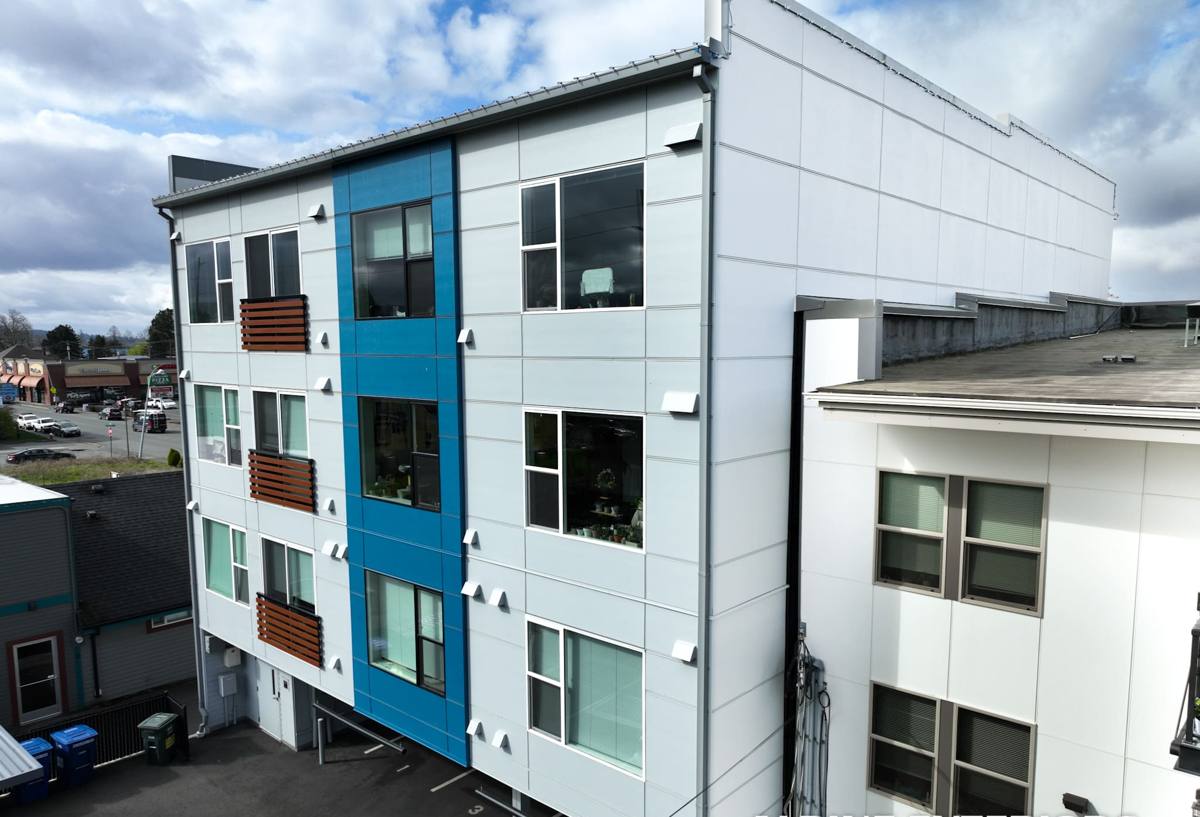
What James Hardie Brings to a Cordata Home
James Hardie fiber cement siding is engineered specifically to handle conditions like these. It's not wood, so it doesn't feed moss and algae growth the way cedar or untreated wood siding does. It's non-combustible, which matters more each year as wildfire smoke and ember exposure become a regional concern even west of the Cascades. And James Hardie's HZ5 product line is formulated for the wetter, milder climate zones that include Western Washington — it's not a one-size-fits-all product shipped in from a dry-climate factory.
The factory-applied ColorPlus finish is a meaningful part of that performance, not just a convenience. It's baked on under controlled conditions with better adhesion and UV stability than a field-applied paint job can match, which means fewer repaints and a more even, long-term appearance on a home that's going to see a lot of gray, wet weather.
What a Correct Installation Actually Involves
Fiber cement siding is only as good as the assembly it's installed into. A huge share of the siding problems we see on Cordata homes aren't material failures — they're installation shortcuts that let water get where it shouldn't.
Weather-Resistive Barrier and Drainage Plane
Every wall needs a continuous weather-resistive barrier behind the siding, and in a climate this wet, a drainage gap (rain screen) between that barrier and the back of the siding makes a real difference. It gives any moisture that does get past the cladding a path to drain and dry out instead of sitting against the wall sheathing.
Flashing and Clearances
Every window, door, deck ledger, and roof-to-wall intersection is a place where water wants to get in. Correct flashing at these transitions, plus proper clearance between the bottom of the siding and the ground, roofline, or a deck surface, keeps standing water and splash-back away from the material's edges — which is where fiber cement is most vulnerable if it's left unprotected.
Fastening and Joints
James Hardie specifies fastener type, spacing, and placement for a reason — get it wrong and you either compromise wind resistance or create tiny gaps where moisture can wick in. Butt joints and seams need to be treated the way the manufacturer specifies, not just caulked and hoped for. This is the kind of detail that doesn't show up in a curbside look at a finished job but shows up ten years later in how the siding is holding up.
Cost Factors for a Cordata Siding Project
Every home is different, and we don't quote a project without seeing it, but these are the main variables that move the price on a typical Cordata job:
| Factor | Why It Matters |
|---|---|
| Home size and wall complexity | More square footage and more corners, dormers, and angles mean more cutting, more trim, and more labor hours |
| Existing siding removal | Tear-off of old wood, vinyl, or damaged siding adds time and disposal cost versus a bare or already-stripped wall |
| Sheathing and moisture damage found underneath | Rot or damaged sheathing discovered during tear-off has to be repaired before new siding goes on — this is common on older homes with a history of water intrusion |
| Siding profile chosen | HardiePlank lap siding, HardiePanel, and HardieShingle have different material and labor costs |
| Trim, soffit, and fascia work | Full exterior refreshes that include trim and soffit cost more than a straight siding swap but hold up better long term |
| ColorPlus vs. field-painted finish | Factory-finished ColorPlus panels cost more up front but remove the need for an immediate paint job |
How Our Process Works
We keep the process straightforward because homeowners have usually already dealt with enough surprises from contractors before they call us.
- Inspection and moisture check: we look at the current siding, wall assembly where accessible, and any signs of past water intrusion before we recommend anything.
- Product and color selection: we walk through James Hardie lines and ColorPlus color options based on your home's style and the exposure it gets.
- Written estimate: a clear scope and price, with the cost factors above spelled out rather than buried in a lump sum.
- Tear-off and prep: removal of old material, repair of any damaged sheathing found underneath, and installation of the weather-resistive barrier and drainage plane.
- Installation to manufacturer spec: correct fastening, flashing, and clearances at every transition — not just the visible field of siding.
- Final walkthrough and warranty registration: we register the installation so the transferable warranty is active from day one.
Why a Crew That Already Works Cordata Matters
Siding installation isn't just a product install — it's a building science problem specific to the site. A crew that's already worked in Cordata and the surrounding north Bellingham area knows how the local exposure to salt air, wind direction off the bay, and shaded, moss-prone lots tends to show up on real houses, not just in a manufacturer's climate zone chart. That means fewer surprises during tear-off and a better read on where a given home actually needs extra attention — a north-facing wall with heavy tree cover, for example, gets treated differently than a south-facing wall in full sun.
Working within Whatcom County and the City of Bellingham's permitting process also means fewer delays. Permit requirements, inspection scheduling, and disposal logistics for tear-off material all move faster when a crew already has that process down rather than learning it project by project.
Keeping Moss Off James Hardie Siding
James Hardie siding doesn't feed moss growth the way wood does, but moss and algae can still take hold on the surface in a climate as damp as this one, especially on shaded walls. Fiber cement makes that easy to manage because it holds up to cleaning far better than wood or vinyl.
- Rinse shaded and north-facing walls with a garden hose or low-pressure wash once or twice a year to prevent buildup before it sets in
- Keep shrubs and tree branches trimmed back from siding so walls get airflow and some sun exposure
- Clean gutters regularly — overflow running down a wall is one of the most common causes of localized moss and staining
- Avoid high-pressure washing directly at seams and joints, which can force water where it doesn't belong
- Address any moss or algae early with a manufacturer-appropriate cleaner rather than letting it build up over multiple seasons
- Have caulking and joints checked periodically, since UV and moisture cycling can wear caulk out well before the siding itself shows any age
Choosing the Right James Hardie Line for a Cordata Home
James Hardie makes several siding profiles, and the right one depends on the home's style and exposure as much as personal taste.
HardiePlank lap siding is the most common choice for traditional home styles and gives the classic horizontal-board look with strong wind and moisture performance. HardiePanel vertical siding works well for modern designs or as an accent alongside lap siding. HardieShingle siding replicates a cedar-shingle look for homes that want that texture without the maintenance burden that comes with real wood in a climate this wet. All three are available in ColorPlus factory finishes, which matters most on walls that take the brunt of Cordata's driving rain and shaded, damp conditions.
Get a Local, No-Pressure Estimate
If your Cordata home's siding is showing moss, cracking, warping, or you're just planning ahead for a replacement, we're happy to come take a look and give you a straightforward assessment — no pressure, no upsell to a product we don't stand behind. Use the form below to request a free estimate.