 Bellingham Siding
 Building a Deck That Holds Up in Cordata
Cordata sits in north Bellingham, and like the rest of Whatcom County it gets a steady diet of driving rain, damp shoulder seasons, and a moss season that seems to stretch longer every year. A deck out here isn't just a weekend project that sits pretty for a few summer barbecues — it's an outdoor structure that has to shed water for ten months out of twelve and resist the salt-tinged air that drifts in off Bellingham Bay. Homes in this part of Bellingham range from newer builds to older single-family lots, and whether your deck is attached to a newer home or bolted onto a house from the 80s, the same climate rules apply: water management and material choice matter more here than in drier parts of the state.
We build and repair decks specifically with this climate in mind, not a generic Pacific Northwest template. That means paying close attention to ledger flashing, joist protection, and drainage details that a lot of standard deck builds skip.
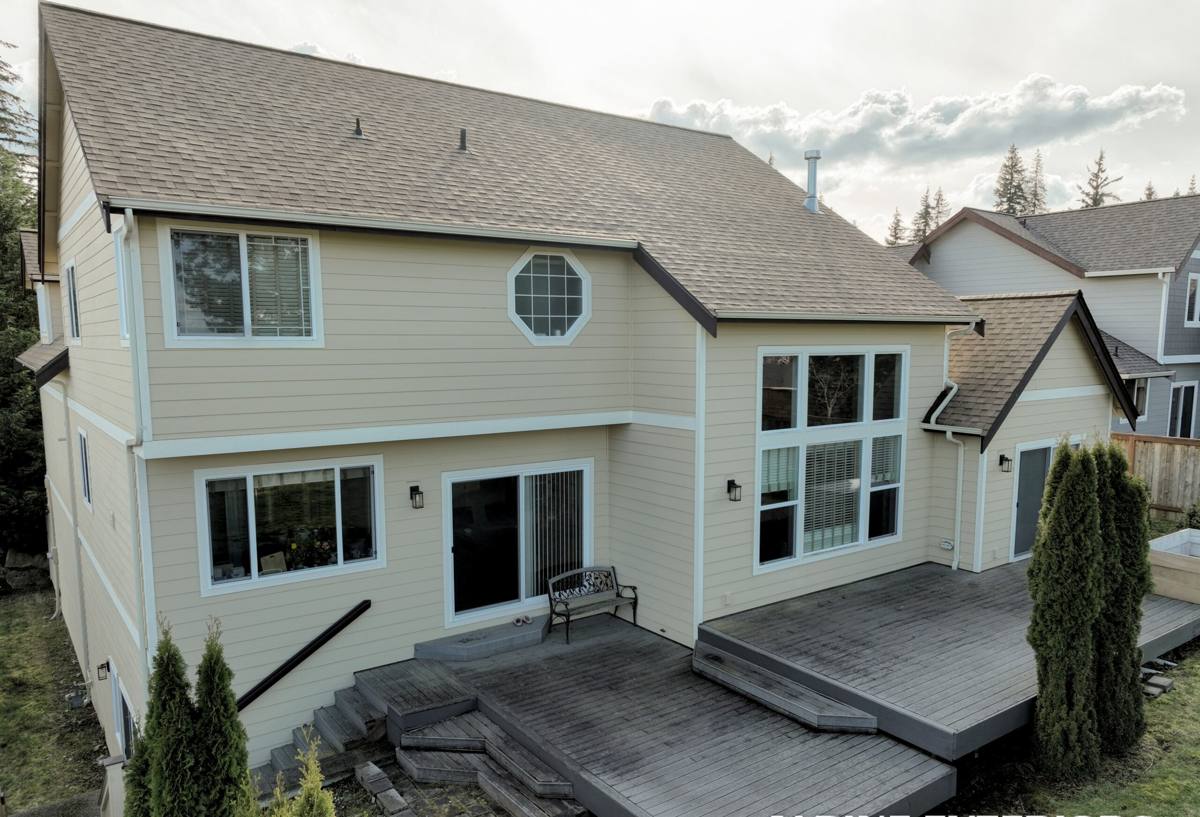
What Cordata's Climate Does to a Deck
Three things drive almost every deck problem we see in this part of Whatcom County:
- Driving rain — wind-blown rain gets pushed sideways into ledger boards, stair stringers, and any horizontal surface that isn't properly flashed or sloped.
- Salt air — Bellingham Bay is close enough that airborne salt accelerates corrosion on fasteners, joist hangers, and any exposed metal hardware, especially on decks with western or coastal exposure.
- Extended moss season — shaded decks under trees or on the north side of a house can stay damp for weeks at a stretch, which is exactly the environment moss and algae need to take hold on boards and between deck planks.
None of these are dealbreakers, but they change how a deck should be designed and maintained. A deck built without them in mind will look fine for a season or two and then start showing soft spots, streaking, or a slick green film that makes stairs and landings genuinely unsafe.
Where We See the Most Damage
The ledger board — where the deck attaches to the house — is the single most common failure point. If flashing wasn't installed correctly, or wasn't installed at all, water works its way behind the ledger and into the rim joist and framing underneath. By the time it's visible from outside, there's often already rot in wood you can't see. Fastener corrosion is the second most common issue, particularly on older decks built with hardware that wasn't rated for coastal exposure.
Decking Material Options for This Area
There's no single "best" decking material — it depends on your budget, how much upkeep you want to do, and how exposed the deck is to rain and shade. Here's how the common options compare for a Cordata property:
| Material | Moisture Performance | Maintenance | Typical Lifespan |
|---|---|---|---|
| Pressure-treated lumber | Good if sealed regularly; prone to checking and staining if neglected | Annual cleaning, re-sealing every 1-2 years | 15-20 years |
| Cedar | Naturally rot- and insect-resistant, but still needs sealing in this climate | Cleaning plus periodic oil or stain | 15-25 years |
| Composite decking | Excellent — doesn't absorb water or rot | Occasional washing to prevent surface mildew/moss film | 25-30+ years |
| PVC/capped polymer | Excellent — fully sealed surface | Low; periodic washing | 25-30+ years |
Composite and capped polymer boards have become popular around Bellingham precisely because they don't care about the rain — they won't rot, splinter, or need yearly staining. The trade-off is upfront cost. Wood is cheaper to install but asks for more of your time every year, and in a climate with this much moisture, skipping maintenance shows up fast in the form of graying, cupping, or soft boards.
What a Correct Job Actually Involves
A deck that's going to last in this climate needs more attention below the surface than above it. The visible decking boards get all the attention in photos, but the framing, flashing, and hardware underneath are what determine whether the deck is still solid in ten years.
The Details We Don't Skip
- Proper ledger flashing where the deck meets the house, with the flashing lapped correctly under the siding, not just caulked on top of it
- A water-resistant barrier or tape on top of joists to keep standing water from soaking into end grain and fastener holes
- Stainless or coated fasteners and joist hangers rated for coastal/wet exposure — standard hardware corrodes faster this close to the bay
- Slight slope away from the house so water sheets off instead of pooling against siding
- Board spacing that allows airflow underneath, which matters a lot for keeping moss and algae from taking hold in shaded spots
- Footings and posts sized and set to current Whatcom County code, especially for elevated decks
Every one of these is invisible once the deck is finished, which is exactly why it's worth asking a contractor to walk you through them before work starts, not after.
Permits and Local Code
Most deck projects in the City of Bellingham that involve structural framing, a new footing, or a deck more than 30 inches above grade require a building permit. Guardrail height, stair rise and run, and footing depth all have to meet code, and inspectors will check ledger attachment closely because it's a known failure point in this climate. We handle the permit process as part of the job so you're not the one chasing paperwork — but it's worth knowing upfront that a "quick" deck job that skips permitting can turn into a real problem at resale, when a lender or buyer's inspector asks for permit history that doesn't exist.
Our Process
We keep the process straightforward and try not to waste your time with back-and-forth:
- On-site assessment — we look at sun/shade exposure, drainage, existing structure (for repairs or replacements), and how the deck ties into the house
- Material and design discussion — honest pros and cons for wood versus composite based on your budget and how much maintenance you actually want to do
- Written estimate — clear scope, materials, and pricing, no vague allowances
- Permitting — we pull what's required and coordinate inspections
- Build — framing, flashing, and hardware done to the standards above, not just to pass a quick glance
- Final walkthrough — we go over care and maintenance specific to your deck's material and exposure
Repair, Rebuild, or Replace?
Not every deck problem means starting over. If the framing is sound and the issue is surface-level graying, moss, or a handful of soft boards, a repair or resurfacing job can add years of life for a fraction of the cost of a full rebuild. But if we find rot at the ledger, undersized or corroded footings, or framing that was never properly flashed to begin with, patching the surface just hides a structural problem that will keep getting worse under Bellingham's rain. We'll always tell you straight which category your deck falls into before we recommend a scope of work.
Maintaining a Deck Through a Whatcom County Winter
Whatever material you choose, a little seasonal upkeep goes a long way here:
- Clear leaves and debris out of gaps between boards before fall rains set in — trapped debris holds moisture and feeds moss growth
- Sweep or rinse shaded areas periodically through the wet season rather than waiting until spring
- Check and re-seal wood decking on the schedule your specific wood type needs — cedar and pressure-treated lumber have different intervals
- Inspect fasteners and hardware yearly for early rust or corrosion, especially on decks facing west toward the bay
- Keep gutters and downspouts near the deck clear so runoff isn't dumping extra water onto the structure
Why Hire a Crew That Already Works This Neighborhood
A deck built to a generic national spec sheet doesn't account for what Bellingham Bay's salt air does to fasteners, or how long a shaded corner of a Cordata backyard stays wet in November. We work decks and siding throughout this part of Whatcom County regularly enough to know which details actually matter here — the ones that don't show up until year three or four if they're done wrong. That's the difference between a deck that needs a rebuild in a decade and one that just needs an annual clean and reseal.
If you're planning a new deck, replacing an aging one, or just not sure whether what you have is still sound, we're happy to take a look and walk you through it. Reach out for a free, no-pressure estimate using the form below.