 Bellingham Siding
 Composite Decking in Cordata: What the Climate Actually Demands
Cordata sits far enough inland from Bellingham Bay that homeowners sometimes assume they're spared the worst of what the coast deals with. In practice, Whatcom County's marine climate reaches every neighborhood in the city, Cordata included. Moisture-laden air off the Salish Sea, long stretches of driving rain from fall through spring, and short, low-angle winter sun that lets moss and algae get a foothold on any shaded, north-facing surface — a deck here deals with all of it, whether it's three blocks from the water or three miles inland.
That combination is hard on decking materials in specific ways. Wood fiber swells and contracts as it wets and dries, which loosens fasteners and opens gaps for water to sit. Shaded corners near fences, mature trees, and taller homes stay damp for days after a storm, which is exactly the environment moss and mildew need to establish. And because Cordata gets real freeze-thaw cycles in winter, any water that gets trapped in a board, a joint, or a fastener hole has the chance to freeze, expand, and do damage that shows up as cracking or splitting months later.
Composite decking doesn't eliminate every one of these issues, but it's built to handle the ones that matter most here — moisture cycling and surface growth — better than solid wood does, provided it's installed correctly. That last part is the catch. A composite deck installed without attention to drainage, ventilation, and fastening will still grow moss, still trap water, and still fail early. The material helps; the installation is what actually protects the deck.
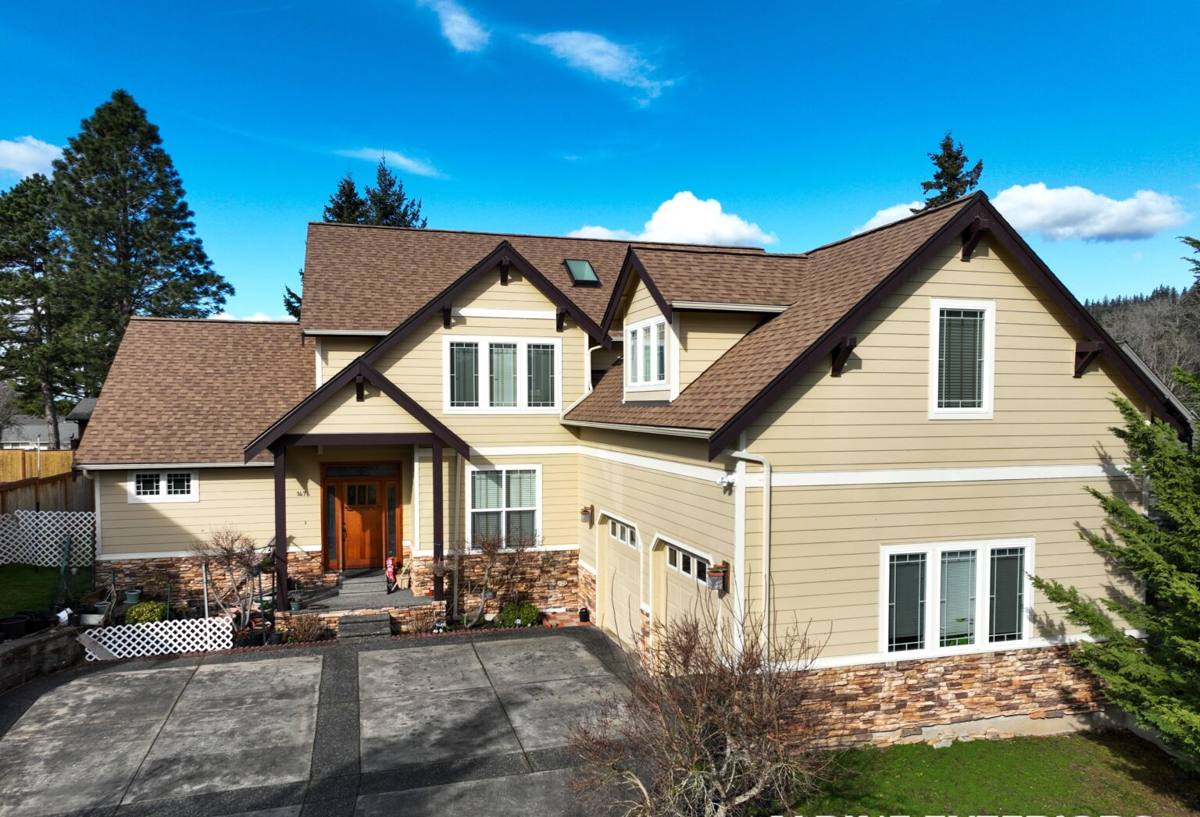
Why Composite Makes Sense for This Neighborhood
We install a range of decking materials across Bellingham, and we're upfront with homeowners about the tradeoffs of each. For a typical Cordata backyard deck — moderate shade from neighboring trees and fences, regular rain exposure, and a homeowner who doesn't want a recurring maintenance chore — composite is usually the better long-term fit. Here's how the common options stack up for this climate specifically:
| Material | Moisture Behavior | Moss/Algae Resistance | Maintenance Load |
|---|---|---|---|
| Pressure-treated wood | Absorbs water, swells and shrinks seasonally | Low — porous surface holds moisture and organic buildup | Annual cleaning, sealing, and board replacement over time |
| Cedar | Naturally moisture-resistant but still absorbs over time | Moderate — still needs regular cleaning in shaded spots | Periodic sealing and spot maintenance |
| Capped composite | Non-absorbent shell resists swelling and rot | Higher — smooth cap sheds water, slows organic growth | Periodic washing; no sealing or staining |
| Uncapped composite | Some moisture absorption into the core over time | Moderate — more prone to surface staining than capped boards | More frequent cleaning than capped composite |
None of these materials is maintenance-free, and we tell homeowners that plainly. What composite changes is the type of maintenance — washing and occasional attention instead of sanding, sealing, and replacing boards that have started to cup or split.
What a Correct Composite Deck Build Involves
The board itself is only part of the job. Most of the problems we get called out to fix on existing decks in this area trace back to what's underneath the boards, not the boards themselves. A build that's going to hold up through Whatcom County winters needs:
Framing and Substructure
Composite decking is heavier than wood per square foot, and it has its own manufacturer-specified joist spacing — usually tighter than what's standard for a wood deck. Framing built to wood-deck spacing under composite boards leads to noticeable deflection and, eventually, fastener pull-through. We frame to the board manufacturer's spec, not a generic standard.
Ventilation and Drainage
Composite doesn't rot, but the framing underneath it still can if air can't move and water can't drain. Low-clearance decks close to grade, or decks built tight against a house foundation, need real attention to slope and airflow so water doesn't pool against ledger boards or posts.
Fasteners and Hidden Clips
Hidden fastening systems keep the deck surface clean and reduce the exposed metal points where water can collect and corrode. We use fasteners rated for the specific board profile — mismatched clips are a common cause of boards working loose after a season or two of freeze-thaw cycling.
Flashing at the House
Where the deck meets the house, ledger flashing has to shed water away from the wall assembly, not just sit there decoratively. This is one of the most commonly skipped details on lower-cost deck builds, and it's the one most likely to cause hidden water damage to the house itself over time.
Our Process, Start to Finish
Homeowners in Cordata generally want to know two things upfront: what we're actually going to do, and what it's going to disrupt. Here's the shape of a typical project:
- On-site assessment. We look at existing framing (if there's a deck to replace), grade and drainage around the site, sun/shade exposure, and how the deck connects to the house.
- Material and layout discussion. We walk through board options, color and grain choices, railing and fastener systems, and where board seams and picture-framing will fall.
- Written estimate. Scope, materials, and price in writing before any work starts — no verbal-only agreements.
- Demo and framing. Removal of the old structure if applicable, then framing built to the new board manufacturer's spec.
- Decking, fascia, and railing installation. Boards, edge treatments, and railing installed with attention to expansion gaps, which composite requires more of than wood.
- Final walkthrough. We go over the finished deck together, including basic care specific to the board you chose.
Common Problems We See on Existing Decks in This Area
When we're called out to look at an aging deck in Cordata or nearby parts of Bellingham, a handful of issues show up repeatedly:
- Green or black staining concentrated on the shaded side of the deck, where sun never fully dries the surface
- Soft or spongy boards near ledger connections, usually from years of water pooling against the house
- Fastener heads that have backed out or corroded, especially on older wood decks with exposed screws
- Warped or cupped boards where drainage underneath was never adequate
- Railing posts loosening where moisture worked into post bases over multiple winters
Most of these are substructure and drainage failures, not surface-level cosmetic issues — which is why we spend more time talking about what's underneath the deck than about board color.
Choosing the Right Board for a Cordata Property
Not every composite board is built the same way, and the right choice depends on how exposed the deck is and what the homeowner wants to deal with long-term.
| Factor | What to Consider |
|---|---|
| Capped vs. uncapped | Capped boards resist staining and moisture absorption better in a wet climate; uncapped boards cost less upfront but need more cleaning |
| Grooved vs. solid edge | Grooved boards work with hidden fastener systems for a cleaner look; solid-edge boards are simpler to repair board-by-board |
| Color | Lighter colors show less thermal expansion movement in temperature swings but can show algae staining more visibly than darker tones |
| Board density | Denser boards resist scratching and deflection better under furniture and foot traffic |
| Warranty structure | Composite warranties vary significantly by manufacturer on fading, staining, and structural coverage — worth reading before choosing on price alone |
We'll talk through these tradeoffs against your budget and how the deck will actually be used — a deck for occasional summer use has different priorities than one that's the main outdoor living space for a family.
Living with a Composite Deck Through a Bellingham Winter
Composite decking cuts down on maintenance, but it doesn't remove it entirely, especially with the moss and algae pressure that comes with a long Whatcom County wet season. A simple seasonal routine keeps a composite deck looking and performing the way it should:
- Sweep leaves and debris off the surface regularly in fall — trapped organic matter is what feeds moss growth
- Wash the deck surface once or twice a year with a soft-bristle brush and a composite-safe cleaner, focusing on shaded areas
- Keep gutters and downspouts near the deck clear so runoff isn't dumping directly onto or under the deck surface
- Check railing posts and stair connections annually for movement, especially after a hard winter
- Avoid pressure washing at close range or high PSI, which can damage the board's surface texture over time
None of this is heavy work, but skipping it is how a low-maintenance deck turns into a neglected one. We go over this with every homeowner at the final walkthrough so there are no surprises the first wet winter.
Why a Crew That Already Works in Cordata Matters
Deck building isn't complicated in theory, but building one that holds up to this specific climate over years, not just one dry summer, comes down to details a crew only gets consistent about by doing it repeatedly in the same conditions. Framing spacing, drainage slope, flashing details at the ledger, and fastener selection all need to account for the freeze-thaw cycles and sustained wet periods that are normal for Bellingham and the rest of Whatcom County. A crew that mostly works drier climates and treats every job the same way tends to skip the details that don't matter until year three or four, when they show up as soft framing or loosening railings.
We're not asking you to take that on faith — ask any contractor bidding your deck how they handle ledger flashing, joist spacing for composite specifically, and drainage under a low-clearance deck. The answers tell you a lot about whether they've actually thought through what this climate does to a deck over time.
Get a Straightforward Estimate
If you're planning a new composite deck in Cordata or replacing one that's showing its age, we're happy to come take a look, walk the site with you, and put together a clear written estimate — no pressure, no upselling. Use the form below to get started.