 Bellingham Siding
 Roof Replacement for the Columbia Neighborhood
Homes in Columbia sit close enough to the water and the tree canopy that the roof takes a different kind of beating than it would a few miles inland. Salt-laden air off Bellingham Bay works on metal fasteners and flashing year-round, driving rain finds every seam a roof has, and the long stretch of wet, low-sun months from October through April keeps roof surfaces damp enough, long enough, for moss to take hold and spread. A roof replacement here isn't just about swapping old shingles for new ones — it's about building back a roof system that's matched to what this specific neighborhood does to a house.
We work on roofs throughout Whatcom County, but Columbia's mix of older housing stock, mature trees, and proximity to the bay means we see the same failure patterns repeat: moss-driven granule loss, soft decking under valleys and eaves, and flashing that's corroded faster than the shingles around it. Knowing that pattern in advance changes how we scope and price a replacement, and it changes what we recommend.
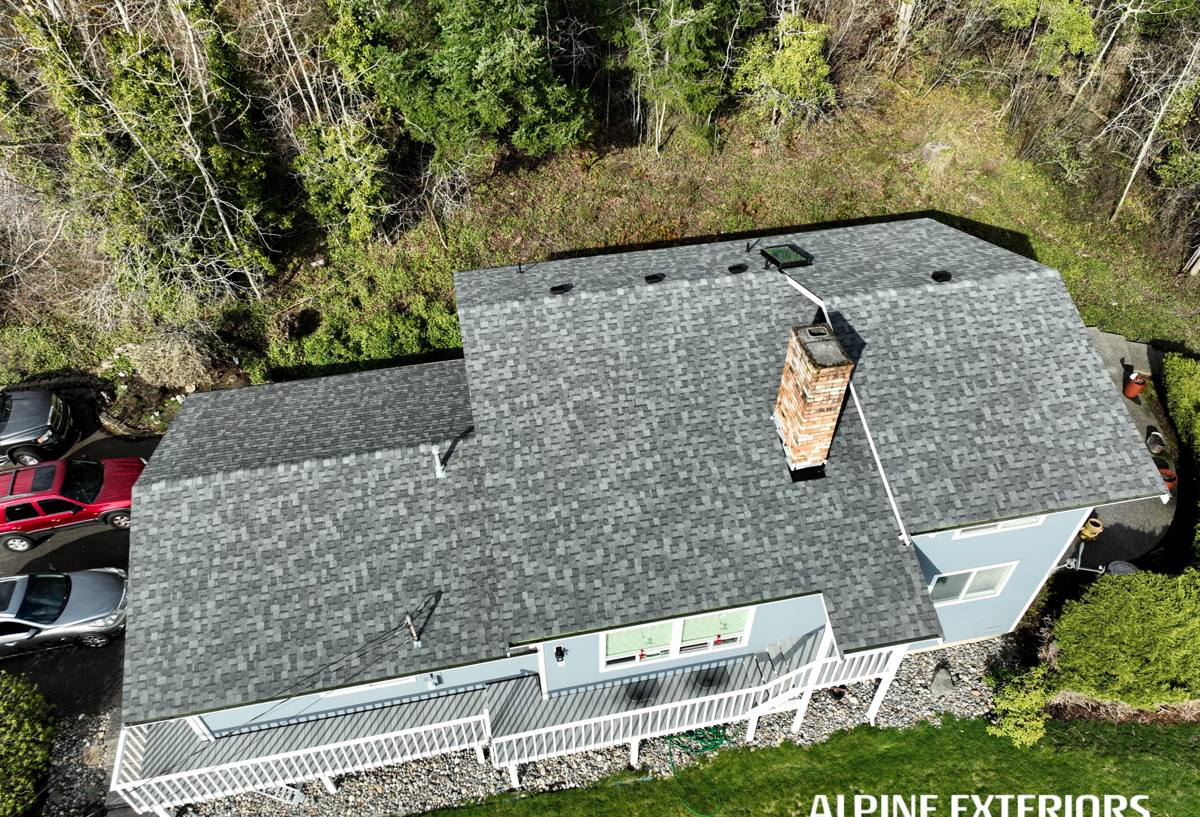
What Bellingham's Climate Actually Does to a Roof
Salt Air and Metal Fatigue
Even a mile or two from saltwater, airborne salt accelerates corrosion on exposed metal — nail heads, flashing, vent stacks, and gutter hardware. Once corrosion starts at a fastener, water finds its way past the shingle above it, and the leak that shows up inside the house is often several feet away from where the water actually got in. This is why we spec corrosion-resistant fasteners and flashing on every replacement, not as an upgrade, but as the baseline for this area.
Driving Rain and Wind-Driven Moisture
Bellingham's rain doesn't just fall — it comes in sideways often enough that standard lap coverage on a marginal roof isn't enough. Driving rain pushes moisture up and under shingle edges, into exposed nail heads, and through any flashing that's lost its seal. A replacement done right accounts for wind direction and exposure on each slope, not just a uniform install across the whole roof.
The Long Moss Season
Moss needs shade, moisture, and time — Columbia's tree cover and Bellingham's wet season provide all three for the better part of eight months. Moss doesn't just look bad; its root structure lifts shingle edges and holds water against the roof deck, which is one of the more common reasons we find soft, delaminating decking during a tear-off on roofs that otherwise looked fine from the ground.
Signs a Columbia Home Needs Replacement, Not Another Repair
- Granule loss heavy enough that you can see bare, shiny patches on south- or west-facing slopes
- Moss growth that comes back within a season or two of cleaning, especially along shaded valleys
- Soft spots underfoot near valleys, chimneys, or eaves — usually a sign the decking underneath has already taken on water
- Shingles curling, cracking, or losing their tab edges, particularly on roofs 18-25 years old
- Daylight visible through the attic roof deck, or consistent damp insulation near the eaves
- Flashing around chimneys, skylights, or vent stacks that's visibly rusted, lifted, or caulked over repeatedly as a stopgap
Any one of these on its own might be a repair. Two or more together, especially on a roof past the 20-year mark, usually means the underlying materials have absorbed more water over more seasons than a patch can fix.
What a Correct Roof Replacement Involves
Full Tear-Off, Not Overlay
We don't install new shingles over old ones. An overlay hides problems instead of solving them, and on a house dealing with Bellingham's moisture load, hidden problems under a second layer of shingles are exactly what leads to decking rot nobody finds until it's expensive. A full tear-off lets us inspect the deck itself, which is the part of the roof most affected by long-term moss and moisture exposure.
Deck Inspection and Repair
Once the old roofing is off, we check the sheathing for soft spots, delamination, and any water staining that points to a slow leak. Any compromised sections get replaced before anything new goes down — laying new roofing over bad decking just resets the clock on the same failure.
Underlayment Built for Wet Climates
We use synthetic or ice-and-water-shield underlayment in the areas that take the most water exposure — valleys, eaves, and around penetrations — rather than relying on felt alone. In a climate where the roof stays wet for days at a stretch during winter storms, this layer is what keeps a small shingle failure from becoming an interior leak.
Flashing and Fasteners Matched to Salt Exposure
Given how much corrosion we see on older flashing in this area, every replacement gets new flashing and corrosion-resistant fasteners, not reused hardware. This is one of the more common corners cut on cheap re-roofs, and it's usually the first thing to fail.
Ventilation That Actually Moves Air
A roof deck that can't breathe holds moisture from both directions — rain from outside, warm moist air from inside. We check intake and exhaust ventilation balance as part of every replacement, since poor ventilation is a major contributor to the kind of decking rot that shows up under moss.
Choosing Materials for a Bay-Adjacent, Moss-Prone Property
| Material | Moss Resistance | Salt Air Durability | Maintenance Burden |
|---|---|---|---|
| Architectural asphalt shingles | Good with algae-resistant granules | Good with corrosion-resistant flashing/fasteners | Low — periodic moss treatment recommended |
| Standing seam metal | Very good — sheds moisture fast, little surface for moss to grip | Requires coated or corrosion-rated panels near the bay | Low, but fastener and coating quality matter more here |
| Cedar shake | Poor without diligent upkeep — moisture-loving material in a moisture-heavy climate | Moderate — needs consistent treatment | High — regular treatment and moss removal required |
We'll install what a homeowner wants, but our professional recommendation for most Columbia properties is algae-resistant architectural asphalt or standing seam metal. Cedar can look great, but it asks for more upkeep than most owners want to keep up with in a climate that gives it eight wet months a year to work against.
Our Roof Replacement Process
- On-site inspection. We walk the roof, check the attic from inside, and look at drainage, tree cover, and sun exposure specific to your lot.
- Written estimate. You get a clear scope — materials, tear-off plan, any decking allowance, and timeline — before any work starts.
- Material selection. We walk through the trade-offs above based on your budget, the look you want, and how much upkeep you're willing to do.
- Tear-off and deck inspection. Old roofing comes off, decking gets inspected and repaired as needed, with any surprises communicated before we proceed.
- Install. Underlayment, flashing, and roofing material go down per manufacturer spec, with attention to the wind and moisture exposure specific to your slopes.
- Final walkthrough. We review the finished roof with you, including ventilation and any maintenance recommendations for the years ahead.
What Affects the Cost of a Roof Replacement Here
| Factor | Why It Matters Locally |
|---|---|
| Roof pitch and access | Steeper or tree-crowded roofs common in Columbia take longer and need more safety setup |
| Decking condition | Moss and long-term moisture exposure often mean more sheathing replacement than expected |
| Material choice | Asphalt, metal, and cedar carry different material and labor costs, plus different long-term maintenance costs |
| Flashing and penetrations | Chimneys, skylights, and multiple roof planes all add flashing detail work |
| Ventilation upgrades | Older Columbia homes sometimes need intake or exhaust vents added to meet current airflow needs |
We don't quote a roof over the phone or from a satellite photo — every estimate here is based on an actual walk of the roof and attic, because the difference between a straightforward tear-off and one with hidden deck damage is significant enough that it's not worth guessing at.
What to Look for When Hiring a Roofing Contractor
- Washington contractor license and current liability insurance, verifiable on request
- A written estimate that spells out materials, underlayment type, and flashing details — not just a lump-sum number
- Willingness to do a full attic and deck inspection before quoting, not just a roof-surface glance
- Manufacturer-backed warranty on materials, plus a clear workmanship warranty from the crew doing the install
- Local references and a track record of jobs in wet, moss-prone Whatcom County conditions specifically
- A straight answer about tear-off versus overlay, and why
Why Hiring a Crew That Already Works Columbia Matters
A roofer who's done work across the wider Puget Sound region will get you a functional roof. A crew that already knows how Columbia's tree cover, bay-adjacent salt exposure, and drainage patterns behave will get you a roof built for the specific conditions on your street. That shows up in small decisions — where extra underlayment goes, which fastener spec to use, how ventilation gets balanced — that don't show up on a quote sheet but do show up in how the roof holds up ten winters from now.
If you're weighing a repair against a full replacement, or just want an honest look at where your current roof stands, we're happy to come take a look. The estimate is free, there's no pressure attached to it, and you'll get a straight answer either way — use the form below to get started.