 Bellingham Siding
 Why Columbia Homes Need Siding That Can Handle This Climate
Columbia sits close enough to Bellingham Bay that salt-laden air is a constant factor in how exterior materials age. Add Whatcom County's long wet season, driving rain off the water, and the shade and moisture that keep moss thriving on north- and west-facing walls for much of the year, and you have a climate that is genuinely hard on siding. Some products tolerate this combination reasonably well. Others fail in specific, predictable ways — swelling at seams, delaminating finish, trapped moisture behind the cladding, or moss and algae staining that never fully washes out.
We install James Hardie fiber cement siding exclusively, and Columbia is exactly the kind of neighborhood where that choice matters. This page covers what a correct fiber cement installation looks like on a Columbia home, the climate-specific details that separate a job that lasts from one that doesn't, and how our process works from first estimate to final walk-through.
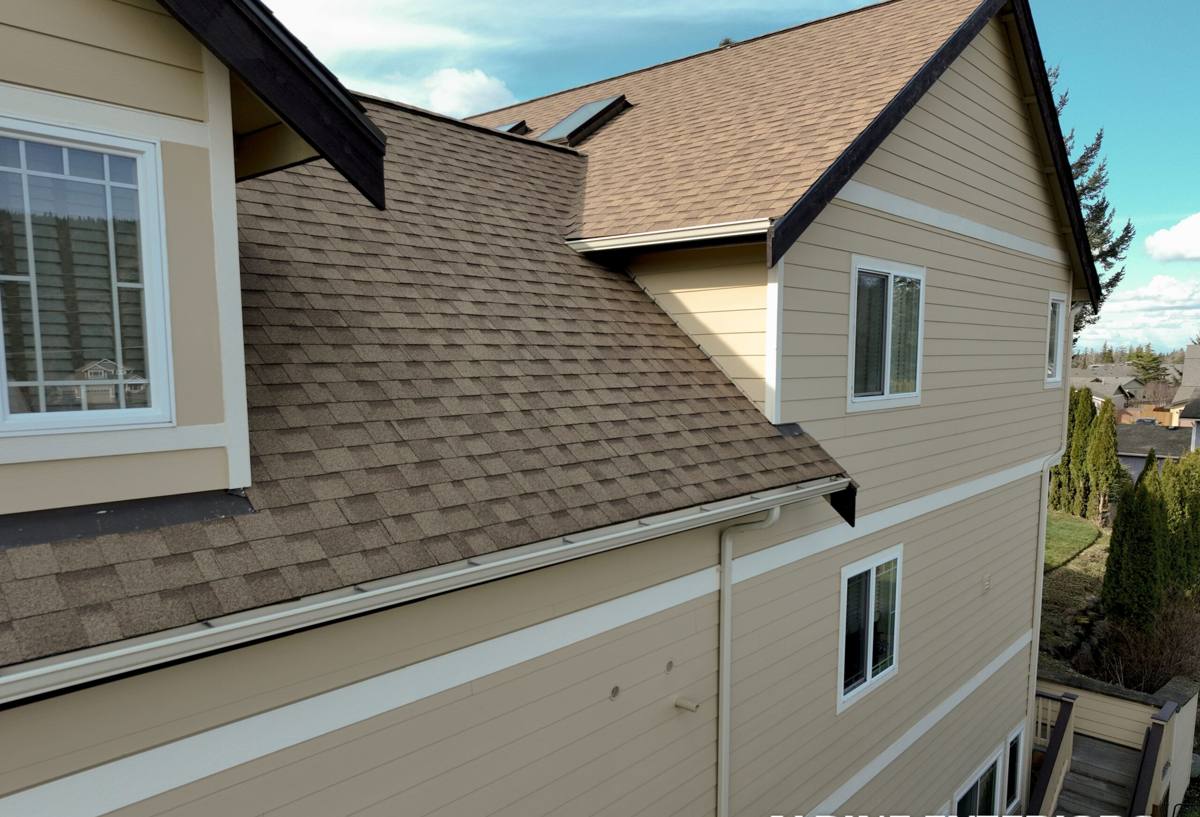
What Salt Air, Rain, and Moss Actually Do to Siding
Salt Air
Airborne salt from the bay settles on exterior surfaces and accelerates corrosion of exposed metal fasteners, flashing, and trim. It also draws moisture, keeping surfaces damp longer than they would be further inland. Fiber cement itself doesn't corrode, but the fasteners, flashing, and any exposed metal components in the assembly need to be rated for coastal exposure, or the salt air will find the weak point in the system.
Driving Rain
Wind off the water pushes rain sideways into wall assemblies, not just straight down. That means water intrusion at Columbia homes is less about flat horizontal surfaces and more about vertical joints, window and door trim, and anywhere two pieces of siding or flashing meet. A siding system that isn't detailed for driving rain will show problems first at these transition points — not in the middle of a flat wall.
Moss and Algae
Shaded, north-facing walls in this part of Whatcom County stay damp for months at a time, which is ideal growing conditions for moss and algae. Untreated wood-based siding absorbs moisture and gives organic growth something to root into. Some engineered wood products are vulnerable here in ways that aren't obvious until a few years in. Fiber cement with a factory-applied finish gives moss and algae far less to hold onto, and the surface itself doesn't feed the growth the way wood fiber can.
Why We Only Install James Hardie, Full Stop
We get asked fairly often why we don't offer vinyl, LP SmartSide, or other fiber cement brands as options. The honest answer is that we made a standard, and we stand behind it rather than offering a menu of products with different failure modes for a homeowner to gamble on.
- Non-combustible core: Hardie's fiber cement doesn't burn, which matters in a region where wildfire smoke seasons have become more common even west of the Cascades.
- ColorPlus factory finish: baked-on in a controlled environment, which holds up to UV and moisture better than field-applied paint and resists the fading and chalking that shows first on sun- and rain-exposed elevations.
- Climate-engineered HZ product lines: Hardie's HZ5 formulation is engineered for wetter, harsher climates like ours, rather than a single national product trying to work everywhere.
- Warranty structure: a strong, transferable manufacturer warranty backed by a company with a long track record, not a newer entrant with less field history in coastal Pacific Northwest conditions.
Vinyl can work loose and gap in high wind, and it doesn't hold paint if a homeowner ever wants to change color. Engineered wood products depend heavily on field-applied sealing and paint maintenance to keep moisture out of the wood fiber core — skip a maintenance cycle in a wet climate like Columbia's and you're taking on real risk. We'd rather install one product correctly, every time, than offer several and hope the cheaper ones hold up.
What Correct Fiber Cement Installation Involves
Fiber cement is only as good as its installation. The material is durable, but the details around it — flashing, gaps, fastening, caulking — determine whether water gets in over the next twenty years.
Weather-Resistive Barrier and Drainage Plane
Every job starts with a proper weather-resistive barrier and a drainage plane behind the siding, so any moisture that does get past the cladding has somewhere to go rather than sitting against the sheathing.
Flashing at Every Penetration
Windows, doors, hose bibs, light fixtures, and vents all need correctly lapped flashing. Given how much of Columbia's rain exposure comes in sideways, these penetration points are where a rushed job shows problems first — usually years later, hidden behind the wall.
Fastener Spec
Fasteners need to be corrosion-resistant and set per Hardie's specification — not overdriven, not underdriven, and spaced correctly. In a salt-air environment, cutting corners on fastener quality is one of the more common ways a siding job ages badly.
Clearances and Gaps
Hardie specifies minimum clearance from grade, roofing, decks, and other transitions, along with gapping at butt joints for expansion. These aren't arbitrary numbers — they're what keeps moisture from wicking up into the bottom of the siding or being trapped where two elevations meet.
Caulking and Sealant
Only at the joints Hardie specifies, with a quality sealant rated for exterior use. Over-caulking traps moisture; under-caulking lets it in. Both are common mistakes from crews that don't install fiber cement often.
Comparing Siding Options for a Columbia Home
| Factor | James Hardie Fiber Cement | Vinyl | Engineered Wood (LP SmartSide, etc.) |
|---|---|---|---|
| Salt air / coastal exposure | Excellent with correct fastener spec | Can become brittle and discolor faster near the coast | Depends heavily on maintained seal and paint |
| Driving rain resistance | Strong when flashed and gapped correctly | Prone to gapping and blow-off in high wind | Vulnerable at cut edges and joints if seal fails |
| Moss/algae resistance | Factory finish resists growth | Resists growth but can trap moisture behind panels | Wood fiber core is more susceptible if moisture gets in |
| Fire performance | Non-combustible | Combustible, can melt/deform | Combustible |
| Repaintable | Yes | No (limited, voids some warranties) | Yes |
| Typical lifespan when installed to spec | Decades | Shorter, especially with UV/coastal wear | Shorter without diligent maintenance |
Our Process for a Columbia Project
- Free on-site estimate: we walk the home, check existing siding and sheathing condition, and look specifically at north/west walls for moss history and shaded moisture exposure.
- Product and color selection: we walk through the Hardie lines and ColorPlus color options that fit the home and the neighborhood's general character.
- Detailed proposal: a clear scope covering tear-off (if applicable), weather barrier, flashing plan, fastener spec, and finish — no vague line items.
- Installation: our crew installs to Hardie's specification, not a shortcut version of it, with attention to the flashing and gapping details that matter most in this climate.
- Final walk-through: we review the completed work with you before considering the job done.
Signs Your Columbia Home's Siding Needs Attention
- Persistent moss or algae staining that returns quickly after cleaning, especially on shaded walls
- Soft spots, swelling, or delamination at seams and butt joints
- Paint that's peeling, bubbling, or chalking faster than expected
- Visible gaps or warping around windows and doors after wind events
- Rust streaking from fasteners or flashing
- Musty smell or visible staining on interior walls that share an exterior wall
Any one of these can be minor. Several together, especially on the sides of the house facing the water or shaded from the sun, usually mean it's worth a professional look before small problems become structural ones.
Why Hire a Crew That Already Works in Columbia
Fiber cement installation done to spec looks the same on paper everywhere. What changes house to house is how a crew handles the details that this specific climate punishes — flashing sequencing around driving rain, fastener choice for salt air, and clearance decisions on walls that stay damp longer because of shade and moisture patterns typical of this part of Bellingham. A crew that has done this work in Columbia and similar Whatcom County neighborhoods has already seen where those details go wrong on other jobs and builds around them by default, rather than learning it on your house.
Get an Honest Look at Your Home
If you're weighing a siding replacement in Columbia, we're happy to come take a look, tell you honestly what condition your current siding is in, and walk you through what a correct James Hardie installation would involve for your home. There's no pressure and no cost to get that estimate — just fill out the form below to get started.