 Bellingham Siding
 Board & Batten Siding in Barkley: What This Neighborhood Actually Needs
Barkley sits close enough to Bellingham Bay and the Nooksack lowlands that homes here deal with a specific combination of weather stress: salt-tinged marine air moving in off the water, driving rain that hits siding at an angle instead of straight down, and a long stretch of fall-through-spring dampness that keeps north- and east-facing walls shaded and slow to dry. Add Whatcom County's moss season — which for a lot of properties runs eight or nine months out of the year — and you have an exterior environment that punishes any siding material with a weak moisture story.
Board and batten is a popular look in Barkley because it fits the mix of craftsman, farmhouse, and modern builds in the area. The vertical lines read as clean and current, and it pairs well with stone or shake accents that a lot of homeowners here are already using. But board and batten is also a style that can go wrong fast if the underlying material and installation don't respect the climate. Vertical board and batten has more seams, more fastener penetrations, and more edge exposure per square foot than horizontal lap siding — which means more places for water to find a way in if the system isn't built correctly.
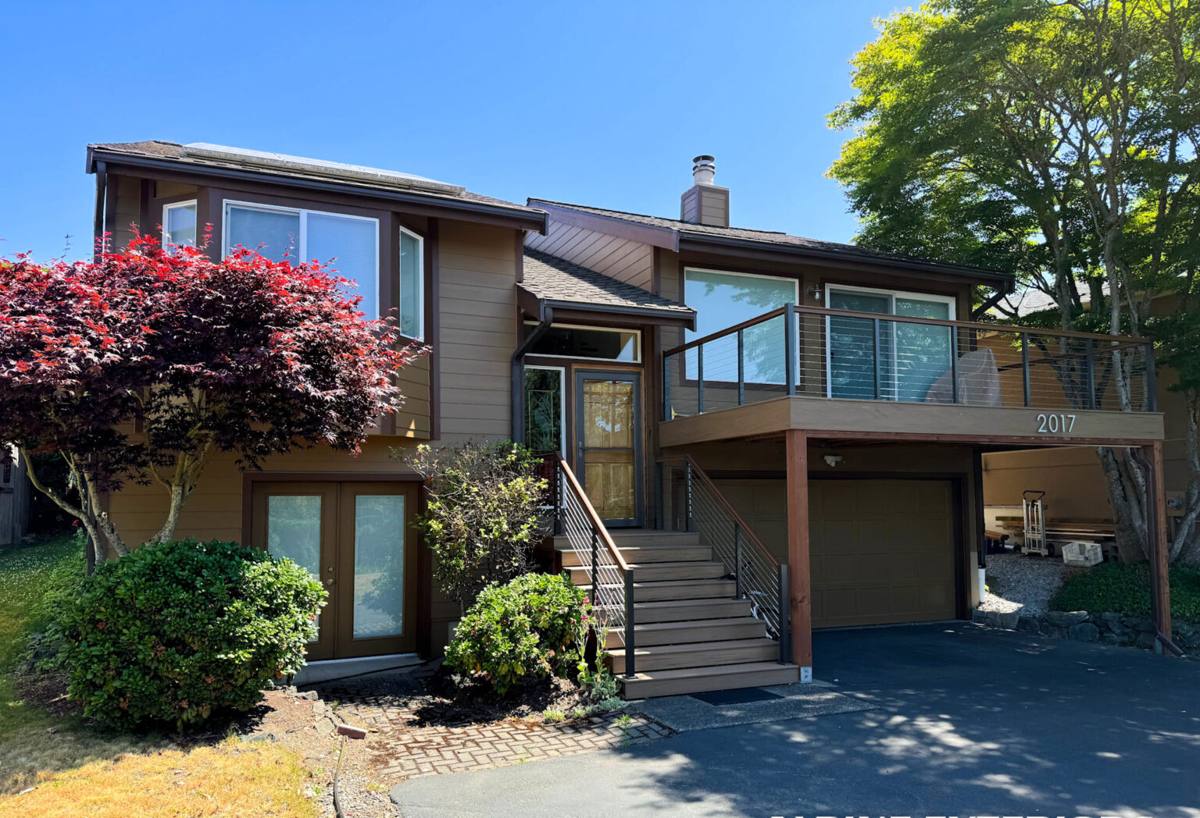
Why Board & Batten Is Riskier Here Than in Drier Climates
In a dry inland climate, board and batten made from almost any material can look fine for years because there simply isn't enough sustained moisture to expose weaknesses. Bellingham is not that climate. Barkley homes get repeated wetting-and-drying cycles all winter, plus wind-driven rain that pushes moisture sideways into vertical seams and batten joints. That combination is exactly what causes:
- Swelling and cupping at board edges on wood-based or engineered wood products
- Paint and caulk failure at batten joints, which then lets water behind the siding
- Moss and algae staining on shaded, north-facing runs that stay damp longest
- Soft spots or delamination at the bottom few feet of boards, where splashback and standing moisture concentrate
None of this is a flaw specific to one brand — it's physics. Any siding material that absorbs moisture, or that relies on field-applied paint and caulk as its primary water defense, is going to be tested harder in Barkley than it would be in a drier part of the state. That's the core reason we standardized on James Hardie fiber cement for every board and batten job we do, including in this neighborhood.
What Correct Board & Batten Actually Requires
A board and batten installation that holds up through Whatcom County winters isn't just "boards and battens nailed to the wall." It's a system, and each layer matters:
- Weather-resistive barrier installed and lapped correctly behind the siding, not just stapled up quickly
- Rainscreen or furring strips in many applications, giving water a drainage path and airflow to dry the wall assembly instead of trapping moisture against it
- Flashing at every window, door, and roofline intersection — the places where board and batten's vertical seams are most likely to funnel water
- Correct fastener placement so battens and boards aren't over-driven or under-driven, which either cracks the material or leaves it loose enough to move and open joints over time
- Factory-finished material so the color and moisture protection aren't dependent on a field-applied coat of paint holding up against Bellingham's rain
Skip any one of these and you don't just get a slightly worse job — you get a siding system that's set up to fail early in exactly the way this climate exposes.
Why We Only Install James Hardie for This Application
We don't install LP SmartSide, vinyl, Cemplank, Allura, primed spruce, or cedar board and batten. That's a deliberate standard, not a lack of options, and it's worth explaining honestly rather than just asserting it.
Wood and engineered-wood products (cedar, primed spruce, LP SmartSide) can look excellent when new, and manufacturers have improved their moisture resistance over the years. But they still rely on wood fiber as a base material, which means they absorb and release moisture with the seasons. In a climate with Barkley's rain volume and prolonged damp stretches, that absorption cycle is the thing that eventually causes swelling, edge softening, and paint failure at the joints — the exact failure points board and batten is most vulnerable to. Vinyl board and batten avoids the rot question but introduces a different one: it expands and contracts significantly with temperature swings, the vertical battens can bow or pull away over time, and it's a petroleum-based product with a thinner, less durable factory finish than fiber cement. Other fiber cement brands (Cemplank, Allura) are legitimate competitors to Hardie on paper, but we've standardized on one manufacturer so our crews, our warranty process, and our installation detailing stay consistent and accountable across every job.
James Hardie fiber cement is non-combustible, dimensionally stable across wet and dry cycles, and comes with a factory-applied ColorPlus finish that's baked on rather than brushed on in the field — which matters a great deal when your finish has to survive salt air and near-constant winter dampness rather than a mild dry season. Hardie's HZ5 product line is engineered specifically for climates with more moisture cycling and freeze-thaw exposure, which describes Whatcom County accurately. The combination of the material itself and a strong, transferable warranty is why this is the only board and batten system we put on Barkley homes.
Comparing the Options Homeowners Actually Consider
| Material | Moisture Behavior in Bellingham's Climate | Finish Durability | Long-Term Maintenance |
|---|---|---|---|
| James Hardie fiber cement | Dimensionally stable, doesn't rot or absorb like wood | Factory-baked ColorPlus finish, resists fading and moss staining better than field-painted surfaces | Occasional wash-down; repaint interval measured in decades, not years |
| Cedar / primed spruce | Absorbs moisture seasonally; prone to swelling at joints | Depends entirely on paint/stain upkeep | Repainting and caulk maintenance every few years |
| LP SmartSide | Engineered wood core; better than raw wood but still moisture-sensitive at cut edges | Factory finish, but edge sealing at every field cut is critical | Moderate; edge sealant needs monitoring |
| Vinyl | Won't rot, but expands/contracts with temperature and can bow over time | Color molded through material but fades and chalks with UV exposure | Low, but panels can crack or warp and are harder to repair invisibly |
Our Process for a Barkley Board & Batten Project
1. On-Site Assessment
We walk the home and look specifically at exposure: which walls take the worst wind-driven rain, which sides stay shaded and damp longest, and where the existing siding (if any) is already showing moss, staining, or moisture damage. This tells us where extra flashing or drainage detail is non-negotiable versus where standard detailing is sufficient.
2. Removing and Inspecting What's Underneath
We don't install over a compromised wall. If sheathing is soft or the weather-resistive barrier is failing, that gets addressed before a single board goes up — covering a wet wall with new siding just hides the problem and shortens the life of the new material.
3. Correct Water Management Layer
Depending on the wall assembly, that means a properly lapped weather-resistive barrier, and in many cases a rainscreen gap so water that does get past the siding has somewhere to drain and dry out rather than sitting against the sheathing.
4. Installing Hardie Board & Batten to Manufacturer Spec
Correct fastener spacing and depth, correct gaps at board ends for expansion, and flashing integrated at every window, door, and roof intersection — not caulk used as a substitute for flashing.
5. Final Detailing and Walkthrough
We check every seam, corner, and trim intersection before calling the job done, and walk the homeowner through what maintenance (if any) is actually needed going forward.
Why a Crew That Already Works Barkley Matters
Board and batten detailing isn't one-size-fits-all, and neither is Bellingham weather exposure. A crew that's worked Barkley homes already knows which orientations in this specific area tend to catch the worst of the driving rain off the bay, how the tree cover and shade patterns common to the neighborhood affect moss growth on north walls, and what the existing housing stock's wall assemblies typically look like once old siding comes off. That local pattern-recognition means fewer surprises mid-project and fewer callbacks later. It also means we're not learning Whatcom County's climate behavior on your house — we're applying what we already know from other homes nearby.
What a Correctly Installed Job Should Look Like Years Later
- Tight, even joints with no visible gapping or bowing at battens
- Consistent color across all walls, including the shaded north side, with no premature fading or paint peel
- No moss staining concentrated at seams or fastener heads
- No soft spots, cracking, or delamination at the base of boards near grade
- Flashing still fully concealed and functional at every window and roofline intersection
If you're weighing board and batten for a home in Barkley, we're glad to walk the property, point out the exposure patterns specific to your lot, and give you a straightforward estimate — no pressure, no upsell, just an honest look at what your home needs. Request a free estimate below and we'll get you scheduled.