 Bellingham Siding
 Window Installation Built for Blaine's Marine Climate
Blaine sits at the northern edge of Whatcom County, right on the water, and homes there take a different kind of weather beating than houses twenty minutes inland toward Bellingham. Salt-laden air off the water, wind-driven rain that comes in sideways during fall and winter storms, and a moss season that can run from October well into spring all work against windows that weren't installed with those conditions in mind. When we replace or install windows in Blaine, we're not just swapping glass in a frame — we're accounting for a specific set of stresses that will test the work for the next two or three decades, not just the first winter.
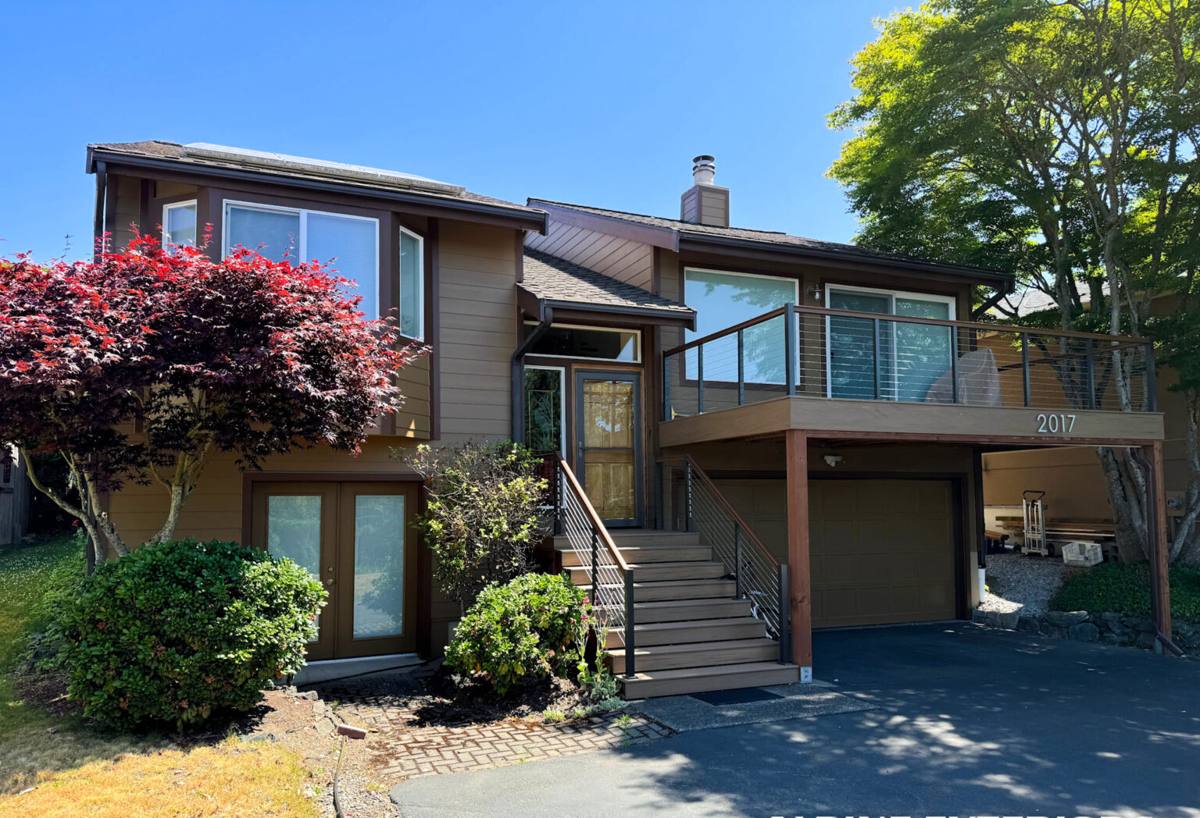
What Blaine's Climate Does to Windows Over Time
Salt Air and Corrosion
Proximity to the water means airborne salt settles on hardware, screens, and exposed metal components, even on homes that aren't right on the shoreline. Over years, that salt accelerates corrosion on lower-grade latches, balances, and fasteners, and it can pit aluminum cladding that isn't rated for coastal exposure. This doesn't show up in year one. It shows up as a window that gets harder to open, a lock that starts to seize, or streaking corrosion around hardware five or ten years in — problems that are avoidable with the right hardware specification at install time.
Wind-Driven Rain and Water Intrusion
Blaine gets storms that push rain horizontally against the wall of a house, not just straight down. A window that would perform fine in a calmer, drier climate can leak under that kind of pressure if the flashing, sill pan, and sealant details weren't done correctly. Most window leaks we find in this area aren't a bad window — they're a window that was installed without proper water management around it, so wind-driven rain finds a path behind the trim instead of shedding off the surface.
A Long Moss Season Means Prolonged Dampness
Whatcom County's extended damp season keeps moss, algae, and general moisture active on exterior surfaces for much of the year. Around windows specifically, that means any gap, unsealed joint, or bit of trapped moisture has more months to do damage than it would in a drier climate. Wood trim and sills that stay damp longer are more prone to rot, and caulk joints that would last a decade elsewhere can fail sooner here if the wrong sealant was used or it wasn't tooled correctly.
Signs a Blaine Home Needs New Windows
Homeowners often live with a failing window for years before addressing it, partly because the signs are gradual. Here's what we'd want a Blaine homeowner to watch for:
- Condensation or fogging between the panes of a double-pane window — the seal has failed and the insulating gas has escaped
- Visible daylight, drafts, or a noticeable temperature difference near the window frame
- Wood trim, sills, or the frame itself that feels soft, spongy, or shows dark staining
- Difficulty opening, closing, or locking a window that used to operate smoothly
- Paint that keeps bubbling or peeling around the same window no matter how often it's redone
- A musty smell or visible mold near the interior window frame, especially after a stretch of wet weather
- Noticeably higher heating bills without any other change in the home
What a Correct Window Installation Actually Involves
Flashing and Water Management Come First
The window itself is only part of the job. Before it ever goes in the opening, the rough opening needs correct flashing — typically a sill pan to catch and direct any water that gets past the window, plus side and head flashing that integrates with the home's existing water-resistive barrier. Skipping or shortcutting this step is the single biggest cause of window-related water damage we see, and it's invisible once the trim goes back on, which is exactly why it matters who's doing it.
Frame Material Matters More Here Than Inland
Not every frame material handles salt air and sustained moisture equally well. We factor in the home's exposure — how close it sits to the water and how much weather it takes directly — when we talk through frame options with a homeowner, rather than defaulting to one product for every job.
Sealing, Insulation, and Air Gaps
Once the window is set plumb, level, and square in the opening, the gap between the window frame and the rough opening needs to be insulated and air-sealed correctly — not overpacked with expanding foam, which can bow a frame, and not left loose, which lets moist air condense inside the wall cavity. Interior and exterior sealant beads finish the job, and the type of sealant matters in a climate that stays damp this much of the year.
Comparing Window Frame Materials for Coastal Whatcom County
| Material | Moisture & Salt Air Behavior | Maintenance | Trade-Offs |
|---|---|---|---|
| Vinyl | Doesn't corrode or rot; performs well in salt air | Low — no painting or sealing needed | Frame color/style options are more limited; quality varies significantly by manufacturer |
| Fiberglass | Very stable in moisture and temperature swings; resists corrosion | Low | Higher upfront cost than vinyl |
| Aluminum-clad wood | Exterior handles weather well; interior wood offers a traditional look | Moderate — clad exterior is low-maintenance, but any breach in the cladding exposes wood underneath | Installation quality is critical; a poor seal at the cladding joint can trap moisture against the wood |
| Solid wood | Most vulnerable to sustained dampness and salt exposure without diligent upkeep | High — regular painting/sealing required | Best suited to homes with real weather protection (deep eaves, covered porches) rather than direct coastal exposure |
We don't push one material on every homeowner. A well-protected wood window under a deep eave can do fine in Blaine; the same window on a wall that takes direct wind and rain is a maintenance headache waiting to happen. Part of our estimate is being honest about which option fits the specific wall and exposure we're looking at.
Our Window Installation Process
- On-site assessment — we look at the existing windows, the wall assembly where visible, and the home's specific exposure to wind and rain before recommending anything
- Product selection — we walk through frame material, glass package, and hardware options based on that assessment and your budget
- Removal — old windows come out carefully, and we check the rough opening for hidden rot or water damage before proceeding
- Repair as needed — any damaged framing or sheathing gets addressed before a new window goes in; installing a new window in a compromised opening just hides the problem
- Flashing and sill pan installation — proper water management is built in before the window is set
- Setting the window — plumb, level, square, and fastened per manufacturer specification
- Insulation and air-sealing — the gap between frame and opening is filled correctly, not overpacked or left loose
- Interior and exterior finish work — trim, sealant, and paint or stain as needed to match the home
- Final walkthrough — we test operation, locks, and check the seal with you before calling the job done
Cost Factors for Window Installation in Blaine
Every home is different, but the main variables that move the price on a Blaine window job are consistent:
| Factor | How It Affects Cost |
|---|---|
| Number of windows | Per-window cost typically drops slightly with larger multi-window projects |
| Frame material | Vinyl is generally the most affordable; fiberglass and clad-wood cost more |
| Condition of the rough opening | Hidden rot or water damage found during removal adds repair cost before the new window goes in |
| Glass package | Upgraded low-E coatings or triple-pane glass add cost but improve comfort and efficiency |
| Window size and type | Large picture windows, custom shapes, or operable styles (casement, awning) cost more than standard sliders |
| Exterior trim and siding work | Full trim replacement or siding tie-in around the new window adds labor beyond the window itself |
We give a written, itemized estimate before any work starts, so you know exactly what's driving the number rather than a single lump figure.
Why a Crew That Already Works in Blaine Matters
A contractor who mainly works drier, more sheltered areas can still install a window correctly on paper and have it underperform once it's sitting on a wall in Blaine that takes direct wind and salt spray off the water. Knowing to spec corrosion-resistant hardware without being asked, knowing which sealants actually hold up through a wet Whatcom County winter, and knowing how much extra care the flashing details deserve on an exposed wall — that comes from doing this work in this specific climate repeatedly, not from a general how-to. We work throughout Bellingham and the surrounding Whatcom County communities, and Blaine's coastal exposure is one of the more demanding conditions in our service area, which is exactly why we treat it as its own case rather than a standard inland install.
If you're dealing with drafty, foggy, or hard-to-operate windows on a Blaine home, we're happy to take a look and give you a straightforward, no-pressure estimate — just fill out the form below.