 Bellingham Siding
 Blaine's Coastal Climate Is Tough on Roofs
Blaine sits right on the water at the northern edge of Whatcom County, just minutes from the Canadian border. That location is part of what makes it a great place to live, and it's also exactly why roofs here take more abuse than roofs twenty miles inland. Salt air, driving rain off the water, and a moss season that barely takes a break all work on a roof year-round, not just during the one big windstorm that finally knocks something loose.
When we get a storm damage call from a Blaine homeowner, we're rarely looking at a roof that was in perfect shape the day before the storm hit. Usually the storm exposed or finished off a weak spot that had been building for a while — a fastener that had already started to corrode, a shingle edge that moss had been lifting for a season or two, flashing that was already thinning out. Understanding that pattern is the difference between a repair that actually holds and one that fails again in the next storm.
Salt Air Speeds Up Corrosion
Metal roofing components — flashing, drip edge, nail heads, ridge vents, gutter hardware — corrode faster this close to salt water. A fastener or flashing seam that would last decades in a drier, inland part of the county can start failing years earlier out here. Once a fastener corrodes and loosens, the shingle or panel it's holding down becomes the first thing a strong gust takes.
Wind-Driven Rain Finds Every Weak Spot
Storms coming off the water in Blaine tend to bring rain sideways, not straight down. That matters because a roof only has to shed water moving downhill — wind-driven rain gets pushed sideways and even upward under shingle edges, lap joints, and flashing that was fine in normal weather. A repair that only replaces what's visibly missing, without checking how water moves during a real wind event, tends to leak again at the next storm.
A Long, Wet Moss Season
Whatcom County's wet season runs long, and north-facing and shaded slopes in Blaine can stay damp for months at a stretch. Moss doesn't just look bad — it holds moisture against the shingle surface, works its way under tabs and lifts them, and adds weight that stresses fasteners. A lot of the storm damage we find has moss as a contributing factor: the moss weakened the seal long before the wind arrived to finish the job.
What Actually Counts as Storm Damage
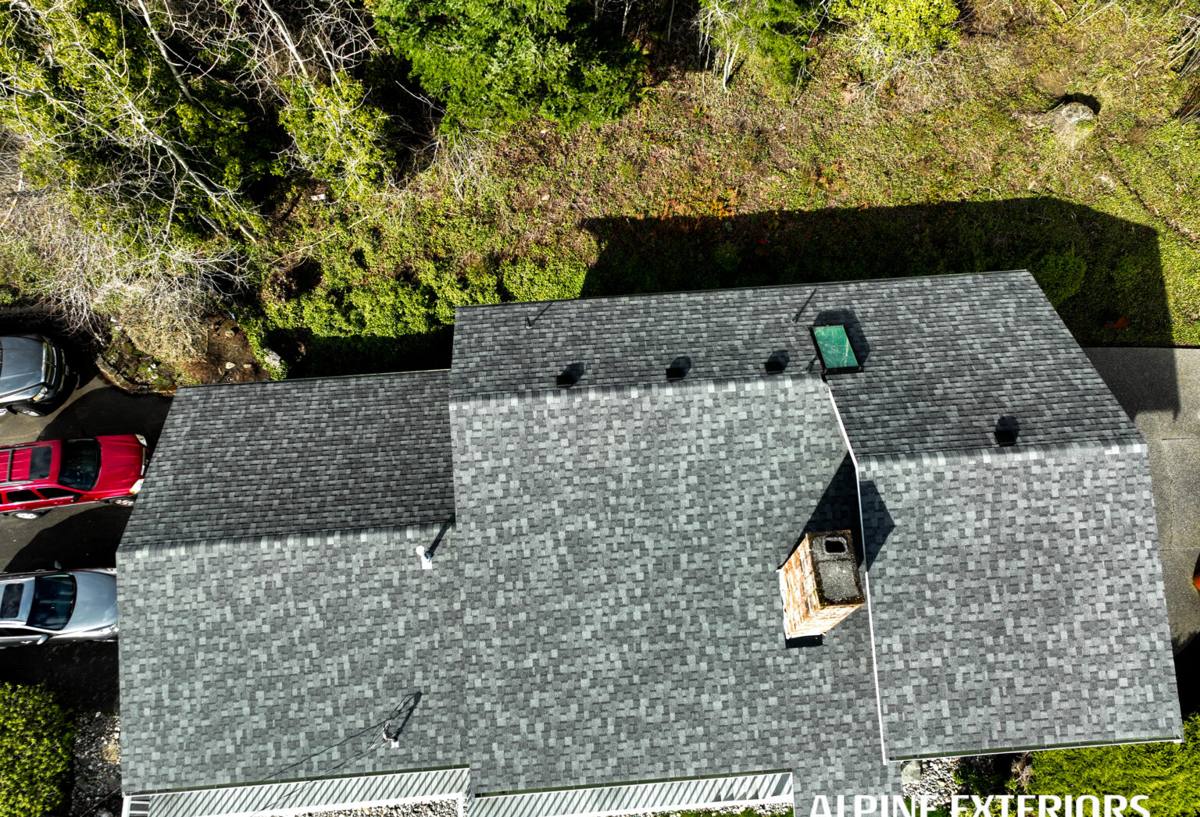
Homeowners sometimes assume "storm damage" only means a hole in the roof or a tree branch through the decking. In practice, most storm-related repair calls in Blaine involve damage that's easy to miss from the ground:
- Shingles lifted, cracked, or blown off entirely, especially near edges, ridges, and valleys
- Torn or missing ridge cap shingles, which are the first thing high wind grabs
- Flashing pulled loose or bent around chimneys, skylights, and roof-to-wall transitions
- Granule loss from wind-driven rain and hail, which shows up as bald patches on shingles
- Damaged or detached gutters and downspouts that then let water run down the fascia and behind the roof edge
- Fastener backout — nails that have worked loose enough to no longer hold the shingle flat
Some of this is obvious after a bad storm. A lot of it isn't, which is why an inspection matters more than a quick look from the driveway.
What a Correct Storm Repair Actually Involves
Inspection Before Any Repair Starts
We don't quote a storm repair without getting on the roof, or close to it, first. That means checking not just the obvious damage but the surrounding field — shingles, flashing, and fasteners within a few feet of the visible problem — because storm forces rarely damage just one shingle in isolation. We also check the attic side when we can, since staining or damp insulation tells us whether water has already been getting in before the storm made the damage visible.
Matching Materials, Not Just Patching Holes
A patch that doesn't match the existing shingle profile, color, or exposure will shed water differently than the surrounding roof and often fails at the seam. Where we can source a close match, we do. Where a close match isn't available — common on older roofs — we'll say so up front rather than let a mismatched patch pass as a real fix.
It's Not Just the Shingles
Underlayment and flashing do more of the actual waterproofing work than the visible shingles do. A repair that replaces the top layer but leaves torn underlayment or bent flashing underneath will look fine and still leak. Correct storm repair means checking and, where needed, replacing what's underneath — not just what's on top.
Our Process for Storm Damage Repairs in Blaine
- Inspection and documentation. We assess the damage, take photos, and note anything relevant to an insurance claim before any repair work starts.
- Written scope and estimate. You get a clear description of what's damaged, what we recommend, and why — not just a total.
- Repair or replacement. We do the work to match manufacturer specifications, including proper flashing and fastening, not just the fastest fix.
- Final check. We walk the repair area again before we consider the job done, checking that everything sheds water the way it's supposed to.
- Follow-up. If a question comes up after the next round of weather, we're a phone call away — not a crew that did one job and disappeared.
Repair or Replace? How We Help You Decide
Not every storm-damaged roof needs full replacement, and not every roof is a good candidate for another round of patching. We walk through the same factors with every Blaine homeowner:
| Factor | Points Toward Repair | Points Toward Replacement |
|---|---|---|
| Age of roof | Under roughly 10–12 years, still within expected service life | Near or past the manufacturer's expected lifespan |
| Extent of damage | Isolated to one slope, ridge, or flashing area | Spread across multiple slopes or recurring in the same spots |
| Moss and moisture history | Light, surface-level moss with no decking damage found | Long-term moss growth with soft decking or trapped moisture |
| Underlying materials | Underlayment and decking still sound where exposed | Underlayment brittle, decking soft or delaminating |
| Insurance scope | Claim covers a defined repair area | Adjuster's scope already calls for full slope or full roof |
We'll walk you through where your roof falls on each of these before we recommend either option — we're not trying to sell a replacement a repair would honestly solve, and we're not going to patch a roof that's going to need the same call again next winter.
Working With Your Insurance Company
A lot of storm damage repair in Blaine gets paid for, at least in part, through a homeowner's insurance claim. We're not adjusters and we don't handle your claim for you, but we can document the damage clearly, provide a written scope and estimate that lines up with what an adjuster needs to see, and answer questions about what's storm-related versus what's normal wear if your adjuster asks. Being upfront about that distinction matters — claims move faster and go smoother when the paperwork is honest from the start.
Signs Your Blaine Roof Needs a Storm Inspection
After any significant wind or rain event, it's worth checking for these signs, or having someone check for you:
- Shingle pieces or granules in the gutters or on the ground after a storm
- A ridge line that looks uneven, gapped, or partially open
- New or growing water stains on interior ceilings or in the attic
- Gutters pulling away from the fascia or hanging unevenly
- Visible moss buildup along shaded slopes or valleys
- Flashing around chimneys, vents, or skylights that looks bent, lifted, or rusted
- Daylight visible through the roof deck from inside the attic
Any one of these is worth a call. None of them require an emergency tarp-on-the-roof visit by themselves, but they all get worse the longer they sit through another wet Whatcom County winter.
Why Hire a Crew That Already Works Blaine
Storm damage repair isn't the same job in every town. A crew that mostly works drier, inland roofs may not think to check for the corrosion patterns that show up on coastal fasteners, or may not recognize how far moss has already progressed under a Blaine roof's north-facing slope. Working this stretch of coast regularly means we know what to look for the moment we get on a ladder, and we're not learning the local climate on your roof.
It also means we're not disappearing after the invoice is paid. We're based near Bellingham and back in Blaine regularly, which matters if a question comes up after the next storm or if a repair needs a follow-up look once the weather has had a chance to test it.
If you've got storm damage — or you're just not sure whether what you're seeing is storm-related or ordinary wear — we're glad to take a look. Fill out the form below for a free, no-pressure estimate, and we'll tell you honestly what we find.