 Bellingham Siding
 Why Blaine Roofs Wear Out Differently Than Roofs Inland
Blaine sits right on the water at the northern edge of Whatcom County, and that location shapes what a roof has to put up with year after year. Salt-laden air off the Strait of Georgia and Semiahmoo Bay works its way into metal flashing, fasteners, and vent components faster than it would on a home twenty miles inland. Add in driving, wind-blown rain off the water and a moss season that can run eight or nine months out of the year in the shaded, humid corners of a roof, and you've got a combination that shortens the working life of a roof installed with inland assumptions instead of coastal ones.
A new roof installation in Blaine isn't just "put shingles on a house." It's choosing materials and details that specifically account for salt exposure, sustained moisture, and moss pressure — the three things that cause most premature roof failures we see in this part of Whatcom County.
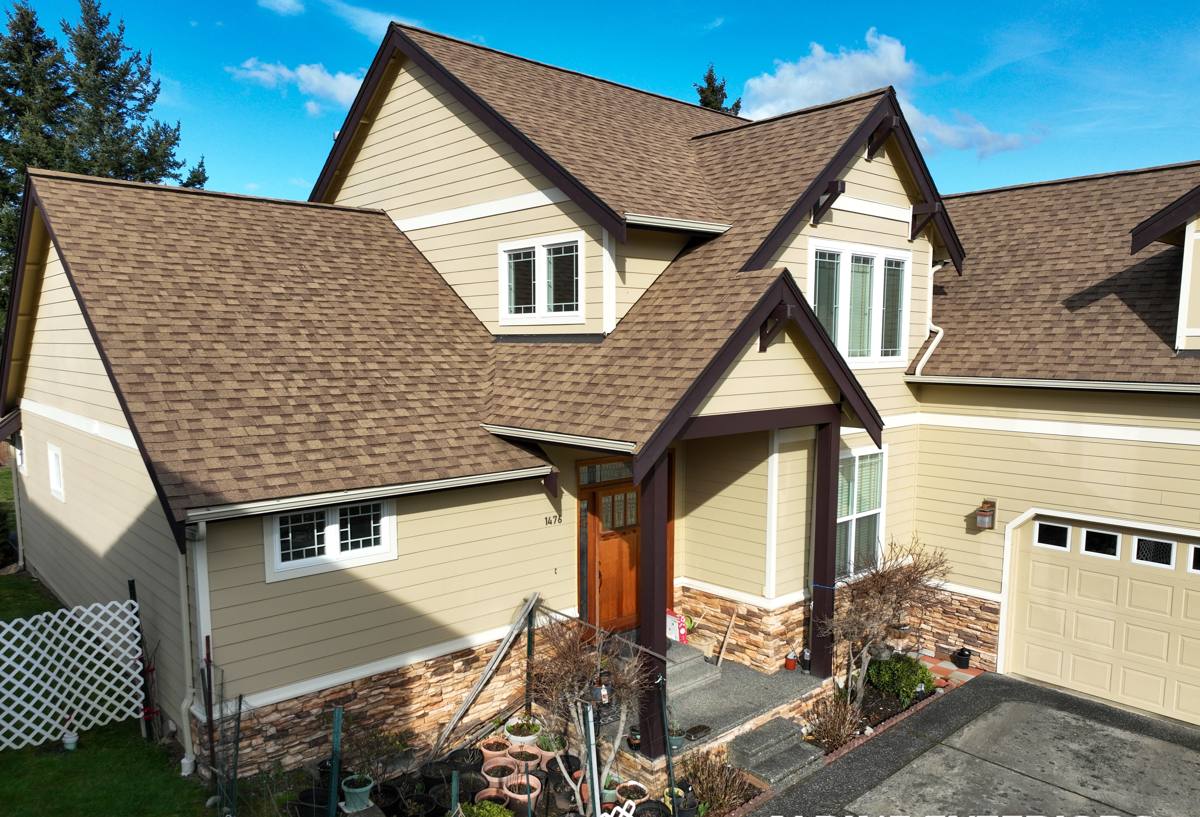
Signs a Blaine Home Actually Needs a New Roof
Not every roof problem calls for full replacement, and a good contractor should tell you that plainly rather than upsell you. That said, there are a handful of signs that mean repair is no longer the honest answer:
- Shingles that are cupping, curling, or losing granules across large sections rather than one isolated spot
- Soft or spongy decking felt underfoot when walking the roof, which usually means the plywood or sheathing underneath has taken on water
- Moss and moisture staining that keeps coming back within a season or two of cleaning, even after treatment
- Daylight visible through the roof deck from inside the attic, or consistent damp insulation
- A roof already past or close to the end of its rated material life, especially one that's never had proper ventilation added
If a roof is showing one or two of these in a small area, targeted repair can still make sense. When several show up together, or the decking itself has been compromised by long-term moisture, replacement is usually the more honest and more cost-effective path — patching a wet deck just delays a bigger repair bill.
What a Correct New Roof Installation Actually Involves
A roof is a system, not a single product. Skipping or shortcutting any one layer is where roofs in this climate tend to fail early, usually well before the shingles themselves would have worn out.
Tear-Off and Deck Inspection
We remove the old roofing down to the deck rather than layering over it. That's the only way to actually see the plywood or board sheathing, catch soft or delaminated sections, and replace them before they're sealed under a new roof for another 20-plus years. Layering over an existing roof hides problems instead of fixing them, and it's a poor fit for a climate where moisture intrusion is already the biggest risk factor.
Underlayment and Moisture Barrier
This layer matters more here than almost anywhere else in the state. With the amount of driving rain Blaine gets off the water, we use synthetic underlayment rated for extended UV and moisture exposure, plus self-adhered ice-and-water membrane at the eaves, valleys, and any low-slope transitions — the spots where wind-driven rain is most likely to find a way under the shingles.
Flashing Details
Flashing around chimneys, skylights, sidewalls, and roof-to-wall transitions is where salt air does the most damage over time if the wrong metal or fastener is used. We use flashing and fasteners rated for coastal exposure and detail every penetration so water is shed, not trapped.
Ventilation
Balanced intake and exhaust ventilation keeps the underside of the deck dry and reduces the cool, damp attic conditions that feed moss and algae growth on the shingle surface above. A roof installed without adequate ventilation in a climate like Blaine's will grow moss and show premature wear even with good shingles on top.
Choosing the Right Roofing Material for Blaine's Exposure
There's no single "best" roofing material for every home — the right choice depends on budget, roof pitch, home style, and how much long-term maintenance you want to take on. Here's how the common options actually perform in a salt-air, high-moisture, moss-prone environment like Blaine's:
| Material | Salt Air / Corrosion Resistance | Moss Resistance | Maintenance Burden |
|---|---|---|---|
| Architectural asphalt shingle | Good, with corrosion-resistant fasteners and flashing | Moderate — benefits from algae-resistant granules and copper or zinc strips | Low to moderate; periodic cleaning recommended |
| Standing seam metal | Very good when coated and detailed correctly; low points and cut edges need attention | Very good — sheds moisture quickly, little surface for moss to grip | Low |
| Cedar shake/shingle | Fair — untreated fasteners corrode faster in salt air | Poor without regular treatment; moss and moisture retention are the main long-term issues | High — regular cleaning and treatment needed |
| Composite/synthetic shingle | Good | Moderate to good depending on product | Low |
For most Blaine homes, we recommend architectural asphalt shingle with algae-resistant granules and proper zinc or copper strips at the ridge as the best balance of cost, appearance, and moss resistance. Standing seam metal is a strong option for homes with lower-slope sections or owners who want to minimize long-term maintenance, even though the upfront cost is higher. We can walk through what makes sense for your specific roof and budget rather than pushing one product across the board.
Our Installation Process
- On-site inspection and estimate — we walk the roof (not just look from the ground), check the attic for ventilation and moisture issues, and give you a written scope and price
- Material selection — we go over the options above in the context of your home's style, pitch, and budget
- Permitting — we pull the required permit through the applicable jurisdiction before work starts
- Tear-off and deck repair — full removal of old roofing, replacement of any compromised decking, disposal handled by us
- Underlayment, flashing, and ventilation installation — the layers that actually determine how the roof performs in this climate
- New roofing material installation — installed to manufacturer specification, which matters for both performance and warranty validity
- Final walkthrough — we inspect the finished roof with you and go over basic care before we consider the job done
Moss, Ventilation, and Why This Matters More in Blaine
Moss isn't just a cosmetic problem. It holds moisture directly against the shingle surface, works into seams and under tab edges, and can lift shingles enough for wind-driven rain to get underneath. In a location with Blaine's combination of shaded lots, marine humidity, and a moss season that runs most of the year, a roof that isn't designed to shed moisture and dry out between rain events will grow moss again within a season or two, no matter how thoroughly it's cleaned beforehand.
That's why we treat ventilation and moss-resistant materials as part of the installation itself, not an upsell. Zinc or copper strips near the ridge release trace amounts of metal ions with each rain that inhibit moss and algae growth over the life of the roof. Combined with adequate attic ventilation to keep the underside of the deck dry, this is the difference between a roof that stays clean for years and one that needs moss treatment every summer.
What a New Roof Costs in Blaine — and What Drives the Price
We don't publish a flat price because roof cost depends on real variables specific to your house. What we can tell you honestly is what moves the number up or down:
| Factor | Effect on Cost |
|---|---|
| Roof size and number of facets/valleys | More square footage and more complex geometry both add labor and material |
| Roof pitch and accessibility | Steep or hard-to-access roofs require more safety setup and time |
| Decking condition | Rotted or delaminated sheathing found during tear-off adds material and labor to replace |
| Material choice | Standard architectural shingle costs less upfront than metal or cedar; metal and quality synthetic products cost more but often reduce maintenance |
| Ventilation upgrades | Adding proper intake/exhaust venting where none existed is a modest add that pays off in roof life |
| Layers of old roofing to remove | Removing multiple existing layers takes longer than a single-layer tear-off |
Most straightforward asphalt shingle replacements on a typical Blaine home fall in a broad mid-range for the region; steep, complex, or metal roofs run higher. The only way to get an accurate number is a real on-site look at your roof, which is why we don't quote sight-unseen over the phone.
Why Hiring a Crew That Already Works in Blaine Matters
A roofing crew that regularly works this stretch of Whatcom County already knows which flashing and fastener grades hold up against the salt air, which roof orientations on local lots collect the most moss, and how to schedule tear-off work around the driving rain that can roll in off the water with little warning. That's not something a crew based well inland picks up on their first job here — it comes from doing the work in this specific climate repeatedly.
It also matters for permitting and inspection. A contractor familiar with the local permitting process knows what documentation is expected and won't leave you managing that back-and-forth yourself mid-project.
After the Install: A Simple Maintenance Checklist
A correctly installed roof still benefits from basic upkeep, especially in a climate that pushes moss and moisture year-round. We go over this with every homeowner at the final walkthrough:
- Clear gutters and downspouts at least twice a year so water isn't backing up under the eaves
- Have moss buildup addressed early rather than letting it establish for a full season
- Trim back overhanging branches to reduce shade and debris buildup on the roof surface
- Do a visual check after major windstorms for lifted or missing shingles and displaced flashing
- Schedule a professional roof inspection every few years, even if nothing looks obviously wrong
If you're weighing repair versus replacement, or just want an honest look at what condition your roof is really in, we're glad to come out, walk the roof, and give you a straight answer along with a free, no-pressure estimate — no obligation either way.