 Bellingham Siding
 Birchwood Roofs Take a Specific Kind of Beating
Birchwood is a well-established part of Bellingham, and that means a lot of roofs in the neighborhood are old enough to be nearing the end of their service life — or already past it. What shortens that life here isn't any one dramatic event. It's the steady, year-round combination of moisture off Bellingham Bay, wind-driven rain rolling in off the Sound, and long stretches of gray, damp weather that never really let a roof dry out between storms. Add in the mature tree canopy common throughout Whatcom County neighborhoods, and you get shaded, north-facing slopes that stay wet longer than the rest of the roof — prime territory for moss, moisture intrusion, and premature aging.
A new roof installed for Birchwood needs to be built for that reality, not just installed to code and left to hope for the best. This page covers what that actually means: what local homes need, what a correct installation involves, how our process works, and why it matters to hire a crew that already knows this neighborhood's roofs.
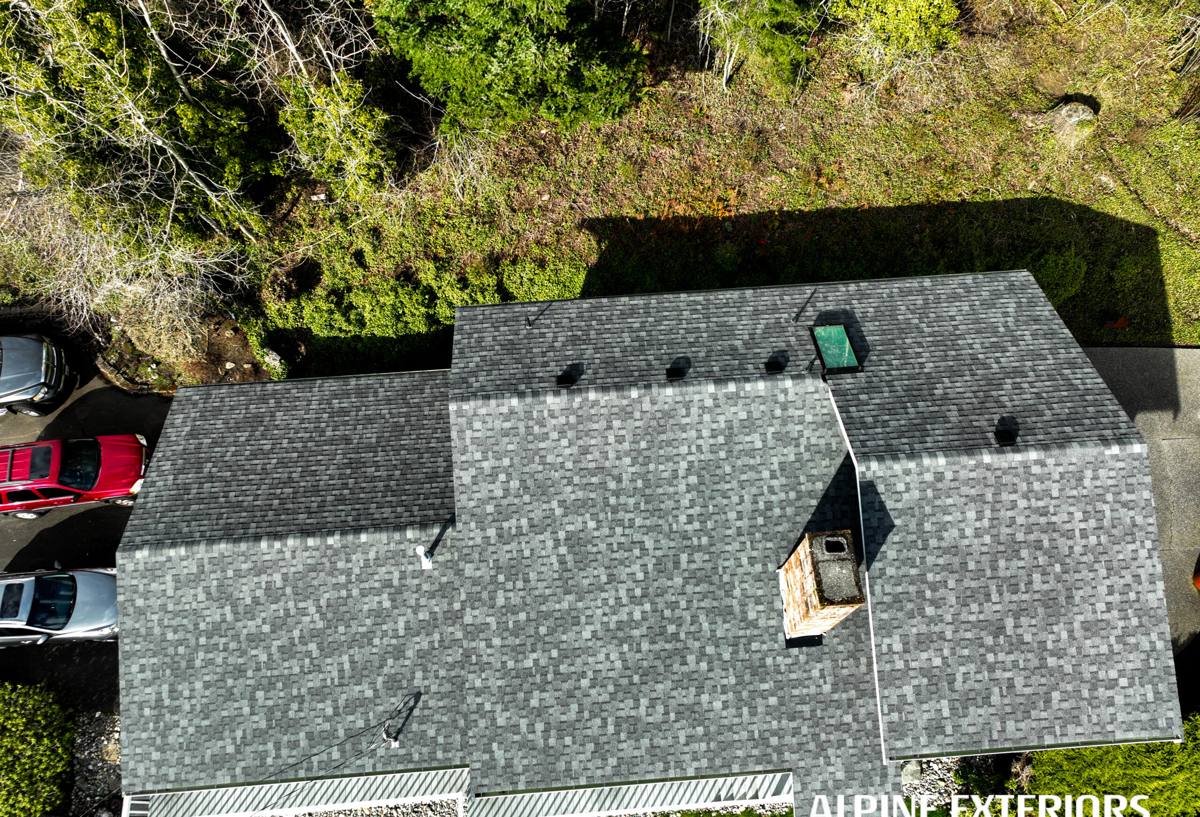
What Local Conditions Actually Do to a Roof
Three factors do most of the damage to roofs in and around Bellingham, and Birchwood gets all three:
- Salt-laden air off Bellingham Bay accelerates corrosion on exposed metal — flashing, fasteners, gutters, and any exposed hardware — faster than it would inland.
- Driving rain pushed by wind off the Sound doesn't just fall straight down. It gets forced sideways and upward under shingle edges, into laps, and around penetrations, which is why flashing and underlayment details matter more here than in drier climates.
- A long moss and algae season — Whatcom County stays damp for much of the year, and shaded or north-facing roof sections rarely get enough sun to dry out fully. That constant dampness is exactly what moss and algae need to take hold.
None of these alone would be a big deal. Together, over years, they're what turn a 25-year shingle into a 15-year roof if it wasn't installed with local conditions in mind.
Signs a Birchwood Roof Needs Replacement, Not Another Repair
Not every roofing problem calls for a full tear-off. But there's a point where patching stops making financial sense. Some signs worth taking seriously:
- Granule loss heavy enough that you're finding grit in gutters and downspouts every time it rains
- Shingles that are curling, cupping, or cracking across large sections rather than one isolated spot
- Moss growth that keeps coming back within a season or two of cleaning, especially on shaded slopes
- Soft or spongy decking felt underfoot during inspection, or visible sagging from the ground
- Daylight visible through the roof deck from inside the attic
- Water stains on ceilings or in the attic that show up after wind-driven storms specifically
- A roof already in the 20+ year range with no major work done, especially with heavy tree cover overhead
If you're seeing one or two of these, a repair might still buy you time. If you're seeing several at once, or the roof is already old, replacement is usually the more honest recommendation — and the one that actually saves money over the next decade.
What a Correct Installation Actually Involves
Tear-Off and Deck Inspection
A new roof is only as good as what's underneath it. We remove the old roofing down to the deck and inspect every sheet of sheathing for soft spots, delamination, or rot — particularly around valleys, chimneys, and any area that's been holding moisture. Any damaged decking gets replaced before anything new goes down. Installing new shingles over a compromised deck just hides a problem that gets more expensive to fix later.
Underlayment and Ice-and-Water Protection
Given how much wind-driven rain this area sees, underlayment choice isn't a place to cut corners. We use synthetic underlayment across the field of the roof and self-adhered ice-and-water membrane at the vulnerable spots — eaves, valleys, and around penetrations — where wind can push water backward under the shingle edge.
Flashing Details
Flashing failures, not shingle failures, cause most of the leaks we get called out to fix. Every chimney, skylight, vent pipe, and roof-to-wall transition gets new, properly lapped flashing — not caulk smeared over old, corroded metal. In a salt-air environment, we pay particular attention to fastener and flashing material choice to avoid premature corrosion.
Ventilation
A roof that can't breathe traps moisture in the attic, which shortens the life of the decking and the shingles from underneath — often before homeowners notice anything wrong from outside. We check and correct intake and exhaust ventilation as part of every installation, not as an upsell afterward.
Choosing Materials for Whatcom County Weather
There's no single "best" roofing material — the right choice depends on your home, your budget, and how much long-term maintenance you're willing to take on. Here's an honest comparison of the options most Birchwood homeowners weigh:
| Material | Typical Lifespan | How It Handles Our Climate | Maintenance |
|---|---|---|---|
| Architectural asphalt shingle | 25–30 years | Good all-around performance; algae-resistant granule options help with moss/algae staining | Low to moderate |
| Standing seam metal | 40–50+ years | Sheds moisture and moss well due to steep slope shedding and smooth surface; needs coastal-grade fasteners to resist salt-air corrosion | Low |
| Cedar shake | 20–30 years with upkeep | Attractive but holds moisture longer in a damp climate, which increases moss and rot risk without regular maintenance | High |
| Synthetic/composite shingle | 30–50 years | Resists moisture absorption better than wood; performance varies by product line | Low to moderate |
For most homes in this neighborhood, a quality architectural asphalt shingle with algae-resistant granules or a standing seam metal roof gives the best balance of upfront cost and long-term performance against moss and moisture. We'll walk through the real trade-offs for your specific roof rather than push one product across the board — the right call depends on slope, shading, and how long you plan to stay in the home.
Moss, Algae, and Keeping It From Coming Back
Moss isn't just a cosmetic problem. Left alone, it holds moisture against the roof surface, lifts shingle edges, and works its way into laps and fasteners over time. A new roof gives you a clean start, but the same conditions that grew moss on the old roof are still there — shade, moisture, and a long damp season.
Two things make a real, lasting difference: algae-resistant shingle granules (copper-infused granules are the most common and effective approach) and, where the tree canopy is heavy, discussing whether some limb trimming to improve airflow and sun exposure makes sense. We won't oversell "moss-proof" claims — no roof is immune in this climate — but a properly specified new roof with the right materials will hold up dramatically better than one installed without regional conditions in mind.
Our Installation Process, Start to Finish
- On-site inspection and estimate. We look at the current roof, the deck condition where visible, ventilation, and any problem areas, then walk you through honest options and costs.
- Material selection. We help you weigh lifespan, appearance, and budget against how your specific roof is exposed to sun, shade, and wind.
- Scheduling around weather. Roofing in this region means working around rain windows. We plan installation timing to keep your home protected throughout the job, not just at the end of it.
- Tear-off and deck repair. Old roofing comes off, decking gets inspected, and any damaged sheathing is replaced before new materials go down.
- Underlayment, flashing, and ventilation. The details that actually determine whether a roof leaks in year three or lasts three decades.
- Final walkthrough. We review the completed roof with you, confirm ventilation and flashing are correct, and make sure the job site is cleaned up — including magnet-sweeping for stray fasteners.
Why a Crew That Already Works Birchwood Matters
A roofing crew that works throughout Bellingham and Whatcom County regularly sees the same patterns repeat: which slopes hold moss longest, how much wind-driven rain a given exposure actually takes, and which flashing and fastener choices hold up against salt air over the long run instead of just on paper. That's not something you get from a national installer who's never worked the local weather — it comes from doing the work here, season after season.
It also matters for the practical side of the job: knowing local permitting requirements, understanding typical home construction in older Bellingham neighborhoods, and being available for warranty follow-up without a long drive from out of town. A roof is a long-term investment — it's worth hiring a crew that's still going to be around, and local, when you need them.
What to Ask Before You Hire a Roofing Contractor
Whoever you choose, these are worth confirming before signing anything:
- Are they licensed and insured to work in Washington State, and can they provide proof?
- Do they inspect and replace damaged decking as part of the job, or just cover over it?
- What underlayment and ice-and-water protection do they use, and where?
- How do they handle ventilation — is it assessed, or assumed to be fine?
- What's the manufacturer's warranty, and what's covered under their own workmanship warranty?
- Do they have references or completed work in your specific area?
- Is the estimate written, itemized, and clear about what's included?
A contractor who answers these plainly, without dodging or vague reassurances, is a good sign. One who rushes past them isn't.
If your Birchwood roof is showing its age or you're just not sure whether repair or replacement makes more sense, we're happy to take a look and give you a straight answer. Fill out the form below for a free, no-pressure estimate.