 Bellingham Siding
 Deck Repair Built for Birchwood's Weather, Not a Generic Checklist
A deck in Birchwood takes a different kind of beating than a deck in a dry climate. Between the salt air drifting off Bellingham Bay, driving rain that comes in sideways for months at a stretch, and a moss season that seems to run longer every year, the wood, fasteners, and footings under your feet are under constant attack. Most of the deck damage we see here isn't dramatic — it's slow, quiet deterioration that homeowners don't notice until a board flexes underfoot or a rail feels a little too loose. This page covers what deck repair actually looks like for homes in Birchwood, what a correct repair involves, and how our process works from first look to final walk-through.
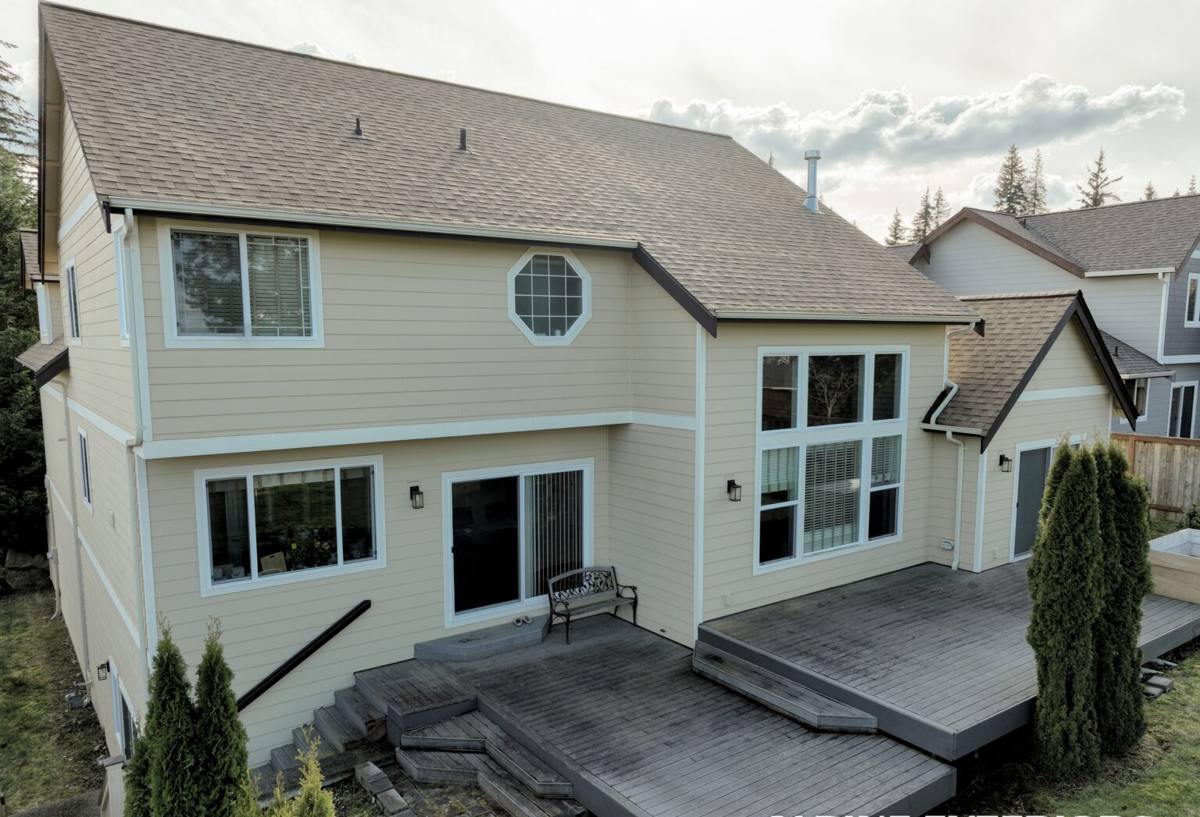
Why Birchwood Decks Age the Way They Do
Salt Air and Fasteners
Even a few miles inland from Bellingham Bay, salt-laden air accelerates corrosion on anything metal — nails, screws, joist hangers, and structural bolts. Once a fastener starts rusting, it loses grip strength long before it looks obviously bad. That's one reason a "solid-looking" deck can still have a weak structural connection hiding under the decking boards.
Moss, Shade, and Trapped Moisture
Whatcom County's tree cover and cloud cover keep a lot of decks shaded for much of the year, which means surfaces stay damp longer after every rain. Moss and algae take hold on north-facing decks and anywhere debris collects — between boards, at the base of posts, and along ledger boards. Moss itself isn't the core problem; it's a sign that moisture is sitting somewhere it shouldn't, and that's what leads to rot underneath.
Long, Wet Winters
Our rainy season isn't just about total rainfall — it's about duration. Wood that gets a chance to dry out between storms holds up far better than wood that stays saturated for weeks. In a typical Bellingham winter, decking boards, stair stringers, and ledger connections rarely get that drying window, which is why untreated or poorly sealed wood shows problems here faster than the same materials would in a drier region.
Signs a Birchwood Deck Needs Repair
Most deck problems give warning signs well before anything fails outright. Walk your deck with these in mind:
- Soft or spongy spots when you press down on decking boards, especially near the house or in shaded corners
- Railings or posts that wiggle more than a firm push should allow
- Visible moss, algae, or black staining that keeps coming back after cleaning
- Gaps opening up between boards, or boards that have started to cup or crown
- Rust streaks below joist hangers, screws, or bolts
- A stair stringer that flexes or feels different from step to step
- Any separation where the deck attaches to the house (the ledger board) — this is a safety-critical connection
- Standing water that doesn't drain off the surface within an hour or two after rain stops
None of these automatically mean the whole deck needs to come down. But each one tells us where to look closer, and how far the damage has likely spread underneath.
What a Correct Deck Repair Actually Involves
Structural First, Cosmetic Second
The framing underneath — ledger board, joists, beams, posts, and footings — carries the load. If any of that is compromised, replacing the decking boards on top without addressing the frame just hides the problem for a season or two. A correct repair always starts by getting under or below the deck to check framing condition before deciding what surface work is needed.
The Ledger Connection
Where the deck attaches to the house is the single most important structural point on most decks, and it's also the spot most exposed to water running down siding and pooling at the connection. Proper flashing at the ledger board keeps water from wicking into the house framing and the deck's structural attachment. This is one of the most common failure points we find on older decks in this area, and one of the easiest to get wrong on a rushed repair.
Fasteners and Hardware
Given the corrosion pressure from salt air and moisture, hardware matters more here than in a lot of other regions. Structural connections should use fasteners and joist hangers rated for the wood treatment being used — mixing incompatible metals accelerates corrosion rather than preventing it. This is a detail that's invisible once the deck is finished, which is exactly why it's worth confirming with whoever does the work.
Drainage and Airflow
Wood that can dry out survives; wood that stays wet doesn't. Repairs should restore or improve gaps between boards, clearance under the deck for airflow, and a clear path for water to run off rather than pool against framing.
Common Deck Problems We See in Birchwood
| Problem | Likely Cause | Typical Repair |
|---|---|---|
| Soft or rotten decking boards | Trapped moisture, moss, poor board spacing | Remove and replace affected boards; improve gaps for drainage |
| Loose or wobbly railing | Corroded fasteners, post rot at the base | Re-secure or sister posts; replace hardware with corrosion-resistant fasteners |
| Water staining at the house wall | Missing or failed ledger flashing | Remove decking near ledger, install proper flashing, reattach |
| Sagging or bouncy section | Undersized or rotted joists, failing joist hangers | Sister or replace joists, upgrade hangers |
| Post base deterioration | Wood-to-concrete contact holding moisture | Replace post base, add standoff hardware to keep wood off concrete |
| Persistent moss/algae | Shade, poor airflow, infrequent cleaning | Clean, address airflow/drainage, recommend a maintenance schedule |
Repair vs. Replace: How We Help You Decide
Not every deck problem calls for a full rebuild, and not every deck is worth chasing repairs on indefinitely. The honest answer usually comes down to how much of the structural frame is still sound.
| Factor | Leans Toward Repair | Leans Toward Replacement |
|---|---|---|
| Framing condition | Joists, beams, and posts are structurally sound | Multiple framing members show rot or damage |
| Age of the deck | Under 15-20 years, built to reasonable standards | Older deck, outdated construction methods |
| Extent of damage | Isolated to a few boards, one rail section, or one connection point | Damage spread across multiple systems (framing, decking, railings) |
| Code compliance | Existing structure meets current safety standards | Railing height, spacing, or footings don't meet current code |
| Budget goals | Lower upfront cost, extends usable life | Higher upfront cost, resets the clock and can include design changes |
We'll always tell you plainly which category your deck falls into. If a repair is the honest answer, that's what we'll recommend — a deck rebuild isn't a better sale for us if a targeted repair will hold up.
Our Deck Repair Process
- On-site inspection. We check the deck surface, railings, stairs, and get underneath or below to inspect framing, ledger connection, and post bases.
- Written scope and honest options. You get a clear explanation of what's failing, what's still sound, and what repair options make sense — including if replacement is genuinely the better call.
- Structural repairs first. Any compromised framing, ledger flashing, or hardware issues get addressed before cosmetic work begins.
- Surface repairs. Damaged decking boards, railings, or stair components are replaced to match the existing deck as closely as possible, or upgraded if you're looking to improve durability.
- Final check for drainage and airflow. We confirm board spacing, under-deck clearance, and water runoff are set up to reduce future moisture problems, not just patch the visible issue.
- Walk-through. We go over exactly what was done and what to watch for going forward, especially given how our wet season affects wood over time.
Material Choices When Repairing
Pressure-Treated Lumber
Still the most common choice for structural framing repairs — joists, beams, and posts — because it's rated for ground and weather exposure and matches what's typically already in place. It requires proper fasteners and, ideally, a sealant reapplied every few years to perform well through our wet winters.
Cedar and Other Natural Wood Decking
Common on older Bellingham-area decks and appreciated for its look, but it demands more upkeep here than in drier climates — regular cleaning, sealing, and moss control are not optional if you want it to last. We're upfront that natural wood decking is a maintenance commitment, not a "install and forget" surface in this climate.
Composite Decking
A reasonable option for board replacement where lower long-term maintenance matters more than matching an existing wood deck exactly. Composite resists rot and moss staining better than untreated wood, but it still needs a sound, well-ventilated frame underneath — composite boards on a rotten structure is just a nicer-looking version of the same problem. We'll walk you through the real trade-offs (upfront cost, appearance, and long-term care) rather than push one product as a cure-all.
Permits and Safety on Deck Repairs
Whether a repair requires a permit through the City of Bellingham or Whatcom County generally depends on the scope of the work — structural repairs, changes to railings, or work affecting the ledger connection are more likely to fall under permit requirements than like-for-like board replacement. We handle that determination as part of the scope conversation so there are no surprises, and we build any repair to meet current safety standards for railing height and spacing, not just match what was there before.
A Quick Self-Check Before You Call
- Press on several boards across the deck, not just one spot
- Push and pull on the top rail — it shouldn't move more than slightly
- Look under the deck (if accessible) for staining, soft wood, or rusted hardware
- Check where the deck meets the house for gaps, staining, or soft siding nearby
- Note any area that stays wet or mossy longer than the rest of the deck
Why It Matters That We Already Work in Birchwood
A crew that regularly works Birchwood and the surrounding Bellingham neighborhoods already knows what this climate does to a deck over five, ten, and twenty years — which framing details tend to fail first, where moss and moisture collect on typical lot layouts, and what a repair needs to hold up through another Whatcom County winter. That local pattern recognition shortens the inspection, sharpens the diagnosis, and means the repair is built for the conditions your deck actually faces, not a generic set of national building standards.
If your deck has soft spots, a loose rail, or just doesn't feel as solid as it used to, we're happy to take a look and give you a straight answer on what it needs. Reach out for a free, no-pressure estimate using the form below.