 Bellingham Siding
 Why Birch Bay Decks Take a Beating
Birch Bay sits right on the water, and that changes what a deck goes through compared to a deck a few miles inland. Salt-laden air moves off the bay and settles on every exposed surface, which speeds up corrosion on anything metal — fasteners, joist hangers, railing hardware. Add the driving rain that comes with Whatcom County's exposure to Pacific storm systems, and horizontal surfaces stay wet longer than they would in a more sheltered yard. Then there's moss season, which in this part of Washington isn't really a season at all — it's most of the year. Shaded, damp deck boards grow moss and algae that hold moisture against the wood and turn the surface slick and unsafe.
None of this means a deck in Birch Bay is doomed. It means the repair work has to account for conditions that a generic "deck fix" job in a drier climate doesn't have to think about. That's the difference between a repair that lasts a few seasons and one that lasts a decade or more.
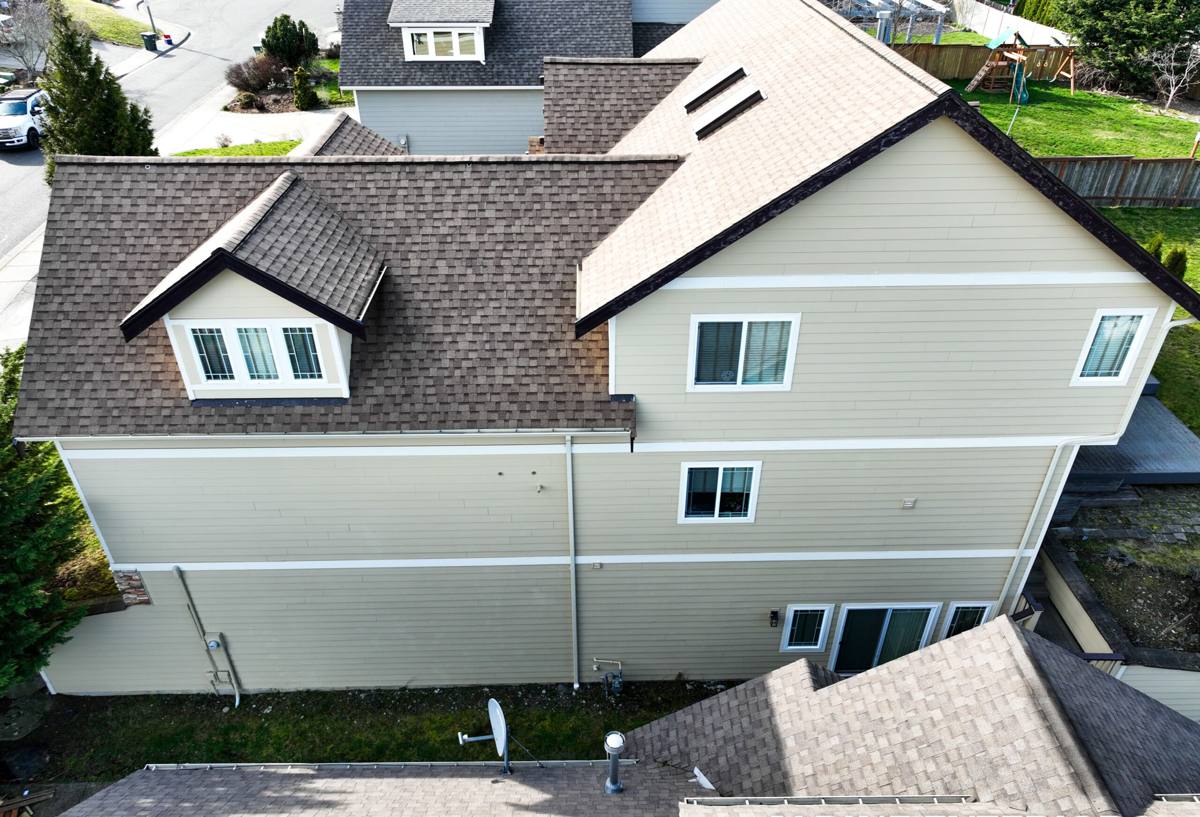
Common Deck Problems We See in Birch Bay
Ledger Board and Structural Rot
The ledger board — where the deck attaches to the house — is the single most important structural connection on most decks, and it's also the most common failure point we find. If flashing was installed poorly or has failed, water gets behind the ledger and rots both the ledger and the rim joist behind it. This is a slow, hidden problem. By the time you see staining or softness on the siding above the deck, there's usually been water intrusion for a while.
Fastener and Hardware Corrosion
Standard galvanized fasteners and joist hangers hold up fine in a lot of the country. Near saltwater, they corrode faster than most homeowners expect, sometimes visibly rusting and weeping stains onto the decking within a few years. Corroded fasteners lose holding strength long before they look obviously bad, which is why a hardware check is part of every inspection we do out there.
Decking Surface, Moss, and Standing Water
Wood decking that stays damp under a moss or algae layer softens and decays from the top down. Composite decking doesn't rot the same way, but moss and algae still build up on it and make the surface dangerously slick, especially on shaded sides of a house or under overhangs where the sun never quite dries things out.
Railings, Posts, and Stairs
Railing posts and stair stringers take direct weather exposure and repeated stress from people leaning and stepping. Post bases that sit in standing water or aren't properly flashed rot from the bottom up, which is a safety issue we take seriously — a railing that looks fine but has a rotted post base can fail under load.
Repair vs. Replace: How We Decide
Not every deck problem calls for a full rebuild, and not every problem should be patched. We look at how much of the structure is affected, not just what's visible from the top.
| Situation | Typical Fix | What It Involves |
|---|---|---|
| A few soft or cracked boards, structure is sound | Spot repair | Replace individual boards, check and upgrade fasteners in that area |
| Surface is worn, gray, or moss-prone but framing is solid | Resurfacing | Remove and replace decking and railings, keep the existing frame |
| Ledger rot, multiple rotted joists, or failed footings | Structural rebuild | Rebuild framing to code, re-flash the ledger connection, then redeck |
| Deck is undersized, poorly located, or past its useful life | Full replacement | Remove entirely and build new to current code and layout needs |
We'll always tell you honestly which category your deck falls into. Spot-repairing a deck with a rotted ledger just hides the real problem under new boards, and we won't sell you that kind of fix.
What a Correct Deck Repair Involves
A repair that's actually going to hold up on the coast needs to address more than what's failing right now. Before we start cutting or fastening anything, a proper job covers:
- A full inspection of the ledger board, flashing, and the connection to the house — the part most homeowners can't see
- Probing joists, beams, and posts for soft spots, not just a visual look
- Checking post bases and footings for rot or movement, especially where water tends to pool
- Evaluating railing post connections for the loads they need to carry
- Assessing drainage — where water sits, where it should be shedding, and why it isn't
- Matching fastener and hardware material to the site's salt exposure, not just using whatever's standard
- Confirming the repair meets current guardrail height, baluster spacing, and stair code where applicable
Skipping any of these turns a repair into a temporary patch. We'd rather spend the extra time on the inspection than come back in two years to fix the same spot again.
Fastener and Hardware Choices for a Salt-Air Site
This is one area where the right choice makes a real difference in how long a repair lasts near the water. Not all fasteners and hardware are built for the same environment, and using the wrong grade is one of the most common shortcuts we see in older or budget repairs.
| Fastener/Hardware Type | Behavior in Salt Air | Where We Use It |
|---|---|---|
| Standard electro-galvanized | Corrodes and stains within a few years near the water | Not recommended for Birch Bay's waterfront-exposed sites |
| Hot-dip galvanized | Better corrosion resistance, still can wear thin over time in direct salt exposure | Acceptable for framing set back from direct salt spray |
| Stainless steel (305/316) | Best resistance to corrosion and staining in direct salt exposure | Recommended for decking, railings, and hardware close to the water |
| Coated structural screws/hangers rated for exterior use | Good performance with a manufacturer coating designed for coastal exposure | Common choice for joist hangers and structural connectors |
Stainless hardware costs more up front, and for a home a few blocks off the water rather than right on the shoreline, hot-dip galvanized or a coated structural fastener may be a perfectly reasonable choice. We'll walk through the trade-off with you based on how exposed your specific deck actually is, rather than defaulting to the most expensive option automatically.
Our Process
- Inspection. We walk the full deck — top, underside, ledger connection, and posts — and probe anything that looks or feels suspect.
- Honest assessment. We tell you what's actually wrong, what's cosmetic versus structural, and where the repair line should be drawn.
- Written scope and estimate. You get a clear breakdown of what's being repaired, what materials and fasteners will be used, and why.
- Repair work. Structural issues get addressed first — ledger, framing, footings — before anything cosmetic goes back on.
- Final check. We confirm railings are secure, boards are properly fastened, and drainage is working the way it should.
Permits and Whatcom County Considerations
Whether a deck repair needs a permit depends on the scope of the work — replacing a few boards typically doesn't, but structural work like rebuilding framing, replacing footings, or changes to railings often does. Because Birch Bay is unincorporated Whatcom County, permitting runs through the county rather than a city office, and we handle that conversation as part of any job that crosses into structural territory. We'd rather confirm what's required up front than have a homeowner find out after the fact that work needs to be reopened for inspection.
Why Hire a Crew That Already Works Birch Bay
A contractor who mostly works inland jobs isn't necessarily going to think about salt exposure, moss buildup patterns, or wind-driven rain the same way a crew that's out on the water regularly does. We've seen what standard-grade hardware looks like after a few winters this close to the bay, and we build repairs around that reality instead of a generic checklist. That means better fastener choices, closer attention to flashing and drainage, and a realistic sense of which repairs will actually hold up through another wet Whatcom County winter.
It also means we're familiar with the kind of homes out here — waterfront and near-waterfront properties with decks that see more direct weather than a typical Bellingham backyard. That local pattern recognition is part of what you're paying for when you hire a crew that's already done this work up and down the coast, not just read about it.
If your deck in Birch Bay has soft spots, rusting hardware, a slick moss problem, or you just want an honest read on its condition, we're happy to take a look. Reach out using the form below for a free, no-pressure estimate.