 Bellingham Siding
 Barkley's Climate Puts Real Demands on Siding
Barkley sits inland from Bellingham Bay but still gets the full package of what Whatcom County weather throws at a house: salt-tinged marine air pushed in off the Sound, long stretches of driving rain from fall through spring, and a moss season that can run eight or nine months out of the year in shaded, north-facing areas. None of that is unique to Barkley by itself, but the combination is what wears down the wrong siding faster than homeowners expect.
Barkley is a newer, master-planned part of Bellingham with a mix of home styles — from recent construction to homes now old enough to be due for their first or second siding replacement. Whatever the age of the house, the exterior has to deal with the same moisture load every other home in this part of the county deals with. Siding here isn't just cosmetic. It's the first line of defense against a climate that stays damp for most of the year.
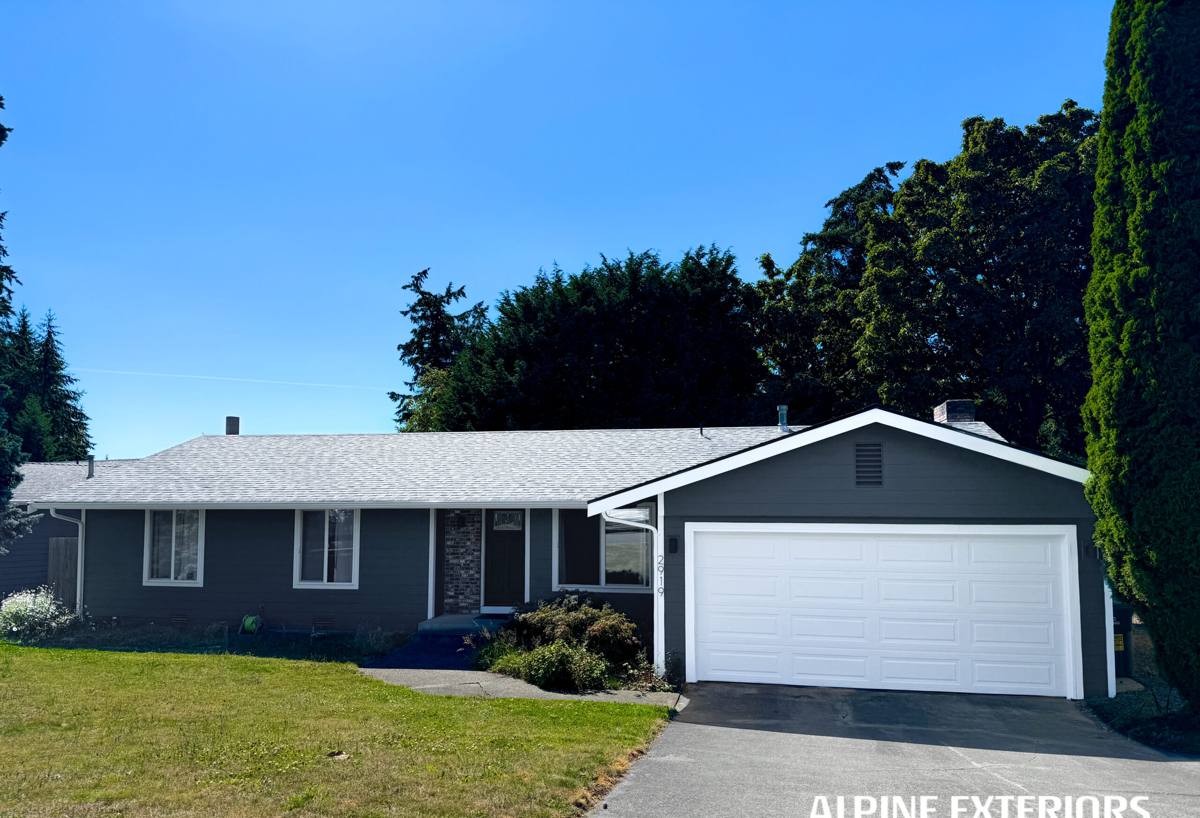
What Local Homes Actually Need From Their Siding
Three things matter more here than in drier parts of the country:
- Moisture rejection, not just moisture tolerance. Siding that absorbs water and slowly releases it will eventually show swelling, soft spots, or paint failure — especially on shaded elevations that never fully dry out between rain events.
- A finish that resists moss and mildew staining. Bare or field-painted surfaces pick up green and black staining fast in Whatcom County's damp shade. A factory-cured finish holds up considerably better than site-applied paint.
- Dimensional stability in swings between soaked and dry. Materials that expand and contract with moisture content open up seams and joints over time, which is exactly where water gets behind the siding and into the wall assembly.
This is the lens we install through on every Barkley job — not a generic "which siding is popular" decision, but which product actually holds up to this specific climate over a 30-plus year span.
Why We Only Install James Hardie
We standardized on James Hardie fiber cement for every home we side in Bellingham, including Barkley, and we don't install vinyl, LP SmartSide, primed wood, or other fiber cement brands. That's a deliberate professional standard, not a sales pitch.
Hardie's fiber cement is non-combustible and dimensionally stable in wet climates in a way wood-based and vinyl products aren't. The ColorPlus factory finish is baked on under controlled conditions rather than applied on-site, which matters directly for moss and mildew resistance in a climate like ours — a factory finish simply holds color and resists staining longer than field-applied paint exposed to Bellingham's damp, low-sun months. Hardie also engineers specific product lines (HZ5) for climates with sustained moisture exposure, which the Pacific Northwest qualifies as.
We're not going to tell you every other product on the market is junk — vinyl and LP SmartSide both have legitimate use cases and price points. But when you're asking a material to perform for three decades in Whatcom County rain and salt air with minimal maintenance, we've made our call, and it's Hardie.
What This Means for a Barkley Homeowner
In practice, it means every quote we write for a Barkley address specifies Hardie panels, planks, or trim rated for our climate zone, with the ColorPlus finish so you're not stuck repainting every 7-10 years. It also means our crews are trained on one installation system rather than juggling install specs for five different products, which reduces the chance of a detail getting missed.
What a Correct Fiber Cement Installation Involves
Fiber cement siding fails early almost exclusively because of installation mistakes, not the material itself. In a wet climate like ours, the details below aren't optional extras — they're what keeps water out of your wall assembly for the life of the siding.
- Weather-resistive barrier and proper lapping — house wrap or building paper installed and lapped correctly behind the siding, not just present.
- Rainscreen or drainage gap where called for — furring strips or a drainage wrap that let incidental moisture drain and the wall assembly breathe, instead of trapping water against the sheathing.
- Correct fastener type, spacing, and penetration depth — Hardie specifies exact nailing patterns; under- or over-driven fasteners are one of the most common causes of premature cracking.
- Proper clearances — minimum gaps from grade, roofing, decks, and hardscape so splash-back and standing moisture don't wick into the bottom courses.
- Flashing at every penetration — windows, doors, hose bibs, light fixtures, and vents all need correctly lapped flashing, since these are the most common leak points on any home.
- Caulked and sealed joints per manufacturer spec — not skipped, not painted over as a substitute for actual sealant where sealant is required.
Any one of these done wrong can undercut everything else, no matter how good the siding material is. This is where hiring a crew with local, repeat experience actually shows up in the outcome.
Our Process on a Barkley Job
| Step | What Happens | Why It Matters Here |
|---|---|---|
| Site walk & assessment | We inspect existing siding, sheathing, and trim for hidden moisture damage before quoting | Whatcom County moisture can rot sheathing behind siding that looks fine from outside |
| Scope & product selection | We spec Hardie panel/plank type, exposure, and ColorPlus color for the home's elevation and sun exposure | North-facing, shaded walls need different attention for moss/mildew resistance than sun-exposed walls |
| Tear-off & sheathing check | Remove old siding, inspect and repair sheathing/framing as needed | Catches rot early instead of sealing it behind new siding |
| Weather barrier & drainage plane | Install house wrap and drainage gap correctly lapped and fastened | This is the actual waterproofing layer — the siding is secondary protection |
| Flashing & trim | Flash all penetrations, install trim per Hardie spec | Prevents the leak points that cause the most exterior damage locally |
| Siding installation | Install panels/planks to manufacturer fastening and clearance spec | Correct installation is what makes the 30+ year lifespan realistic |
| Final inspection & walkthrough | Walk the job with the homeowner, check caulking, clearances, and finish | Confirms the details that prevent future callbacks |
Cost Factors for a Barkley Project
Every home is different, but a few factors consistently move the price on fiber cement jobs in this area:
| Factor | Why It Affects Cost |
|---|---|
| Existing sheathing condition | Hidden moisture damage found during tear-off adds repair scope before new siding goes on |
| Home size and elevation complexity | More corners, dormers, and trim details mean more cutting, flashing, and labor time |
| Siding profile chosen | Lap siding, panel systems, and shingle-style Hardie products carry different material and labor costs |
| Access and site conditions | Tight lots, slopes, or landscaping close to the foundation can add setup and staging time |
| Trim and accessory scope | Full trim replacement versus reusing sound existing trim changes both material and labor |
We give a firm, itemized quote after the site walk rather than a rough phone estimate — with fiber cement, the sheathing condition and trim scope genuinely aren't knowable until someone's looked at the wall.
Living With Fiber Cement Siding in Whatcom County
Hardie siding with a ColorPlus finish is low-maintenance, not no-maintenance. A short annual routine keeps it performing the way it's supposed to:
- Rinse the siding once or twice a year with a garden hose to clear pollen, road film, and early moss spores before they take hold
- Keep gutters clean and downspouts directed away from the wall so runoff doesn't sheet down the siding face
- Trim back landscaping and tree limbs that keep any section of wall in constant shade and dampness
- Check and re-caulk joints around trim, windows, and penetrations every few years as part of general home maintenance
- Address any impact damage (cracked or chipped panels) promptly rather than letting moisture get behind an exposed edge
None of this is heavy lifting, but skipping it is exactly how moss gets a foothold on the north side of a house and how small caulking gaps turn into bigger moisture problems over a few winters.
Why a Crew That Already Works Barkley Matters
Siding installation quality depends heavily on judgment calls made on-site — how a particular wall assembly is drying, where an unusual trim detail needs extra flashing, how much clearance a specific grade condition actually requires. A crew that has worked repeatedly in Bellingham and Whatcom County has already seen how local wall assemblies, moisture patterns, and typical construction details in this area behave over time. That translates into fewer surprises during tear-off and fewer callbacks after the job is done.
It also means straightforward logistics — material staging, permitting familiarity with the City of Bellingham, and scheduling around our actual weather windows rather than a generic install calendar that doesn't account for how many rain days this region gets.
If your Barkley home is due for new siding, we're happy to walk the property, look at what's actually going on behind the existing siding, and put together a straightforward, itemized quote for James Hardie fiber cement siding built for this climate. There's no pressure and no cost to get an honest look and an estimate.