 Bellingham Siding
 Windows Built for Barkley's Weather, Not Just Its Style
Barkley sits close enough to Bellingham Bay that salt-laden air is a real factor in how fast exterior materials age, and far enough into the Pacific Northwest's wet-weather pattern that driving rain off Puget Sound hits window assemblies from angles that drier climates never have to plan for. Add in Whatcom County's long moss season, when shaded north- and west-facing walls stay damp for months at a stretch, and you have a set of conditions that punishes cheap materials and sloppy installation faster than almost anywhere else in the state.
A window is not just glass in a frame. It is a system: frame material, glazing, weatherstripping, flashing, and the connection between the window and the wall around it. In Barkley, every one of those pieces has to work together, because if one fails, moisture finds the gap and the damage happens inside the wall where you can't see it until it's expensive.
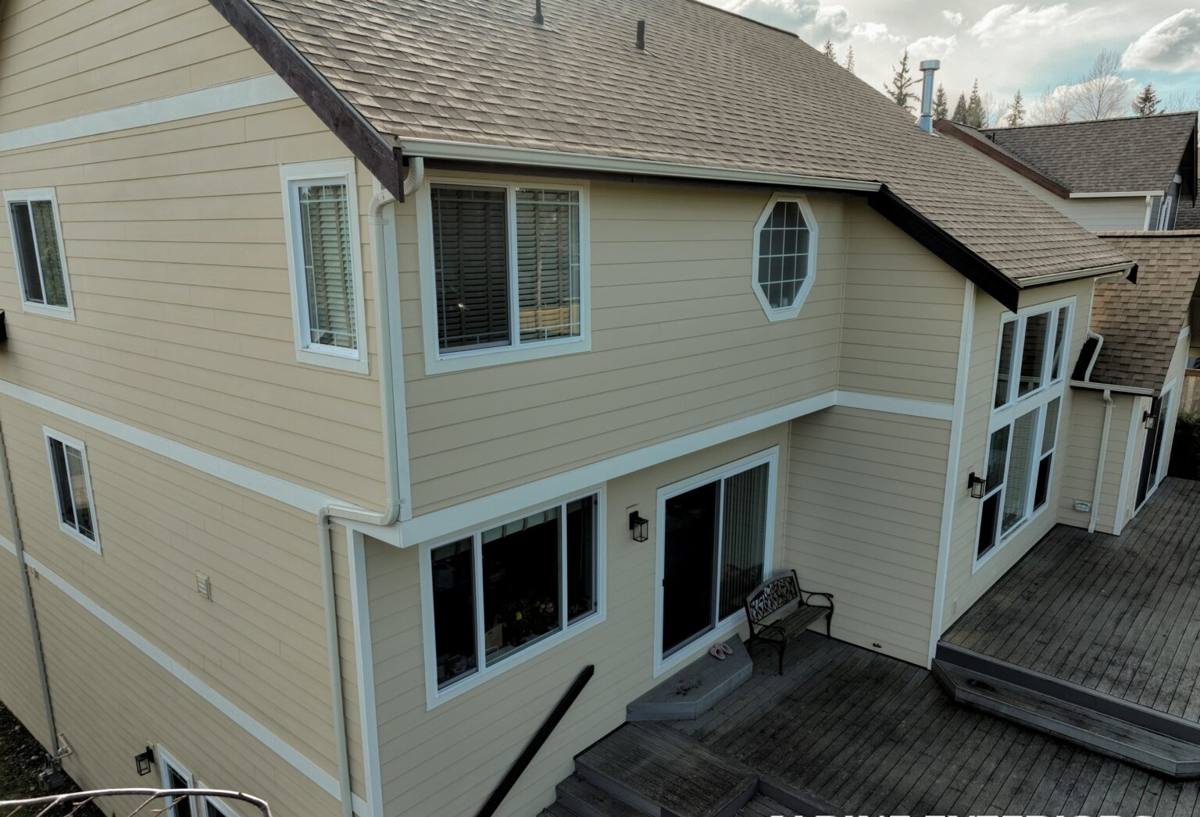
What "Custom" Actually Means for a Window Job
Custom doesn't mean fancy shapes or premium finishes for their own sake. On most Barkley homes, custom simply means the window is built to the exact opening it's going into, rather than forcing a stock size to fit with shims, foam, and trim tricks that leave weak points in the weather barrier.
That matters more than most homeowners expect. Older homes and additions in Bellingham often have openings that have shifted slightly over decades of settling, or were framed to dimensions that stopped being standard years ago. A true custom or "made-to-size" window closes those gaps cleanly. A forced-fit stock window relies on caulk and hope.
Custom also covers:
- Matching sightlines and grid patterns across a home so replacements don't look mismatched next to original windows
- Choosing frame depth and glazing package for the specific exposure — a west-facing wall catching storm winds needs different specs than a sheltered interior courtyard side
- Selecting hardware and operation type (casement, double-hung, sliding, awning) based on how the room is actually used, not just what was there before
- Coordinating trim and cladding tie-in so the finished look reads as one job, not a patch
Signs Your Current Windows Are Losing the Battle
Because moisture damage happens gradually and mostly out of sight, homeowners in this area often live with early warning signs longer than they should. Worth checking for:
- Fogging or a permanent haze between panes — the seal on the insulated glass unit has failed
- Soft or discolored wood at the sill or bottom corners of the frame
- Visible gaps where the frame meets siding or trim, especially after a wall has had months of damp exposure
- Drafts you can feel even with the window fully latched
- Paint or finish that keeps bubbling or peeling in the same spot no matter how often it's touched up
- Difficulty opening or latching windows that used to operate smoothly — frames can swell or warp with sustained moisture exposure
Any one of these is worth a look. Several at once, especially on the same wall, usually points to a flashing or sealing problem rather than just an old window.
Material and Glass Options, Compared
There is no single "best" window material — the right choice depends on the wall's exposure, the home's style, and how much upkeep the homeowner wants to take on. Here's how the common options actually perform under Bellingham conditions:
| Frame Material | How It Handles Salt Air & Rain | Upkeep | Typical Fit |
|---|---|---|---|
| Vinyl | Won't corrode or rot; performs well in coastal moisture | Low — occasional cleaning | Budget-conscious replacements, rental or resale-focused projects |
| Fiberglass | Excellent — dimensionally stable, resists swelling and doesn't corrode | Low | Higher-exposure walls, homeowners wanting a long service life |
| Aluminum-clad wood | Good exterior protection with the exterior clad in metal; interior wood needs the seal to stay intact | Moderate | Homes wanting a wood interior look with better weather resistance outside |
| Solid wood | Most vulnerable to Whatcom County's damp, mossy conditions if finish isn't maintained | High — regular refinishing needed | Historic or architecturally matched homes where wood is specified |
Glazing matters as much as frame material. In this climate, we typically recommend dual-pane, low-E glass as the baseline, with argon fill for added thermal performance on north- and west-facing rooms that take the brunt of winter storms off the water. Triple-pane can make sense on a home with heavy wind exposure or where street or airport noise is a factor, but it adds weight and cost that isn't always worth it on a sheltered wall.
Our Installation Process
The window itself is only part of the job. Installation quality is what actually determines whether a window keeps water out for twenty years or five. Our process for Barkley homes generally runs:
- On-site measurement and assessment — we measure the actual opening, check for existing rot or framing issues, and evaluate the wall's exposure to wind-driven rain.
- Removal of the old unit — done carefully to expose the rough opening and sheathing underneath, so we can catch problems the old window may have been hiding.
- Sheathing and framing repair — any soft wood, compromised sheathing, or missing weather-resistive barrier gets addressed before anything new goes in. Installing a new window over a damaged opening just resets the clock on the same problem.
- Flashing installation — self-adhered flashing tape and, where appropriate, a sill pan, integrated so water is directed out and away from the framing rather than trapped behind the new window.
- Setting and shimming the window — leveled, plumb, and squared so hardware operates correctly and the seal is uniform on all four sides.
- Insulating and sealing — low-expansion foam or backer rod and sealant around the frame, sized to the gap so it insulates without bowing the frame.
- Exterior trim and cladding tie-in — finished to match the surrounding siding and trim, with sealant details that shed water rather than collect it.
- Final operation check — every window is opened, closed, and latched to confirm smooth operation before we call the job done.
Flashing and Moisture Management Matter More Than the Brand
Homeowners often ask which window brand is best. The honest answer: brand matters less than most advertising suggests, and installation quality matters more. A premium window installed without proper flashing will leak. A mid-range window installed correctly, with a sill pan and properly lapped flashing tape tying into the wall's weather-resistive barrier, will outperform it every time.
This is especially true in Barkley given the exposure to driving rain off the bay. Wind-driven rain doesn't fall straight down — it gets pushed sideways and upward against the wall, which means flashing details at the sill and jambs have to be done correctly, not just adequately. This is also why we don't rely on caulk alone as a primary water barrier. Caulk is a maintenance item; it degrades with UV and temperature cycling. Flashing is the permanent, physical path that keeps water moving out instead of in, and it's the detail that separates a window that lasts from one that fails quietly inside the wall.
Living With a Long Moss Season
Whatcom County's moss season isn't just a roofing and gutter issue — it affects windows too. Sustained damp shade on north- and west-facing walls keeps trim and sills wet longer after every rain event, which is exactly the condition that lets wood rot take hold and lets algae or moss establish on sills and tracks. A few habits go a long way:
- Keep nearby vegetation trimmed back so walls and sills get some airflow and occasional sun exposure
- Clear debris from window tracks and weep holes so water has a path to drain rather than pool
- Check caulk lines each fall before the wet season sets in, and touch up any cracking before it becomes a gap
- Watch for green or black staining at sills — an early sign of sustained moisture that's worth addressing before it spreads to the frame
Choosing a Window Contractor Who Actually Works in Barkley
Window installation looks straightforward from a sales brochure, but the details that actually matter — how flashing gets integrated with the existing wall assembly, how a slightly out-of-square older opening gets handled, how a contractor plans around Bellingham's rain patterns during the install itself — come from having done the work locally, repeatedly, in this exact climate.
A crew that works Barkley and the wider Bellingham area regularly knows which wall orientations take the worst weather, how local framing conventions from different building eras typically show up once the old window is out, and how to sequence a job so the opening isn't left exposed during a stretch of driving rain. That local pattern recognition is the difference between a smooth install and a callback.
Before hiring anyone for a window project, it's worth confirming a few basics:
- They carry proper licensing and insurance, and can provide proof without hesitation
- They explain their flashing and sealing approach in specific terms, not just "we seal everything up good"
- They give you a written scope that specifies materials, glazing package, and installation steps — not just a total price
- They're willing to inspect and repair any rot or sheathing damage found during removal, rather than installing over it
- They stand behind both the product warranty and their own workmanship separately
Get an Estimate for Your Barkley Home
Every home in Barkley has its own mix of sun exposure, wind direction, and wall condition, so the right window package really does vary house to house. If you're seeing drafts, fogged glass, or trim that never quite dries out, we're glad to take a look and walk you through honest options. Reach out for a free, no-pressure estimate — we'll assess your windows, explain what we find, and give you a clear scope before any work begins.