 Bellingham Siding
 Building a Deck That Actually Holds Up in Barkley
Barkley is one of Bellingham's newer planned neighborhoods, and a lot of the homes here were built within the last couple of decades with clean lines, low-maintenance siding, and outdoor living space as part of the original design. That's a good starting point for a deck project, but it doesn't mean the deck itself is exempt from what Whatcom County weather does to exterior wood and hardware. Salt air drifting up from Bellingham Bay, long stretches of driving rain, and a moss season that can run from October through May all put real stress on a structure that's sitting outside year-round. A deck built with generic materials and standard fasteners from a big-box plan set will show it within a few years — soft spots, rust streaks, green film on every horizontal surface, and railings that start to wobble.
A custom deck built for this specific location means the framing, fastener selection, decking material, and drainage details are chosen for what actually happens here, not for a national average climate. That's the difference between a deck that needs real repair work in year six and one that's still solid at year twenty.
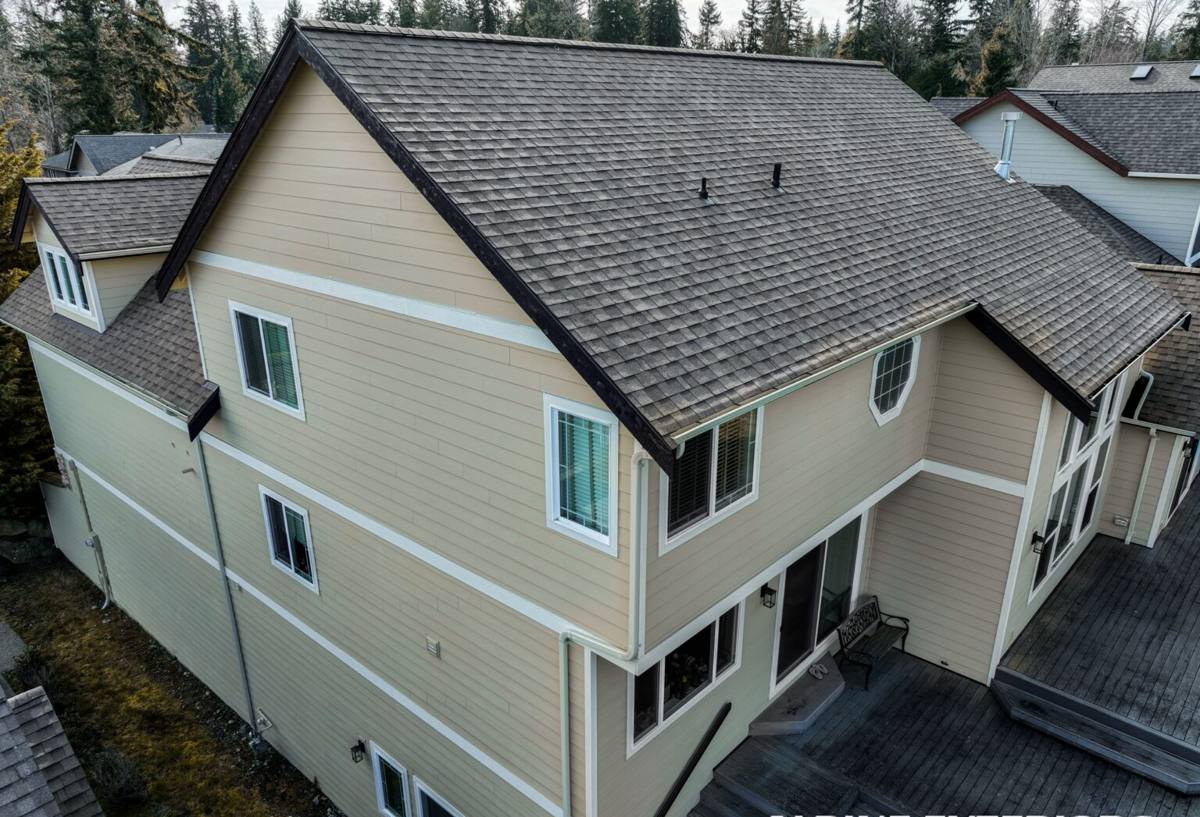
What Barkley Homes Need From a Custom Deck
Salt Air and Corrosion-Resistant Hardware
Bellingham's proximity to the bay means airborne salt is a factor even on inland lots, and it's harder on metal than most homeowners expect. Standard galvanized fasteners can start showing surface rust within a few seasons, and once a nail or screw head starts to corrode, it weakens right where the board is under the most stress. We use stainless steel or high-grade coated fasteners rated for coastal exposure, along with hidden fastener systems where the decking material supports it, so the metal doing the structural work isn't left exposed to weather.
Moss, Algae, and Standing Water
Moss doesn't just grow on roofs here. Any horizontal wood surface that stays damp for days at a time — which describes most of the fall and winter in Whatcom County — will start growing moss and algae if water isn't shedding off it efficiently. That buildup isn't just cosmetic; it holds moisture against the board and accelerates rot, and it makes the surface genuinely slick and unsafe underfoot. Board spacing, deck slope, and material choice all affect how fast this happens, and it's something we plan for from the design stage rather than treating as a maintenance problem to solve later.
Framing and Footings for Local Ground Conditions
Underneath the decking, the framing and footings matter just as much as what you see on top. Footings need to be set below frost depth and bear on undisturbed, properly compacted soil, and ledger board attachment to the house has to be flashed correctly so water can't work its way behind the siding. A poorly flashed ledger is one of the most common causes of hidden rot damage on decks in this region — the deck looks fine, but the wall behind it is quietly failing.
Choosing the Right Decking Material
There's no single "best" decking material for every project — it depends on budget, how much upkeep you want to do, and how the deck will be used. Here's how the common options actually compare for a Bellingham-area deck:
| Material | Moisture & moss resistance | Maintenance | Typical lifespan | Relative cost |
|---|---|---|---|---|
| Pressure-treated wood | Fair — needs sealing and regular cleaning to resist moss | Annual cleaning/staining | 10–15 years | Lowest upfront |
| Cedar | Good natural rot resistance, but surface still grows moss if not maintained | Regular cleaning and periodic sealing | 15–20 years | Mid-range |
| Composite decking | Very good — resists rot; still needs periodic cleaning to prevent surface algae | Occasional washing, no staining | 25–30 years | Higher upfront |
| PVC/capped polymer | Excellent — fully non-absorbent surface | Low — occasional rinse | 25–30+ years | Highest upfront |
We're honest with clients that composite and PVC decking cost more to install, but in a climate that grows moss on almost anything left damp, the reduced maintenance burden and better moisture behavior usually pay for themselves over the life of the deck. Wood is still a legitimate choice for homeowners who want that look and are willing to keep up with sealing and cleaning — we just make sure you know what that commitment actually looks like before you sign off on it.
Design Considerations for Barkley's Setting
Many Barkley lots are on the smaller, more efficient side compared to older Bellingham neighborhoods, which changes how a deck should be designed. Multi-level decks, built-in bench seating, and railing systems that don't visually wall off the yard all help a deck feel larger than its footprint. Because a lot of homes in this area share sightlines with neighboring properties, we also pay attention to privacy — partial screens, strategic railing material, or planter integration can solve that without requiring a full privacy fence. If your property is part of an HOA with design guidelines, we'll work within those requirements as part of the planning process rather than surprising you with a rejected permit later.
Our Deck-Building Process
- Site visit and assessment — we look at grade, drainage, sun exposure, and how the deck will attach to the house before any design work starts.
- Design and material selection — layout, railing style, and decking material chosen for both your use of the space and the local climate.
- Permitting — we handle the permit application and plan submission so the project meets current code requirements.
- Demolition of any existing structure — if you're replacing an old deck, we remove it and inspect the ledger and framing behind it for hidden damage.
- Framing and footings — built to span and depth requirements for the deck's size and load, with corrosion-resistant hardware throughout.
- Decking, railing, and finish work — installed with attention to drainage, fastener placement, and clean sightlines.
- Final inspection — coordinated with the city inspector before the project is considered complete.
Permits, Codes, and Inspections
Most new decks and deck replacements in Bellingham require a building permit, and the requirement generally applies whether the deck is attached to the house or freestanding, once it's above a certain height or size. Code requirements cover things like guardrail height, baluster spacing, stair geometry, and structural connections — these aren't optional details, they're safety requirements that get checked at inspection. Skipping the permit process might save a little time upfront, but it creates real problems later: unpermitted work can complicate a home sale, and it means nobody with code expertise verified that the ledger flashing, footings, and railings were actually done correctly. We pull permits as a standard part of every custom deck project.
Signs Your Current Deck Needs Replacing, Not Just Repairing
- Soft, spongy, or spring-y spots when you walk across the deck surface
- Wood that's gray, splintering, or crumbling at the ends of boards
- Rust stains bleeding out from around fasteners
- A ledger board area that stays damp or shows staining on the siding above it
- Railings or posts that wobble or flex under normal pressure
- Persistent moss or algae that returns within weeks of cleaning
- Footings or support posts that have visibly shifted or settled unevenly
Any one of these on its own might be a simple repair. Several of them together, especially combined with an aging structure, usually means the deck has reached the point where rebuilding is more cost-effective than patching.
Maintenance After the Build
Even a well-built deck needs some seasonal attention in this climate. Clearing leaves and debris before the fall rains settle in prevents moisture from getting trapped against the surface. An annual wash — even just a stiff brush and deck cleaner, no need for aggressive pressure washing that can damage the surface — keeps moss from getting a foothold. Wood decks need periodic sealing to stay protected; composite and PVC decks mainly just need to stay clear of debris and get an occasional rinse. We walk every client through a maintenance plan specific to the material they chose, so there aren't any surprises down the road.
Why Hire a Crew That Already Works in Barkley
A contractor who's already built and repaired decks in this neighborhood knows the local permit process, has a feel for how the lots are laid out, and has already seen what happens to different materials and fastener choices after a few Whatcom County winters. That experience shows up in fewer surprises during the project and a deck that's designed for the conditions it will actually face, not a generic template. We'd rather walk your property, look at your specific site conditions, and give you a straight recommendation than sell you a one-size-fits-all package.
If you're planning a new deck or need to replace one that's showing its age, we're happy to come take a look and put together a free, no-pressure estimate. Use the form below to get started.