 Bellingham Siding
 Birch Bay's Climate Asks More of a Roof Than Most Places
Birch Bay sits right on the water, and that changes what a roof has to deal with year-round. Homes here take on salt-laden air off the bay, wind-driven rain that gets pushed sideways under poorly sealed edges, and a moss season that can run most of the year in the shaded, damp stretches typical of Whatcom County. An asphalt shingle roof that would hold up fine twenty miles inland can wear out early here if it wasn't built for these specific conditions.
None of this means asphalt shingles are the wrong choice for Birch Bay — they're still one of the most practical, cost-effective roofing systems available, and a well-installed shingle roof handles this coastline well. It just means the installation details matter more here than they do in a drier, calmer climate. Corners that get cut inland show up as real problems on a bay-front or near-bay home within a few years instead of a couple decades.
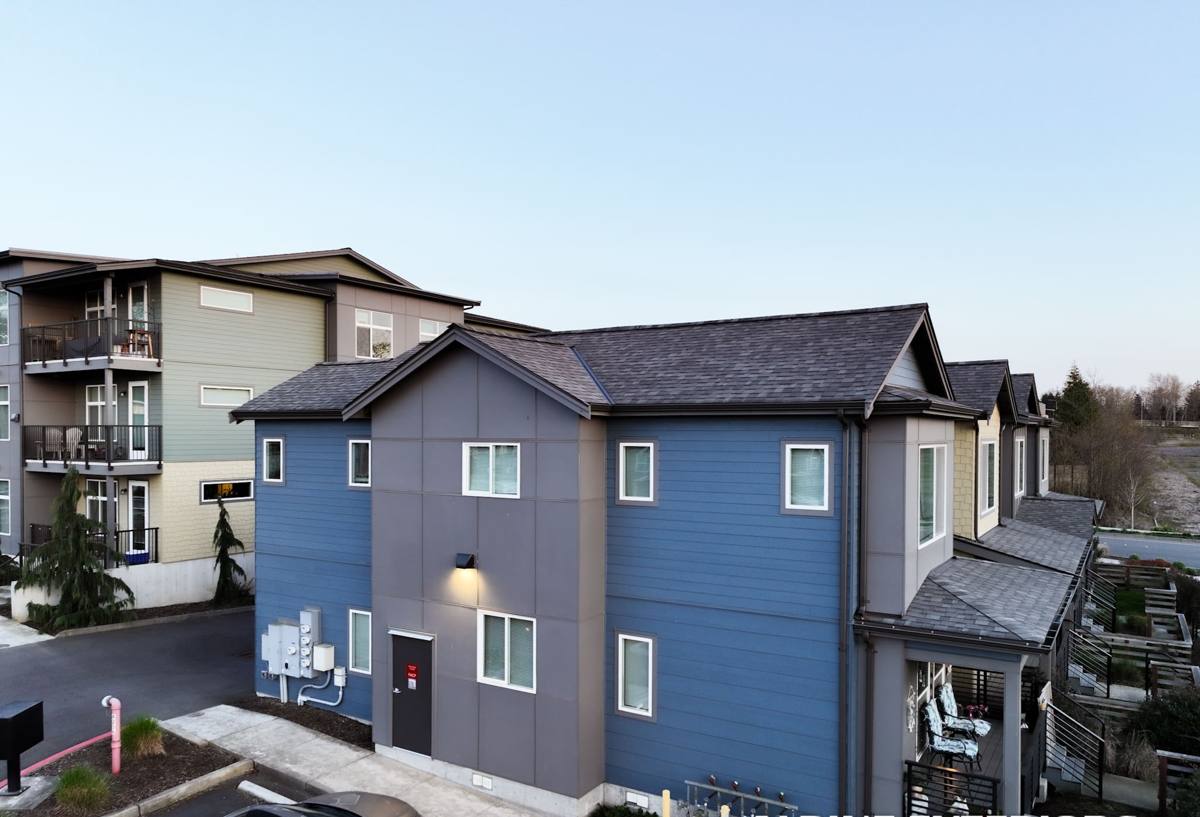
What Salt Air, Driving Rain, and Moss Actually Do to a Roof
Salt Air
Airborne salt accelerates corrosion on any exposed metal — nail heads, flashing, vent boots, and gutter hardware. Over time this can compromise the very components that are supposed to keep water out at valleys, chimneys, and roof-to-wall transitions, even while the shingles themselves still look fine from the ground.
Driving Rain
Storms off the Georgia Strait and Puget Sound push rain sideways, not just straight down. That means water gets tested at every seam, lap, and fastener, not just on open shingle field. Underlayment quality and how flashing is layered matter more here than the shingle brand does.
Moss Season
Shaded, north-facing, and tree-covered roof sections in and around Birch Bay can stay damp for long stretches of the year, which is exactly what moss and algae need to establish. Moss doesn't just look bad — as it grows, it lifts shingle edges, holds moisture against the roof deck, and slowly works its way into laps and fastener lines.
What a Correctly Built Shingle Roof Needs Here
A roof built for this stretch of coastline needs a few things a generic install may skip:
- Synthetic or high-quality underlayment rated for extended wet exposure, not just minimum-code felt
- Ice-and-water shield or self-adhering membrane at eaves, valleys, and around every roof penetration
- Corrosion-resistant flashing and fasteners suited to a salt-air environment
- Balanced intake and exhaust ventilation so moisture doesn't get trapped in the attic and work its way back into the deck
- Algae-resistant (AR) shingles on shaded or moss-prone sections
- Properly lapped step flashing and counterflashing at every wall and chimney intersection
Skip any one of these and the roof may still look fine for a few years — the failures in this climate tend to be slow leaks and hidden deck rot rather than dramatic blowoffs, which is part of why they go unnoticed until the damage is already expensive.
Signs a Birch Bay Roof Needs Attention
Because problems here often start hidden, it helps to know what to watch for from the ground or a quick ladder check:
- Moss or dark streaking concentrated on north-facing or shaded slopes
- Granules collecting in gutters or at downspout outlets
- Shingle edges that look lifted, curled, or cupped
- Soft or spongy spots when walked, or visible sagging
- Water stains on interior ceilings, especially after a windy rainstorm
- Rust streaking near flashing, vent boots, or valleys
Any of these on their own isn't necessarily an emergency, but they're worth a professional look before the next wet season.
Choosing the Right Shingle for a Bay-Front Property
Not every asphalt shingle performs the same way on a coastal roof. Here's how the common options compare for a Birch Bay home:
| Feature | Standard 3-Tab | Architectural (Dimensional) | Algae-Resistant (AR) |
|---|---|---|---|
| Wind resistance | Lower rating, more exposed edges | Higher rated, heavier profile | Same as base shingle, plus coating |
| Moss/algae resistance | None built in | None unless specified as AR | Copper or zinc granules resist growth |
| Typical lifespan in this climate | Shorter, especially on shaded slopes | Longer with proper ventilation | Longest on moss-prone sections |
| Best use in Birch Bay | Budget builds, low-exposure sections | Most of the roof | Shaded, tree-covered, north-facing slopes |
In practice, most Birch Bay homes do best with an architectural shingle overall and an algae-resistant option specifically on the sections that stay shaded or damp longest — that's usually the north side, or any slope facing tree cover.
Our Asphalt Shingle Roofing Process
1. Inspection and Assessment
We start by walking the roof and the attic, not just eyeballing it from the driveway. We're checking deck condition, existing ventilation, flashing detail, and how much moss or moisture damage is already present before quoting anything.
2. Tear-Off and Deck Prep
Old material comes off down to the deck so we can see what's actually underneath — soft or rotted decking gets replaced, not covered over. This is the point where hidden damage from long-term moss or slow leaks becomes obvious.
3. Underlayment and Waterproofing
We install underlayment rated for this climate's wet exposure, with self-adhering waterproof membrane at eaves, valleys, and every penetration point — the details that matter most when rain is coming in sideways off the bay.
4. Flashing
New, corrosion-resistant flashing goes in at chimneys, walls, valleys, and vents, properly stepped and lapped rather than caulked over old flashing.
5. Shingle Installation
Shingles go down to manufacturer spec for nailing pattern and exposure, with algae-resistant product used where the roof's exposure calls for it.
6. Ventilation Check
We confirm intake and exhaust ventilation are balanced so the attic can actually dry out between storms instead of trapping moisture against the new deck.
7. Cleanup and Walkthrough
Site gets cleared of debris and nails with a magnetic sweep, and we walk the finished roof with the homeowner before calling the job done.
Maintaining a Shingle Roof Through Birch Bay's Moss Season
A well-installed roof still needs periodic attention in this climate. This is a reasonable seasonal checklist for most Birch Bay properties:
- Clear gutters and downspouts at least twice a year, more often under overhanging trees
- Have moss physically removed (not just chemically treated) from shaded slopes before it thickens
- Trim back branches that keep roof sections shaded and slow to dry
- Check flashing and vent boots annually for early rust or gaps
- Schedule a professional inspection after any major windstorm
- Avoid pressure washing shingles directly — it strips granules and shortens roof life
What Affects the Cost of a Birch Bay Shingle Roof
| Factor | Why It Matters Here |
|---|---|
| Roof pitch and access | Steeper or harder-to-reach roofs take longer and need more safety setup |
| Existing deck condition | Moss and slow leaks over time can mean hidden rot that needs replacing before shingles go on |
| Shingle grade chosen | Algae-resistant and heavier architectural shingles cost more upfront but hold up longer on shaded, moss-prone slopes |
| Flashing and ventilation scope | A roof with several valleys, a chimney, or poor existing ventilation needs more detail work |
| Tear-off vs overlay | A full tear-off costs more but is usually the right call once moss or moisture has affected the old layer |
We don't quote a roof without seeing it in person — anything else is a guess. A full inspection lets us give a number based on your actual roof rather than a rough per-square estimate.
Why It Matters That We Already Work in Birch Bay
A crew that mostly works inland treats every roof the same way. A crew that regularly works Birch Bay and the rest of the Bellingham and Whatcom County coastline already knows which slopes on a given lot are going to hold moss, which flashing details fail first in salt air, and how much underlayment coverage this specific stretch of coastline actually needs — not the textbook minimum. That local pattern recognition is the difference between a roof that just meets code and one that's actually built for where it sits.
It also means we're not guessing about material behavior — we've seen how different shingle grades and ventilation setups hold up on bay-front homes over multiple wet seasons, and we build accordingly rather than defaulting to whatever's standard everywhere else.
Get a Straightforward Look at Your Roof
If you're dealing with moss buildup, a slow leak, granule loss, or you're just planning ahead for a roof that's getting older, we're happy to take a look and give you an honest assessment — no pressure, no inflated scare tactics. Fill out the form below to schedule a free estimate for your Birch Bay home.