 Bellingham Siding
 Roofing Happy Valley Homes for the Weather They Actually Get
Happy Valley sits close enough to Bellingham Bay and the surrounding hills that its homes take a specific kind of beating year-round. Salt-laden air off the water accelerates corrosion on fasteners and flashing. Driving rain off Puget Sound doesn't just fall straight down — wind pushes it sideways under shingle edges and into anything that isn't properly lapped or sealed. And because this part of Whatcom County stays cool, shaded, and damp for long stretches, moss and algae get months at a time to take hold on a roof that isn't shedding water fast enough. None of this is exotic. It's just the normal cost of living somewhere green and close to the water, and it means a roof here has to be installed with those three things in mind from the first course of shingles to the last.
A lot of roofing problems we get called out for in this neighborhood aren't shingle failures — they're installation shortcuts that didn't matter in a drier climate but matter a lot here. Under-lapped flashing, skipped ice-and-water barrier at eaves and valleys, and ventilation that was never actually calculated for the attic in question. Get those right and a quality asphalt shingle roof will handle Happy Valley's climate for decades. Get them wrong and you'll be dealing with moss, leaks, or premature granule loss well before the shingle's rated life is up.
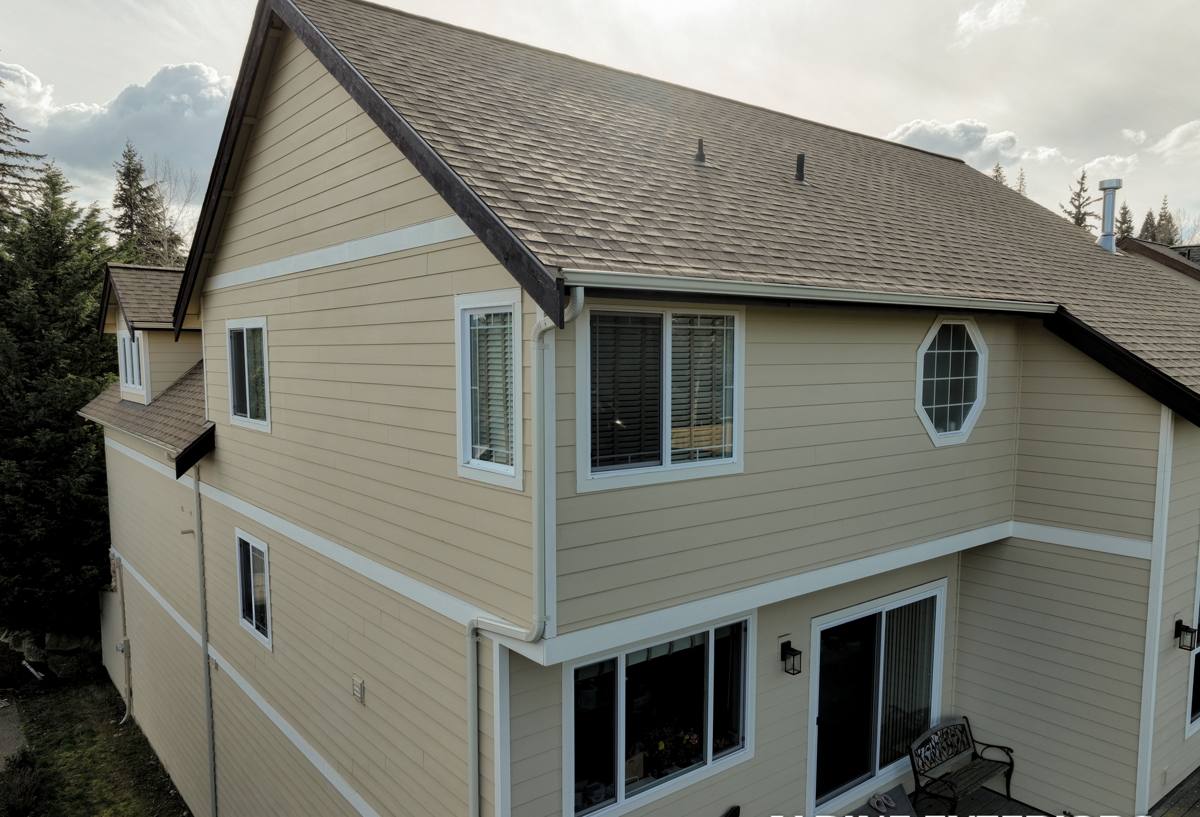
What "Correct" Actually Means for This Job
Underlayment and Water Management
On a roof exposed to wind-driven rain, the underlayment matters almost as much as the shingle on top of it. We use a synthetic underlayment as the general water-resistant layer across the deck, and we install self-adhered ice-and-water membrane at the eaves, in all valleys, and around every penetration — chimneys, plumbing vents, skylights. That membrane is what keeps wind-driven rain from working its way backward under the shingle tabs during a real Pacific storm, which is exactly the kind of weather Happy Valley gets several times a winter.
Flashing
Flashing failures are the single most common source of roof leaks we find on older homes in this area, and they're almost never the shingle's fault. Step flashing at wall intersections, counter-flashing at chimneys, and properly formed valley flashing all need to be installed in the correct sequence with the roofing, not caulked on afterward as an afterthought. We use corrosion-resistant metal given the salt air this close to the bay — standard galvanized flashing can start showing rust streaks years before the roof itself needs attention.
Ventilation
A shingle roof needs balanced intake and exhaust ventilation to let the attic breathe. Without it, moisture from the living space gets trapped under the deck, which shortens shingle life from underneath and can rot sheathing you won't see until it's a real problem. In a damp climate like this one, we treat attic ventilation as part of the roofing job, not an optional add-on — it directly affects how long everything above it lasts.
Moss and Algae: The Long Season Nobody Talks About
Whatcom County's moss season isn't a two-month nuisance — on a shaded, north-facing roof plane it can be close to year-round. Moss holds moisture against the shingle surface, lifts tabs as it grows under the edges, and its root structure works into the granule layer over time. Left unchecked for a few seasons, it can shorten the effective life of an otherwise sound roof by years.
The fix isn't a one-time power wash. It's a combination of design and maintenance:
- Shingles with algae-resistant granules (most quality architectural shingles now include this) slow down the growth cycle, though they don't stop it entirely on heavily shaded roofs
- Zinc or copper strips near the ridge on moss-prone sections let rainwater carry trace metals down the roof, which suppresses regrowth over time
- Keeping overhanging tree limbs trimmed back reduces both shade and the constant leaf litter that holds moisture against the surface
- A gentle annual or biannual cleaning — never a pressure washer aimed directly at the shingle face — removes buildup before it takes hold
- Clear gutters and valleys so water actually leaves the roof instead of sitting and feeding growth
We factor moss exposure into the roof design itself when we quote a Happy Valley job — a heavily shaded rear slope gets treated differently than a sun-exposed street-facing one, even on the same house.
Choosing the Right Shingle for This Climate
Not every asphalt shingle performs the same way once it's exposed to a wet, mossy, salt-air environment for fifteen or twenty years. Here's how the common options stack up for a home in this area:
| Shingle Type | Typical Lifespan | Moss/Algae Resistance | Best Fit |
|---|---|---|---|
| 3-tab standard | 15-20 years | Low unless treated | Budget-focused re-roofs, secondary structures |
| Architectural (laminated) | 25-30 years | Good with algae-resistant granules | Most Happy Valley homes — best balance of cost and durability |
| Premium/designer architectural | 30-50 years | Very good | Homes prioritizing longevity and appearance, steep or highly visible roofs |
| Impact-resistant (Class 4) | 25-30 years | Good with algae-resistant granules | Homes wanting extra durability against debris and hail, may qualify for insurance discounts |
For most homes in this neighborhood, we recommend a laminated architectural shingle with algae-resistant granules as the baseline — it holds up to the region's moisture and shading far better than a 3-tab, without stepping up to premium pricing unless the homeowner specifically wants the look or the longer warranty term.
How We Approach an Asphalt Shingle Roof in Happy Valley
1. Roof and Attic Assessment
Before any quote, we walk the roof and get into the attic. We're checking deck condition, existing ventilation, evidence of past leaks or moss damage, and how much sun exposure each roof plane actually gets — that last part drives real decisions about shingle choice and moss treatment.
2. Tear-Off and Deck Inspection
Full tear-off to the deck on re-roofs, not a layover. That's the only way to actually see the sheathing underneath, which is where hidden moisture damage from old flashing failures tends to show up. Any soft or rotted decking gets replaced before anything else goes down.
3. Underlayment, Flashing, and Ventilation Installed to Spec
Ice-and-water membrane at vulnerable areas, synthetic underlayment across the field, new flashing at every wall, chimney, and penetration, and ventilation sized to the actual attic — not a generic assumption.
4. Shingle Installation
Proper nailing pattern and placement per manufacturer specification — this is what keeps a warranty valid and what actually determines wind resistance, not just the shingle's rating on paper.
5. Final Walkthrough
We walk the finished roof with the homeowner, cover what maintenance the specific roof will need given its shading and exposure, and make sure gutters and downspouts are clear and functioning before we consider the job done.
What Drives the Cost of a Shingle Roof Here
Every roof is quoted individually, but the same handful of factors move the price up or down on most Happy Valley homes:
| Factor | Why It Matters Here |
|---|---|
| Roof pitch and complexity | Steeper roofs and more valleys/dormers mean more flashing detail and labor time |
| Tear-off vs. layover | Tear-off costs more upfront but is the only way to catch hidden moisture or deck damage — we don't recommend layovers in this climate |
| Deck repair needed | Rot from old leaks or ventilation problems sometimes isn't visible until tear-off begins |
| Shingle grade chosen | 3-tab vs. architectural vs. premium changes both material cost and expected lifespan |
| Ventilation upgrades | Adding proper intake/exhaust venting where none existed adds cost but protects the whole roof system |
| Moss/shading mitigation | Zinc strips, extra granule protection, or tree trimming coordination for heavily shaded slopes |
We give straightforward, itemized quotes so homeowners can see exactly what they're paying for and where — no vague lump sums.
Signs Your Happy Valley Roof Needs a Look
Because roof damage in this climate often starts underneath the shingles or in the attic, it's easy to miss until it's advanced. Watch for:
- Visible moss or heavy algae streaking on shaded roof planes
- Granules collecting in gutters or at downspout outlets
- Curling, cracking, or lifted shingle tabs, especially near ridges and edges
- Water stains on interior ceilings or in the attic after heavy rain or wind events
- Daylight visible through the roof deck from inside the attic
- Sagging sections along the roofline
- Rusted or visibly deteriorating flashing around chimneys and vents
- A roof approaching or past 20 years old that hasn't had a professional inspection recently
Any one of these is worth a professional look before it turns into an interior repair on top of a roof repair.
Why It Matters That We Already Work This Neighborhood
A roofing crew that works Happy Valley and the surrounding Bellingham area regularly has already seen how the local mix of tree cover, wind exposure, and moisture behaves on roofs like yours — which slopes tend to hold moss, which wall-roof intersections tend to leak first, which older homes in the area were roofed with underlayment or flashing practices that don't hold up to today's storms. That local pattern recognition shortens the assessment, sharpens the quote, and means fewer surprises once tear-off starts. It also means we're not learning Whatcom County's weather on your roof — we already know what it does to a shingle roof over a Bellingham winter.
We stand behind our workmanship and back it with manufacturer warranties on the materials themselves, so you're covered on both the installation and the shingle. If you're weighing a repair against a full re-roof, or just want an honest read on how much life is left in your current roof, we're happy to come take a look. We offer free, no-pressure estimates for Happy Valley homeowners — fill out the form below and we'll get a time on the calendar.