 Bellingham Siding
 Fairhaven's Siding Has to Work Harder Than Most
Fairhaven sits close to Bellingham Bay, which means homes here take on a combination of weather stresses that a lot of siding products simply weren't built for. Salt-laden air off the water works its way into fasteners, trim joints, and any exposed wood. Driving rain off Puget Sound doesn't fall straight down — it hits siding at an angle, driven by wind, and finds every gap a lazy installation left behind. And because Fairhaven's tree cover and marine humidity keep things damp for much of the year, moss and algae get a long head start on north-facing walls, shaded gables, and anything close to grade.
None of this is unusual for the Pacific Northwest, but Fairhaven's proximity to the water pushes the salt and moisture exposure a notch higher than you'd see a few miles inland in Bellingham. That matters when you're choosing a siding product and, just as much, when you're choosing who installs it.
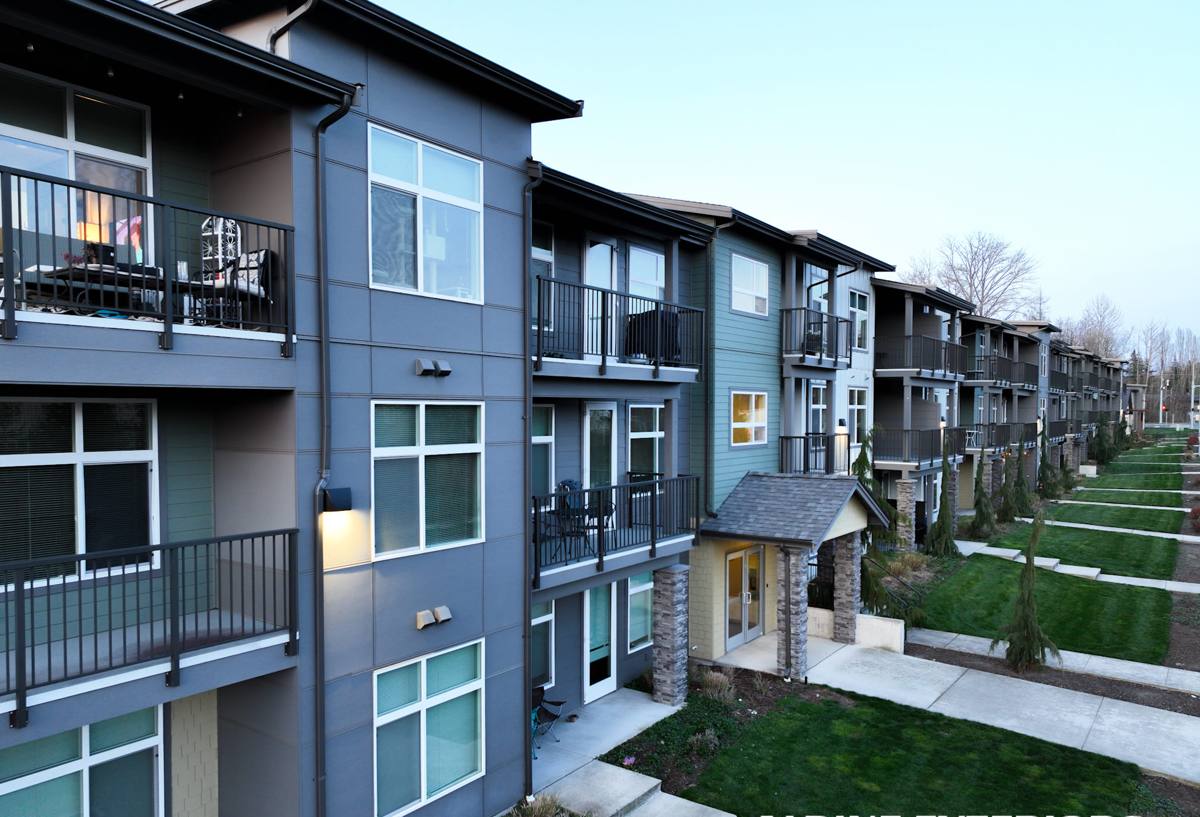
Why We Only Install James Hardie in This Neighborhood
We don't install LP SmartSide, vinyl, Cemplank, Allura, primed spruce, or cedar. That's a deliberate standard, not a sales pitch, and it's worth explaining honestly rather than just asserting it.
- Vinyl expands and contracts with temperature swings and can warp or crack under UV exposure over time; in a coastal setting it also tends to show salt film and chalking faster than fiber cement.
- Wood products (cedar, primed spruce) look great new, but they're organic material sitting in a climate that stays damp for months at a stretch. Even with good maintenance, wood siding near the water needs more frequent painting, caulking, and moisture monitoring than most homeowners want to keep up with.
- LP SmartSide is an engineered wood product with a resin-treated strand core. It performs reasonably in dry climates, but wood-based cores are more sensitive to sustained moisture exposure at cut edges and butt joints — exactly the kind of exposure Fairhaven's rain and humidity create.
- Cemplank and Allura are also fiber cement, and fiber cement as a category is the right call for this area. But we've standardized on one manufacturer so our crews, our fastening specs, our caulking practices, and our warranty paperwork are consistent on every job — no guessing which product's install guide applies.
James Hardie is a non-combustible, cement-based product engineered specifically for regional moisture and temperature profiles through its HardieZone system. For Western Washington, that means the HZ5 product line, formulated for climates with sustained damp seasons and freeze-thaw cycling. It doesn't rot, it doesn't attract insects, and its factory-applied ColorPlus finish is baked on under controlled conditions rather than field-painted, which matters a lot in a neighborhood where humidity makes on-site paint cure slowly and unevenly.
What "Correct" Hardie Installation Actually Involves
James Hardie siding is only as good as the installation behind it. The product is engineered to shed water, but that only works if the assembly underneath it is built correctly. In Fairhaven specifically, we pay close attention to a few things that generic installation crews often shortcut:
Rainscreen and Drainage Plane
Given how much wind-driven rain this area sees, we install a proper weather-resistive barrier with a drainage gap behind the siding rather than nailing panels tight to the sheathing. That gap lets any water that gets past the siding drain out instead of sitting against the wall assembly.
Fastening and Clearances
Hardie's warranty is specific about fastener type, spacing, and penetration depth — and about keeping the bottom edge of the siding at least a few inches above grade, decks, and roof lines. In a salt-air environment, using the wrong fastener metal invites corrosion staining within a few years. We use the fasteners Hardie specifies for coastal exposure, every time.
Caulking and Joint Treatment
Butt joints, trim transitions, and penetrations (hose bibs, vents, light fixtures) are where most siding failures actually start. We seal these per Hardie's published details rather than relying on caulk alone to cover gaps that shouldn't exist in the first place.
Moss and Algae Prevention at Installation
Where a home has heavy shade or sits close to mature trees — common in parts of Fairhaven — we pay extra attention to ventilation clearances and avoid trapping moisture against the siding face, which is the number one driver of moss growth on any exterior material.
Fairhaven's Housing Stock Isn't One-Size-Fits-All
Fairhaven has a genuine mix of older character homes and newer construction, and that mix changes what a siding job actually involves. Older homes often have layers of previous siding, wood trim that needs evaluation, and framing that may need minor repair once old material comes off. Newer homes are usually a cleaner tear-off but may have larger wall expanses and more window trim detail to match. We look at each home's existing envelope before quoting — not just square footage — because hidden sheathing damage or old moisture issues change the scope.
Style Considerations
Craftsman and bungalow-style homes, common in and around Fairhaven, often look best with HardieShingle staggered-edge panels on gables or accent areas paired with HardiePlank lap siding on the main walls. Homes with a more traditional or contemporary profile typically do well with a straight lap reveal in a wider or narrower exposure depending on the home's scale. We'll walk through what suits your specific house rather than defaulting to one look.
Matching the Right Hardie Product to This Location
| Product | Best Use | Why It Fits Fairhaven |
|---|---|---|
| HardiePlank Lap Siding | Primary wall siding | Most common choice; HZ5 formulation handles sustained damp seasons and coastal humidity |
| HardieShingle | Accents, gables, craftsman-style homes | Matches the character look common in the neighborhood without the maintenance burden of real wood shingles |
| HardieTrim | Corners, window and door trim | Fiber cement trim resists the moisture wicking that rots wood trim near the water |
| HardiePanel | Modern/vertical siding sections | Clean look for contemporary homes; same HZ5 moisture engineering |
What a Fairhaven Project Looks Like With Us
- On-site assessment — we inspect existing siding, sheathing condition, trim, and any signs of past moisture intrusion before quoting anything.
- Product and color selection — we go through ColorPlus finish options and product lines suited to your home's style and exposure.
- Tear-off and sheathing check — old material comes off and we address any rot or damage found underneath before anything new goes up.
- Weather barrier and rainscreen install — the drainage plane goes in correctly, not skipped to save a day.
- Hardie installation to spec — fastening, clearances, and joint treatment done per Hardie's coastal exposure guidelines.
- Final walkthrough — we go over the finished work and warranty paperwork with you directly.
Local Crew, Local Knowledge — Why That Actually Matters
A crew that already works in Fairhaven and greater Bellingham knows the practical details that don't show up in a spec sheet: which blocks sit closest to the water and need extra attention to fastener corrosion resistance, how City of Bellingham permitting and inspection scheduling typically runs, and what moss and algae actually look like on a two-year-old install versus a ten-year-old one in this specific climate. That's different from a crew that occasionally drives up from out of the area to bid a job. Familiarity with Whatcom County's damp season also shapes scheduling — we plan tear-off and install windows around weather rather than pushing a job through during a stretch of driving rain, which protects the sheathing underneath from unnecessary exposure.
Maintaining James Hardie Siding in a Salt-Air, High-Moss Climate
Hardie siding is low-maintenance compared to wood or vinyl, but "low-maintenance" doesn't mean "no maintenance," especially this close to the water. A simple seasonal routine keeps it performing the way it's supposed to for decades.
- Rinse siding with a garden hose (not a pressure washer aimed directly at seams) once or twice a year to clear salt film and airborne debris.
- Keep gutters clear so water isn't overflowing and running down the siding face repeatedly.
- Trim back vegetation and tree limbs that shade siding and keep it damp longer than the rest of the house.
- Check caulking at trim joints and penetrations annually, especially after the first winter in a new install.
- Address moss or algae growth early with a gentle wash rather than letting it establish and hold moisture against the surface.
- Watch for any staining near fasteners, which can signal a fastener or clearance issue worth having checked.
What This Costs, Honestly
Every Fairhaven home is different — square footage, trim complexity, tear-off scope, and product mix all move the number. Broadly, fiber cement siding projects in this area run higher than vinyl up front and lower than the lifetime cost of maintaining real wood siding, once you factor in repainting and repair over a comparable span of years. We don't publish blanket pricing because it isn't honest to do so without seeing the house — but we'll give you a clear, itemized estimate after a walkthrough, with no pressure to sign on the spot.
If you're weighing a siding replacement in Fairhaven and want a straight answer about what your home actually needs, we're happy to take a look. Reach out for a free, no-pressure estimate using the form below.